














 Email
Email SMS
SMS Whatsapp
 Web Push
 App Push
 Audience Sync for Ads
 Popups
 Channel A/B Testing
  Control groups Analysis
 Frequency Capping
 Funnel Analysis
 Cohort Analysis
 RFM Analysis
 Signup Forms
 Surveys
 NPS
NPS Landing pages personalization
  Website A/B Testing
  PWA/TWA
 Heatmaps
 Session Recording
 Wix
Wix Shopify
 Magento
 Woocommerce
 eCommerce D2C
  Mutual Funds
 Insurance
 Lending
  Recipes
  Knowledgebase
 Developer Docs
 Product Updates
 App Marketplace
 Academy
 Ebooks
 Case Studies
 Blog
Blog Templates
 Stella
Retention marketing is using marketing techniques to keep customers with a company. It includes different methods, such as creating a positive customer experience, offering special deals, and using social media to stay in touch with customers.
Retention marketing is useful for any business, but it is especially effective in businesses with loyal customers. It can be used in both big and small businesses and can effectively increase customer loyalty and sales. By using retention strategies, companies can increase their profits while maintaining their customer base.
To help you out, we have prepared a thorough guide on Retention marketing that will allow you to get started.
What is Retention Marketing and why does it matter?
Retention marketing implies promoting your business to existing customers. This strategy is developed to prompt customers to select the same business for further purchases by keeping the customers engaged, updated, and rewarded.
Retention marketing improves purchase frequency (how frequently a typical customer purchases) and repeat purchase rate (likelihood a shopper returns).
Growth in these two metrics suggests improving the customer lifetime value (CLV), which leads to long-term profitability rather than short-term acquisition gains.
Now, you must be wondering why you need retention marketing, so let’s move ahead and look at its strategies and examples. First, have a look at its benefits.
Retention Marketing vs Customer Acquisition
Although both strategies contribute to business growth, they serve different purposes. Customer acquisition focuses on attracting new customers, while retention marketing aims to strengthen relationships with existing customers and encourage repeat purchases. Since retaining customers is generally more cost-effective, businesses often combine both approaches to maximise long-term profitability.
| Aspect | Retention Marketing | Customer Acquisition |
|---|---|---|
| Target Audience | Existing customers | New customers |
| Primary Goal | Customer loyalty and repeat purchases | New customer growth |
| Cost | Lower | Higher |
| Return on Investment | Higher | Moderate |
| Key Metrics | Retention rate, CLV, churn rate | CAC, leads, conversions |
| Focus | Long term relationships | Initial conversions |
Benefits of Retention Marketing
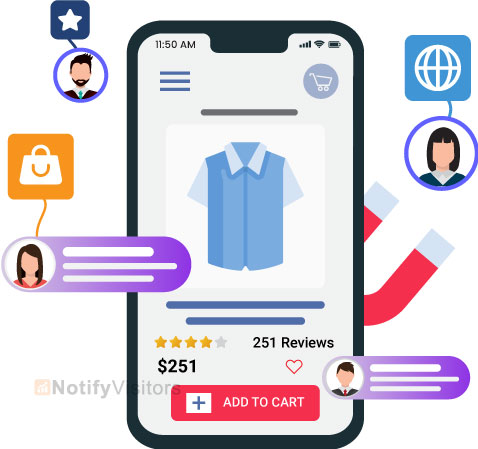
Here are a few benefits of retention marketing:
- A cheaper form of marketing: It’s challenging to find new leads. But if you already have their email address or phone number, then remarketing and retaining them is easy, as more than half the work has been done.
- Build long-term customer relationships: 77% of customers say they’ve strengthened relationships with brands for at least 10 years. Think about it.
- Offer higher returns: 61% of customers go out of their way to purchase from trustworthy brands, and 60% make more frequent purchases.
- Word-of-mouth marketing: 75% of loyal customers will help you grow your business by recommending your products to their friends and family.
How to Build an Effective Retention Marketing Strategy
1. Customer Journey Mapping
You can’t keep your current customers if you don’t know about them. Gone are those days when you used to send emails and newsletters in bulk— 66% of customers expect companies to comprehend their individual needs and personalisations, but 66% also say they’re treated like numbers.
Learning how, where, and when potential and current users interact with your brand is essential for optimising your retention marketing strategy at every stage.
By understanding your users’ expectations, you can tailor your user experience to fulfil your users’ needs — and facilitate retention rates for every key user segment.
2. Determine Current Retention and Churn
Learning how many customers are leaving and when they are leaving is crucial for customer retention. Also, ensure that you know your most satisfied customers and why they are so happy with your app.
Use cohort analysis as a retention marketing strategy to understand how many customers churn, when they churn, and what the leading factors are.
Cohorts may sound complex and like data science, but they’re not. A cohort is a group of users who share a common trait — they all downloaded your app on the same day, purchased a particular product, or used a key feature.
For instance, you could create a cohort of users who downloaded and joined your app on a particular day and track them over the next seven days. Every day, you’ll get insight into how many users came back, how frequently they came back, what friction points caused churn, and more.
By noticing what’s working (and what’s not), you can identify what your most active users are doing and what makes other users uninstall your app.
3. Focus on Onboarding and First Purchase
Do you know the initial retention phase is the most critical? For instance, did you know that 77% of users leave the app within 72 hours of downloading it?
If you don’t offer users a good first-time experience, they have few chances of returning. So make sure that your onboarding process is effective so that it can prevent churn.
The goals of onboarding are threefold:
- Setting Up: Direct new users through the initial stages of registration and login.
- Enlightening: Guide users on how your product works, how it helps the user, and quick tips for getting the most out of it.
- Accumulating Data: Gather information about your users to build their profiles and personalise their experiences.
There are a few golden rules for effective onboarding:
- Make it simple and provide incentives to promote an initial conversion.
- Allow users to skip through tutorials and other value-adds for a streamlined experience.
- Use UI overlays, easy walkthroughs, and visual clues to help new users quickly experience the critical benefit of the app. Establish an efficient contact centre and fully responsive team support to manage queries during onboarding.
- Ask permission for data collection, push notifications, payment methods, and personal information.
4. Use Data to Offer Personalised Customer Communication
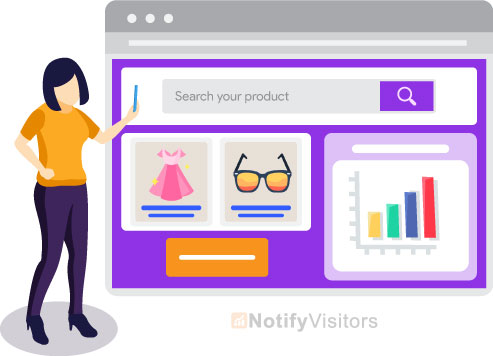
Retention marketing is all about bonding with users on a personal level. It’s about enhancing the entire end-to-end user experience that strengthens their relationship with and loyalty to your brand.
Human-to-human relationships are important to connect with customers and hold their attention now more than ever. But to produce empathetic messaging and compelling offers, you’ll require meaningful insights into your users and what they need.
It is vital because you won’t be able to keep users unless you engage them the right way, at the right time, through customer segmentation.
Gathering and analysing this user data allows you to understand your customers based on a complete picture: from their age, gender, location, and interests to how they utilise your app.
All of these insights allow you to engage customers over the long term.
5. Leverage Funnel Analysis to Understand Friction Points
A seamless user experience is essential to keep users coming back. Therefore, funnel analysis can be your saviour in this. Funnels are a behaviour analysis tool that determines how users navigate your platform and at what points they leave.
Conversion funnels enable you to focus on app-critical aspects: the registration or checkout process. Besides, it helps you to determine the most effective customer acquisition channels so that you can focus your customer retention marketing effort on the channels with the highest ROI.
By optimising your funnels, you not only increase conversions but also enhance and simplify the user experience.
6. Collect Customer Feedback
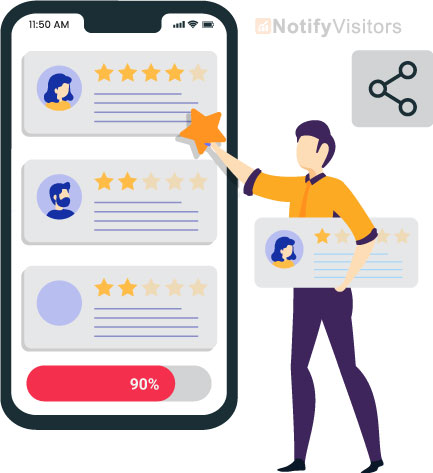
Retention marketing is all about building a relationship with your users. And everyone understands that communication is the key to a healthy relationship.
Asking users for feedback is the best way to determine and improve friction points before users quit your app. Users want to see that you’re listening to their comments, suggestions, requests, and criticisms and doing something about them.
Customer Retention Metrics
Tracking the right metrics helps businesses evaluate the effectiveness of their retention efforts and identify opportunities to improve customer loyalty and long-term revenue. Some of the most important customer retention metrics include retention rate, churn rate, customer lifetime value, and repeat purchase rate.
| Metric | What It Measures | Why It Matters |
|---|---|---|
| Retention Rate | Percentage of customers retained over time | Indicates customer loyalty |
| Churn Rate | Percentage of customers lost during a period | Highlights customer loss |
| Customer Lifetime Value | Revenue generated throughout the customer relationship | Measures long term profitability |
| Repeat Purchase Rate | Frequency of repeat purchases | Reflects buying behavior |
| Net Promoter Score | Customer satisfaction and advocacy | Indicates brand loyalty |
Retention Rate
Retention rate measures the percentage of customers who continue doing business with a company over a specific period. A higher retention rate indicates stronger customer loyalty and long-term engagement.
Churn Rate
Churn rate represents the percentage of customers who stop using a product or service. Monitoring churn helps businesses identify issues and implement strategies to improve retention.
Customer Lifetime Value
Customer lifetime value estimates the total revenue a business can expect from a customer throughout the relationship. Increasing CLV is one of the primary goals of retention marketing.
Repeat Purchase Rate
Repeat purchase rate measures how often customers return to make additional purchases. It helps businesses understand customer loyalty and buying behaviour.
Net Promoter Score
Net Promoter Score evaluates customer satisfaction and their likelihood of recommending a brand to others. A higher score often indicates stronger customer advocacy.
7 Best Retention Marketing Strategies and Examples
1. Reactivation-Based Retention Marketing Campaigns
Perhaps unsurprisingly, repeat customers are 73.7% more likely to convert than first-time visitors. But while considering customers that no longer engage with your brand, you need to concentrate on the “goldilocks” time frame — not overwhelming customers who are in the initial churning stage but not reaching too far in the past.
An email marketing study by Return Path discovered that sending reactivation emails to “long inactive” customers has only a 1.8% read rate. This can be partly attributed to spam or promotional message filtering, which mailbox providers decide with a mix of recency, engagement rate, and delete/ignore rate.
For example, Instacart started an email campaign incentivising inactive users to return with free delivery and discounts. They added a sense of urgency to a time-sensitive deal.
Use surveys and other user feedback forms to comprehend why people uninstall your app, and then utilise that information to address the issue. Consider new feature announcements, discount codes, or personalised content/product recommendations.
Return Path analysed reactivation campaigns and saw two crucial best practices:
- Define dollar amounts in the subject line. $ off offers are almost 2x more successful as % off discounts.
- Act quickly. Only 1.8% of emails sent to long-inactive users were read, compared to the 12% average.
2. Onboarding Customer Retention Marketing Campaigns
Onboarding is the beginning of a customer success program. It can ease points of friction or frustration if you invest the time into enabling users to understand your app and its benefits.
With 55% of users stating they’ve returned a product because they don’t understand how to use it, it’s obvious that companies need to invest in a good onboarding experience to keep their customer base.
For instance, MyFitnessPal allows users to track calories and log workouts via a straightforward user interface and an extensive food database.
The app’s onboarding process enables new users to log something they’ve eaten. This lets them instantly experience how easy it is to calculate calories with the app, with no guesswork or approximations.
Nowadays, customers enjoy a personalised onboarding experience, and this is what MyFitnessPal gets right: rather than displaying videos of how to use the platform, they direct users through the setup and have them enter crucial information, like their weight and daily meals, to get started.
3. Referral-Based Customer Retention Campaigns
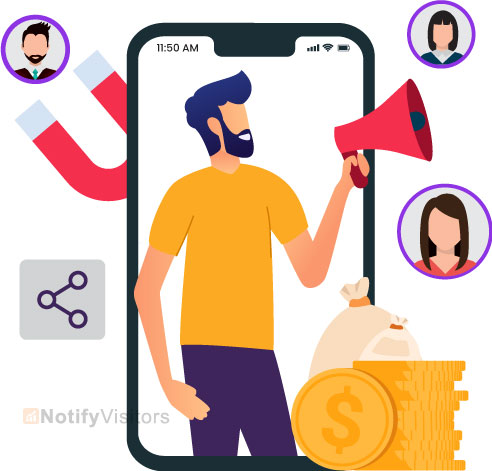
Referral marketing lets your customers share your product with people, just like word-of-mouth marketing. It’s also one of the most useful methods: 78% of B2B marketers state b2b referral programs yield good or excellent SQLs.
Incentivising current users to recommend your app for a reward, you can prompt them to keep using your platform and deliver prospective users with powerful social proof to boost new downloads.
And it works: 77% of mobile users state they downloaded an app because they heard about it via word of mouth.
For example, Dropbox, Airbnb, and Uber have used mutual incentives as viral loops to keep and reward current users and gain new ones.
Use referral-based retention marketing campaigns to yield high-quality leads through two-sided referral programs, social endorsements, and user-generated content.
4. Loyalty and Rewards-Based Retention Campaign
At their core, consumers want to feel valued, and they like to spend their money on brands that they appreciate. A loyalty program is one of the finest ways to hit both.
With 58% of loyalty program consumers buying at least once a month, it’s clear that loyalty programs work. For example, Starbucks is a king in offering convenience through mobile engagement and keeping customers.
Their app has always featured a simple loyalty system that rewards users with stars for every order, which can then be redeemed for free food and drinks. Moreover, during COVID-19, it used to inform users that while in-store cafes are closed, drive-thrus and delivery still deliver a safe and convenient way to get their favourite caffeine.
These updates effectively strengthen their brand and help maintain their emotional connection with consumers during tough times.
5. Community-Based Customer Retention Campaign
Online communities are incredibly effective for brands and customers to engage with one another. Forming a group centred around a particular topic can bring ideas together to create buzz.
For instance, Reddit is a community-based social networking platform that names itself “the front page of the internet.” Redditors can see shared interests in areas ranging from Life Pro Tips to the Movie Universe — creating communities a goldmine for user-generated content.
Developing an active, passionate user community that shares a common interest can be a compelling way to keep customers engaged with your app — particularly in times of crisis when people rely on their communities for support and connection.
For example, TripAdvisor, their vacation guide platform, offers customer reviews for things to do, places to stay, and eateries. Still, it also delivers an in-app discussion forum for TripAdvisor users to talk about anything and everything about the locations.
6. Subscription-Based Customer Retention Campaign
Monetizing apps is not a new retention strategy. Of these, the subscription plan is one of the most typical, with 53% of software revenue generated via subscription by 2023.
The subscription model is not only a useful way to generate revenue, but it can also enhance retention. You can create user habits and loyalty by incentivising users to purchase monthly or annual subscriptions. One of the key challenges in sustaining this model is involuntary churn, which often occurs when users lose access due to failed or expired payment methods.
For example, The New York Times app is a free download and shows an in-app message to non-subscribers counting down the remaining free articles for that month. These marketing messages attract free users to buy a subscription and commit to the app as their trusted source for breaking news.
7. Content-Based Retention Marketing Campaign
Become your users’ guide for anything and everything about your industry. By delivering solutions to their problems, they’ll notice your brand as the leader in your space and default to you for future purchases.
A content-based retention marketing strategy is one of the best methods to do this. By offering exclusive benefits in the form of content, you can create customer loyalty with an inbound approach that doesn’t have an extra cost per person.
For example, DoubleTree Hotels, owned by Hilton, launched a content campaign sharing the secret recipe for their famous chocolate chip cookies — a recipe bakers had been trying to recreate for years.
DoubleTree’s recipe video has been viewed over 800,000 times, with fans posting their home-baked cookies to social media platforms. This content allows DoubleTree to maintain a strong connection with customers even when they cannot travel.
Conclusion
Retention marketing is a form of advertising that offers attractive offers and creates an environment that encourages customers to stick around. This can be done by creating content, providing helpful resources, and creating a positive customer experience.
With the right strategies in place, businesses can achieve high retention levels by ensuring that their customers feel appreciated and are likely to return for more.
If you want to leverage Retention marketing for your business, then consider using NVECTA marketing automation tools, such as journey building and funnel creation. If you want to know more about it, schedule a free demo.
Frequently Asked Questions
What does retention marketing actually mean?
Retention marketing refers to strategies designed to keep existing customers engaged and encourage repeat purchases. Businesses use personalisation, loyalty programs, and automated communication to strengthen customer relationships and increase customer lifetime value.
What is a good customer retention rate?
A good customer retention rate varies by industry, but higher retention rates generally indicate stronger customer relationships and satisfaction. Businesses should benchmark their retention rate against industry averages and focus on reducing churn over time.
How is retention marketing different from customer acquisition?
Customer acquisition focuses on attracting new customers, while retention marketing focuses on keeping existing customers engaged. Retention generally delivers higher ROI and improves customer lifetime value.
How can I reduce customer churn?
Reducing customer churn starts with understanding why customers leave. Improving onboarding, collecting feedback, personalising communication, and offering loyalty incentives can help businesses retain more customers and strengthen long-term relationships.
What role does customer feedback play in retention marketing?
Customer feedback helps businesses identify pain points, improve customer experiences, and address issues before customers disengage. Listening to customer concerns and acting on feedback can significantly improve retention and satisfaction.
Is retention marketing suitable for small businesses?
Yes. Retention marketing is valuable for businesses of all sizes because keeping existing customers is often more affordable than acquiring new ones. Even small businesses can improve loyalty and repeat purchases with the right engagement strategies.
