














 Email
Email SMS
SMS Whatsapp
 Web Push
 App Push
 Audience Sync for Ads
 Popups
 Channel A/B Testing
  Control groups Analysis
 Frequency Capping
 Funnel Analysis
 Cohort Analysis
 RFM Analysis
 Signup Forms
 Surveys
 NPS
NPS Landing pages personalization
  Website A/B Testing
  PWA/TWA
 Heatmaps
 Session Recording
 Wix
Wix Shopify
 Magento
 Woocommerce
 eCommerce D2C
  Mutual Funds
 Insurance
 Lending
  Recipes
  Knowledgebase
 Developer Docs
 Product Updates
 App Marketplace
 Academy
 Ebooks
 Case Studies
 Blog
Blog Templates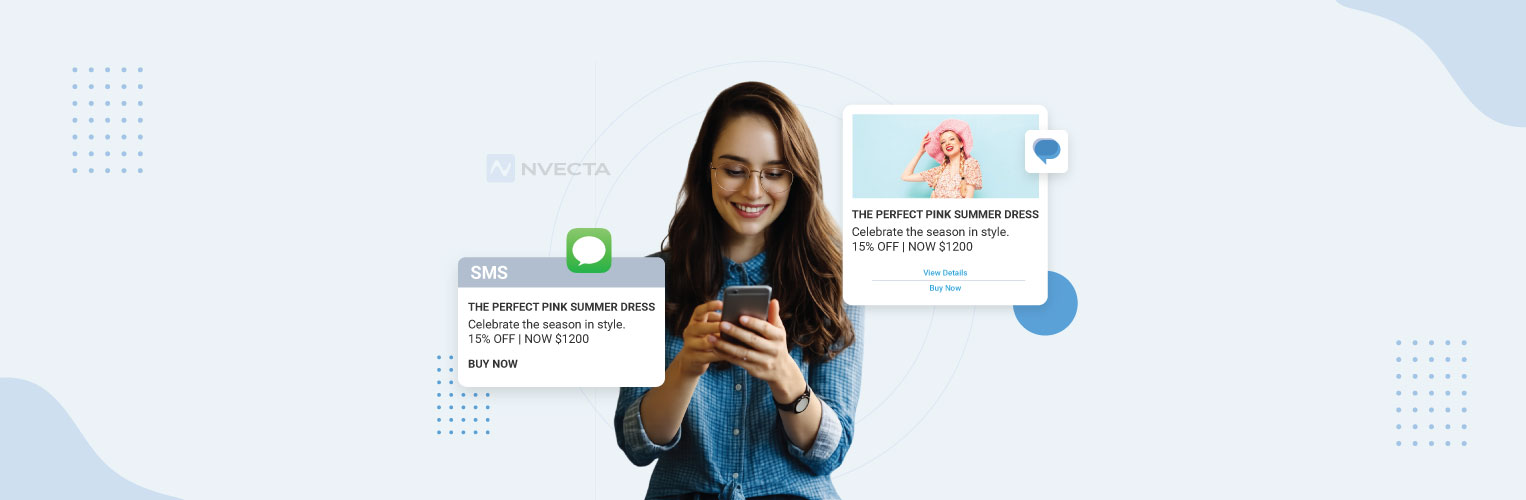
 Afreen Sheikh
📌 Quick Answer: RCS Messaging vs SMS Marketing
SMS delivers plain text up to 160 characters via the cellular network to any mobile device — no internet or smartphone required. RCS (Rich Communication Services) delivers rich media, interactive buttons, verified sender identity, and read receipts via a data connection on compatible Android and iOS 18+ devices. For marketers, the key difference is engagement: RCS sees 3–7x higher click-through rates than SMS and 80% campaign conversion rates, while SMS retains the critical advantage of universal reach on any device regardless of connectivity — making the two channels complementary rather than competitive.
SMS has long been a cornerstone of mobile communication—simple, reliable, and effective for reaching audiences quickly. However, in 2026, user expectations have evolved. People now engage with rich, interactive, and personalized content across multiple platforms, making traditional SMS feel limited and outdated.
This is where RCS messaging comes in, offering a more dynamic and engaging experience with features like rich media, read receipts, and interactive buttons. If you’re evaluating modern communication strategies, understanding the shift through RCS messaging vs SMS marketing can help you see why businesses are increasingly moving toward more immersive messaging solutions.
This is where RCS messaging comes in, offering a more dynamic and engaging experience with features like rich media, read receipts, and interactive buttons. If you’re evaluating modern communication strategies, understanding the shift from SMS to RCS messaging can help you see why businesses are increasingly moving toward more immersive messaging solutions.
Rich communication services or RCS messages are advanced text messages that can include images, buttons, carousels, maps, videos and verified sender profiles. These are interactive messages that look more like WhatsApp messages or in-app conversations, but are delivered through native messaging on Android devices.
This raises an important question- will RCS messaging replace SMS?
In this blog, let us find out the strengths of both channels and which is more suitable for the future of mobile messaging
What is RCS Messaging?
RCS stands for Rich Communication Services. It is a modern version of SMS designed to turn text messages into an interactive, media-rich conversation.
These are delivered directly through the phone’s native messaging app. SMS only delivers plain text and links, but RCS messages can include images, buttons, videos and other actionable content.
Brands can use RCS messaging to personalise plain-text messages, making them look like app-like conversations. This makes communication feel more like chatting over a messaging app.
Key Components of RCS Messaging for Brands Include-
- Rich media– send images, videos, GIFs and product carousels in your messages
- Interactive buttons– allow users to respond or take action with a single tap
- Verified sender identity– brand name logo to build trust
- Read receipt- see when the message is delivered and opened
- No character limit-deliver detailed information in a single message
These features turn basic messaging into a dynamic customer engagement channel. Such interactive messages encourage customers to take actions such as making a purchase or inquiring about services.
RCS vs SMS marketing — key statistics for 2026
Before choosing between RCS and SMS for your next campaign, the benchmark data is worth understanding. These figures show where each channel performs and why RCS adoption among brands is accelerating rapidly.
- RCS open rate: 90–95% — compared to SMS at approximately 98%. RCS open rates are nearly on par with SMS, but with significantly richer content, verified sender branding, and interactive capabilities that SMS cannot match (CM.com).
- 3–7x higher click-through rates — RCS marketing campaigns consistently deliver between three and seven times higher CTR than rich SMS campaigns. The combination of visual content and one-tap action buttons directly drives this uplift (Sinch).
- 80% campaign conversion rate — business campaigns using RCS messaging have demonstrated an 80% conversion rate, making it one of the highest-converting direct marketing channels available in 2026 (Sinch).
- +10% average order value — a well-executed interactive RCS campaign increases average order value by approximately 10% compared to equivalent campaigns on other channels (Sinch).
- 75% of business leaders plan to invest in RCS this year — confirming that RCS is moving from early-adopter territory into mainstream marketing infrastructure (Twilio).
- 59% of consumers prefer RCS over SMS for sensitive messages — for OTPs and account verification, nearly six in ten consumers now prefer RCS because the verified sender identity reduces phishing risk (Sinch).
These numbers confirm that RCS is not a theoretical upgrade — it is delivering measurable improvements in engagement, conversion, and consumer trust across live campaigns.
RCS vs SMS — feature comparison table
Here is a side-by-side comparison of RCS and SMS across the features that matter most to marketers and business teams evaluating which channel to use or how to combine both.
| Feature | SMS | RCS |
|---|---|---|
| Character limit | 160 characters per message | Up to 3,072 characters (no practical limit) |
| Media support | Text and links only | Images, videos, GIFs, carousels, audio, files |
| Interactive buttons | Not supported | Yes — single-tap CTA, reply, and action buttons |
| Read receipts | Delivery confirmation only | Full read receipts — know when message was opened |
| Verified sender identity | No — vulnerable to spoofing | Yes — verified brand logo and name displayed |
| Requires internet | No — cellular network only | Yes — needs mobile data or WiFi |
| Device compatibility | All mobile phones (smartphones and basic) | Android (native) + iPhone iOS 18+ (via Apple Messages) |
| Cost per message | Low — carrier-based flat rate | Higher — varies by carrier and content type |
| Open rate | ~98% | 90–95% |
| Click-through rate | Baseline | 3–7x higher than SMS |
| Best use case | OTPs, alerts, reminders, universal reach | Product promotions, interactive campaigns, booking flows |
Why SMS Marketing has been So Effective for Brands
SMS marketing is a simple, fast, and reliable way to reach customers. Almost every phone has the SMS feature, whether it’s a basic phone or a smartphone.
Brands don’t need to worry about device type, internet access or any app download before sending a message.
Messages reach quickly and are usually seen or read within minutes. This makes SMS marketing a standalone channel for reaching a large audience quickly.
Why SMS Marketing Still Works for Brands
Works on all phones- works on all mobile phones, both keypad and smartphones, across the network and locations.
- No internet required messages are sent over the cellular network
- High open rates -SMS are likely to be read quickly after being delivered
- Simple format- easy for users to read without any distractions
- Cost-effective– ideal for large-scale campaigns and alerts
SMS marketing is still one of the favourite communication channels for businesses.
Benefits of RCS Messaging for Brands
RCS messaging quickly grabs users’ attention as it has creative elements rather than plain text. Attractive messages stimulate users to take action or guide them through a process, building a more personal connection.
This helps engage customers effectively, benefiting brands in multiple ways. Below are the key benefits of RCS messaging for brands-
Personalised Experience
RCS messaging enables tailored content on the basis of customer behavior or preferences. Such personalized messages are helpful, contributing to customer satisfaction and response rates.
Enhance Product Showcase
RCS messaging presents products or services using pictures and structured formats. Customers can view features, pricing, and recommendations in a single message.
Streamline Customer Journey
A RCS message lets customers explore offers and take steps in the same conversation. This reduces friction and streamlines the path to quicker, more convenient customer actions.
Enable 2-Way Communication
RCS message lets customers reply, ask questions or choose a direct option within the message creating a real conversation. This provides a quick redressal mechanism without switching channels.
Stronger Brand Differentiation
RCS messages help brands stand out from competitors still using SMS marketing. Visually rich messages are more memorable to customers, helping brands stay top of mind.
With such customer-friendly messaging, brands can expect positive outcomes, including increased conversions, clicks, and open rates.
Top RCS Messaging Use Cases and Industry Examples
This type of messaging is suitable for situations where brands need to provide detailed information.
When a customer’s decision involves multiple options, confirmations, quick actions, visuals, such messages are very useful. Let’s have a look at the real-life use cases of RCS messaging-
Product/service promotions and offers
Send virtually rich messages to notify new arrivals, offers, seasonal collection in an organised format. Customers can explore options there itself and take immediate actions.
Order tracking and updates
Send rich messages including order confirmation, shipping details, and delivery status. Inform your customers throughout the purchase journey.
Appointment confirmation and reminders
Send messages for confirmed appointments and reminders with easy, clickable options to reschedule or cancel. Such timely reminders keep your customer engaged.
Easy customer support
Provide step-by-step guided assistance for common issues. With this, customers can resolve problems quickly without needing a support agent.
Education alerts and updates
Share important information, such as class details and reminders, to engage learners.
Post Purchase Feedback Request
Collect reviews and ratings for your product or service through a rich message. Mujhe quick response option to let customers share their experience.
Event invitations and updates
Send interactive invitations and schedules with response options in a single message. Interested persons can easily confirm and access event details.
Travel updates and checking details
Travel businesses can schedule boarding information and reminders to keep travellers informed throughout the journey.
Subscription renewal notices
Send subscription reminders before renewal dates and provide user-friendly management options. This helps in reducing churn and failed payments.
Return and refund guidance
Send a rich message for post-purchase processes, such as returns and refunds, to guide customers with clickable buttons.
Billing notifications and reminders
Send an interactive bill summary, due dates and reminders with payment options. Customers can review and act without having to search for information.
RCS Messaging Examples by Industry
Retail and eCommerce
- Create an interactive shopping experience directly in the message inbox
- Share attractive product visuals action button to increase conversions
- Increase brand awareness and royalty using verified brand profiles
- Personalise offers based on purchase behaviour or browsing
Banking and Finance
- Send transaction alerts securely and account activity
- Deliver payment reminders, amounts, and due dates
- Help customers identify suspicious activity quickly
- Share loan, credit card,d and other policy details in an arranged format
Healthcare
- Send appointment details, reminders, and rescheduling options
- Send the report availability to patients and follow-up steps
- Share preventive care information and wellness tips
Travel and Hospitality
- Deliver booking confirmation, check-in reminders, and boarding information
- Notify travellers about delays, gate changes, or cancellations
- Provide hotel and transport details in a single message
Limitations of RCS Messaging
The above benefits and use cases illustrate the powerful capabilities of RCS messaging, but it is currently in its early stages and does not yet match the universal reach of SMS marketing.
Brands must evaluate their audiences and other operational,technical factors before relying on RCS messages as a primary communication channel. It can work well with a multi-channel strategy.
Below are limitations a brand must consider-
Limited device support- RCS messaging works primarily on Android devices and compatible network so some customers may not receive these messages
Internet dependency– Rich messages need mobile data or WiFi, unlike SMS. This can affect message delivery in low-connectivity areas.
Limited Reach – Businesses cannot be sure that every customer will receive such a message, as RCS requires a specific device, operating system, network, and region.
Higher messaging costs– Sending RCS messages is more expensive than sending standard SMS.
RCS on iPhone — what iOS 18 means for marketers
One of the most significant developments for RCS in 2024 was Apple’s decision to add native RCS support in iOS 18, released in September 2024. This changed the fundamental reach calculation for RCS campaigns — iPhone users on iOS 18 and above can now send and receive RCS messages through the default Apple Messages app, without downloading any third-party application.
For marketers, this matters because the Android-only limitation was the single biggest barrier to committing to RCS as a primary channel. With iOS 18 RCS support now live, brands can plan RCS campaigns without automatically excluding the large portion of their audience using iPhones. It is worth noting that RCS on iOS is still rolling out carrier by carrier and country by country — not every iPhone user in every market has full RCS functionality yet, so audience device-mix analysis remains important before planning RCS-first campaigns.
The practical answer for most brands is a fallback strategy: responsible RCS platforms — including NVECTA CDP — automatically deliver the message as a standard SMS when RCS is unavailable on the recipient’s device or network. This means running RCS campaigns does not require abandoning SMS. The two channels work together as a layered delivery system: RCS-capable devices receive the rich, interactive version; everyone else receives the plain-text SMS version automatically. This approach maximises reach while capturing the engagement uplift of RCS wherever it is supported.
RCS vs SMS vs WhatsApp — a 3-channel comparison
Brands evaluating their messaging stack in 2026 increasingly need to understand how RCS, SMS, and WhatsApp compare — and when to use each. All three channels deliver messages to mobile users, but their reach, cost models, and use cases differ significantly.
| Channel | Reach | Rich media | Cost model | Best for |
|---|---|---|---|---|
| SMS | Universal — any mobile device, any network | Text and links only | Low flat rate per message | OTPs, alerts, reminders, guaranteed delivery |
| RCS | Android + iPhone iOS 18+ with carrier support | Images, video, carousels, interactive buttons | Carrier-billed, higher than SMS | Product promotions, booking flows, interactive campaigns |
| Opt-in users only across 180+ countries | Richest — images, video, documents, voice, catalogues | Conversation-based (per 24hr window) | Customer support, two-way conversations, commerce |
The most effective brand messaging strategies in 2026 use all three channels as complementary layers rather than competing alternatives. SMS provides the universal safety net. RCS drives higher engagement and conversion for campaign audiences on compatible devices. WhatsApp powers two-way customer conversations, support flows, and conversational commerce for opted-in users. To see how WhatsApp automation works alongside these channels, explore NVECTA’s guide to WhatsApp marketing automation.
When to use SMS vs RCS — a practical decision guide
Choosing between SMS and RCS is not an either/or decision for most brands. Understanding the scenarios where each channel performs best — and where combining them creates the strongest outcome — is the practical starting point.
Use SMS when:
- You need universal reach regardless of device type, smartphone model, or data connectivity — SMS reaches any mobile phone on any network
- The message is transactional — OTPs, two-factor authentication, bank alerts, appointment reminders, and delivery notifications where delivery reliability matters more than visual richness
- Budget is the primary constraint — SMS remains the most cost-effective channel for large-scale outreach, particularly for audiences in markets with lower smartphone penetration
- Your audience skews older or operates in regions where RCS carrier support is limited or inconsistent
Use RCS when:
- Your campaign goal is driving clicks, purchases, or in-message conversions — RCS’s 3–7x CTR uplift makes it the stronger channel for performance marketing
- You want verified brand identity in the message — the verified sender feature builds trust and reduces the risk of customers dismissing messages as spam
- The campaign involves product showcasing — carousels, images, and structured layouts make RCS far more effective for product launches, seasonal promotions, and new arrivals
- You need two-way interaction within the message — booking confirmations, support flows, and feedback collection all benefit from RCS’s interactive button capability
Use both together (recommended for most brands):
The most scalable approach is running RCS campaigns with automatic SMS fallback. Send the rich, interactive RCS version to compatible devices — and automatically deliver the plain SMS version to everyone else. This approach captures the full engagement uplift of RCS where it is available while maintaining the universal reach guarantee of SMS. NVECTA CDP supports this layered delivery natively, routing each message to the right format based on the recipient’s device capability without any manual management.
Will RCS Messaging Replace SMS Marketing?
RCS messaging is still evolving; of course, it offers personalised, interactive mobile communication, but it cannot replace SMS marketing.
Brands cannot switch to RCS messages as such messaging depends on phone type, network support, and whether the feature is enabled on the device. SMS marketing still prevails as it has a universal reach.
Moreover, people trust SMS as a more secure channel for important messages like OTPs and bank alerts, as it has been used for years. They instantly recognise a message as they trust it.
RCS won’t replace SMS marketing; it will complement and grow alongside it. Brands can create a balanced communication strategy. They can use RCS for interactive messaging and SMS for guaranteed delivery.
How NVECTA CDP Powers RCS Messaging Campaigns
NVECTA is a customer data platform that enables brands to deliver powerful RCS messaging. CDP capabilities utilise customer data to send the right message to the right people at the right time.
Brands can run RCS campaigns to send rich messages to its customers. Such messages are highly personalized based on customer needs and preferences. These campaigns are backed by automation and smart intelligence.
Its key features include-
- Smart audience targeting utilising real customer data
- Automated messages triggered by user actions
- Personalized content based on behavior
- Pre-built customer journeys
- Two-way conversations for better interaction
- Delivery fallback to SMS for broader reach
- Detailed analytics to track engagement and conversions
Wrapping up: RCS messaging vs SMS marketing
Email and social media marketing are interactive channels, but now messages can be interactive too with RCS.
RCS is still in its adoption stage. Brands are choosing RCS over SMS to reach large audiences and generate measurable outcomes.
Both RCS and SMS serve different purposes and have their own benefits and limitations, but where you want interaction to be more engaging, choose RCS.
Ready to Get Started with Rich Communication Services?
Try NVECTA CDP for RCS messaging and enhance your marketing strategy.
