














 Email
Email SMS
SMS Whatsapp
 Web Push
 App Push
 Audience Sync for Ads
 Popups
 Channel A/B Testing
  Control groups Analysis
 Frequency Capping
 Funnel Analysis
 Cohort Analysis
 RFM Analysis
 Signup Forms
 Surveys
 NPS
NPS Landing pages personalization
  Website A/B Testing
  PWA/TWA
 Heatmaps
 Session Recording
 Wix
Wix Shopify
 Magento
 Woocommerce
 eCommerce D2C
  Mutual Funds
 Insurance
 Lending
  Recipes
  Knowledgebase
 Developer Docs
 Product Updates
 App Marketplace
 Academy
 Ebooks
 Case Studies
 Blog
Blog Templates
 Afreen Sheikh
Travel brands collect extensive customer data. For travellers, every travel decision is quite personal, from choosing a holiday destination to booking a flight or a hotel. They expect brands to understand their needs and provide a personalised experience. To do this, it is important to use customer data effectively and make your travellers feel valued when planning a tour.
In the travel industry, customer data is often spread across multiple platforms, including websites, mobile apps, booking systems, email, and customer support tools. This scattered data makes it hard to see or track customers’ actions, resulting in poor communication and missed booking opportunities.
Customer Data Platforms solve this difficulty by bringing all customer data together and turning it into a single, clear customer view.
In the context of CDPs in the Travel Industry, they also empower travel brands with advanced automation capabilities, enabling more personalised experiences and efficient customer engagement across every touchpoint.
In this blog, we explore how CDPs work in the travel industry, why they matter, and how they help brands create better customer experiences. We will also discuss how NVECTA CDP supports travel brands in utilising customer data to connect with travellers.
What is a Customer Data Platform and How is it Different From CRM and DMPs?
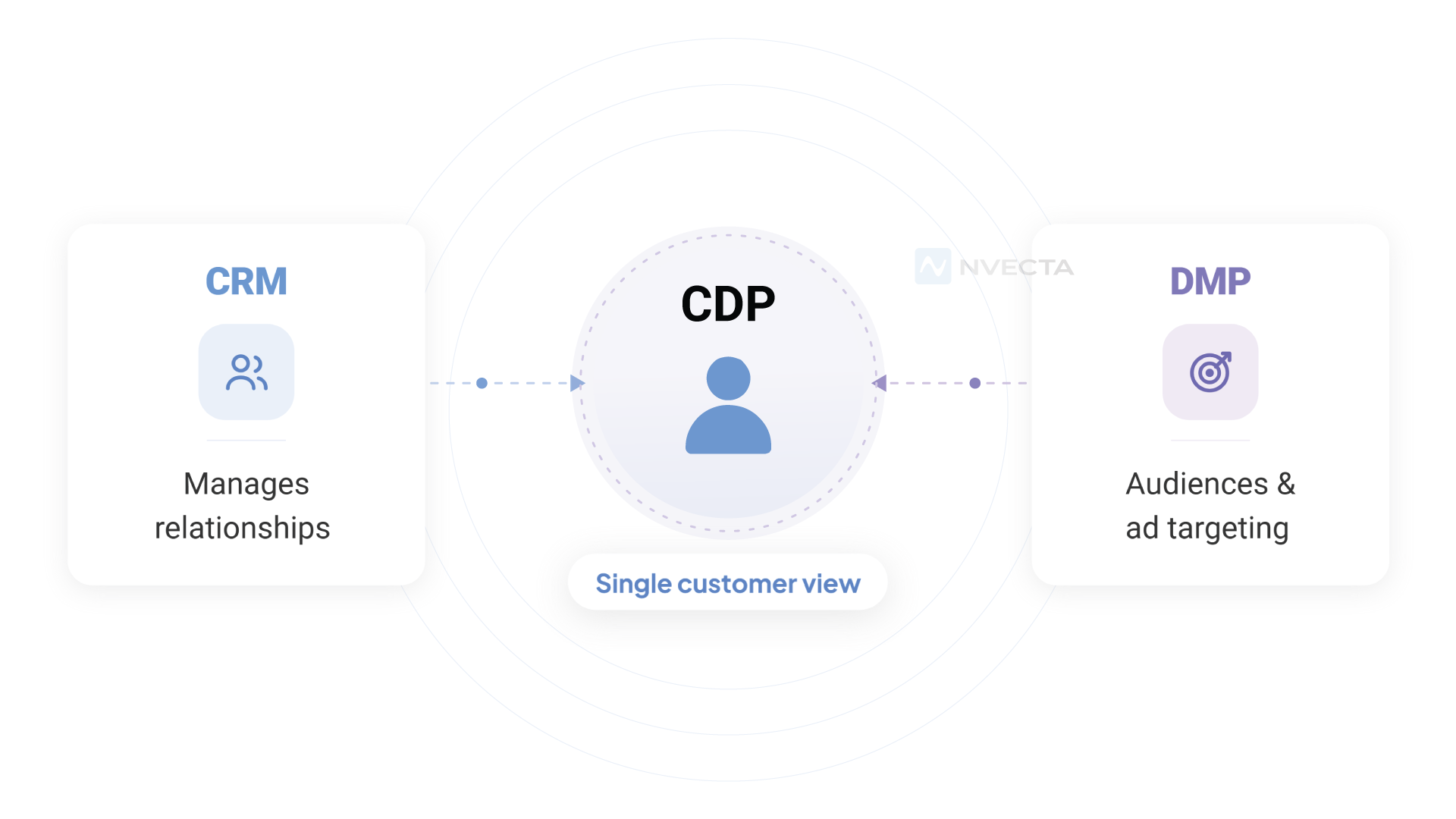
A Customer Data Platform (CDP) is a system that collects customer data from different sources and brings it together in one place.
In simple words, a CDP helps travel brands understand who their customers are, what they like, and how they interact across websites, apps, emails, and bookings.
Instead of data sitting in separate systems, a CDP creates a single, comprehensive customer profile that businesses can actually use for marketing and engagement.
In the travel ecosystem, a CDP is different from tools like CRM and DMP. A CRM mainly focuses on managing customer relationships, bookings, and support interactions, usually for known customers.
A DMP is used for advertising and works mostly with anonymous data for short-term targeting. A CDP connects both by combining known and unknown customer data,
Online and offline interactions, and real-time behaviour, make it especially useful for travel brands with long and complex customer journeys.
Why the Travel Industry Needs CDPs More Than Ever
Fragmented Customer Journeys
Travel journeys rarely follow a straight path. Travellers can browse destinations on websites, compare prices on apps, click on ads, abandon bookings, and return later through a different channel.
When these actions remain scattered across different channels, brands struggle to understand customers’ intent and lose valuable opportunities to re-engage them at the right time.
Digital First Travellers
Modern travellers mostly rely on digital platforms to plan and book trips. They expect quick responses, relevant recommendations, and smooth experiences across every digital touchpoint.
Without a unified view of customer data, meeting these expectations becomes challenging.
High Competition and Price Sensitivity
The travel industry is highly competitive, and travellers are often driven by price.
CDPs help brands identify high-intent users and deliver timely, personalised offers that stand out and drive conversions.
Types of Customer Data in the Travel Industry
Types of Customer Data in the Travel Industry
Travel brands collect data from multiple sources throughout the customer journey. Understanding the different types of customer data helps brands use it more effectively to personalise experiences and drive bookings.
| Data Type | What It Includes | How It Helps Travel Brands |
|---|---|---|
| First-Party Data | Personal details, travel preferences, past booking history | Forms the foundation for meaningful personalisation |
| Behavioural Data | Destination searches, website visits, app usage, email engagement | Reveals traveller interest and booking intent |
| Transactional Data | Confirmed bookings, cancellations, refunds, upgrades, and payments | Uncovers buying behaviour and travel patterns |
| Offline & Supported Booking Data | Call centre interactions, travel desk queries, and in-person support | Completes the full picture of the customer journey |
Each data type plays a unique role. When brought together through a CDP, they create a complete and actionable view of every traveller, helping brands move from generic messaging to truly relevant engagement.
How CDPs Work in the Travel Industry
Data Collection from various Sources
Customer Data Platforms are designed to collect customer information wherever travellers interact with a brand.
This covers websites, mobile apps, booking systems, marketing tools, and even call centres. CDPs bring all data together and ensure that no interaction is missed.
Identity Resolution and 360° Customer View
A traveller switches quickly between devices or channels while planning a trip. A CDP connects interactions across different channels and later fuses them into a single customer profile.
Such tracking creates a clear and complete picture of each traveller, helping brands understand who their customers really are.
Real Time Data Activation
CDPs operate in real time, enabling a brand to respond as soon as a traveller takes action. This helps in sending timely reminders, offers, or updates when customers’ interest is highest.
Easy Audience Segmentation
With all data in one place, CDPs enable advanced AI-driven segmentation, making it easy to group travellers based on their behaviour, preferences, or travel intent.
Consistent Engagement Across all Channels
CDPs ensure customer data is utilised smoothly across all the channels, such as messages, emails, apps, and websites. This promotes a consistent engagement and a more connected travel experience.
Key Benefits of CDPs for Travel Brands
Unified Customer Profiles
Customer Data Platforms gather all traveller data together in one place.
This provides travel businesses with a clear and complete view of each customer—including their preferences, behaviour, and past bookings—enabling more effective behavioural personalisation.
With everything set in a connected way. Marketers can better understand travellers and plan more relevant interactions.
Personalisation at Scale
CDPs are equipped with amazing tools that make it easy to personalise experiences for larger audiences.
Travel brands can easily send tailored messages, destination suggestions, and offers based on what travellers are actually interested in, rather than relying on generic communication.
Improved Marketing ROI
With better targeting and timing, CDPs help in reducing unnecessary marketing efforts. Brands reach the right travellers with the right message, improving conversions and making marketing spend more effective.
Better Retention and Loyalty
When travellers receive consistent and relevant experiences, they feel valued. This builds trust and encourages repeat bookings, and strengthens long-term customer loyalty.
CDP Use Cases Across the Travel Customer Journey
Inspiration and Discovery Stage
At the beginning of the travel journey, travellers keep exploring destinations and gathering ideas. CDPs help travel brands understand these early interests by tracking travellers’ browsing behaviour and past travel history.
Such tracking makes it easier to share relevant content, such as destination suggestions and inspiring offers. This keeps travellers engaged and guides them toward the next step.
Booking and Conversion Stage
When travellers are ready to book, CDPs play a major role in reducing drop-offs.
By using real-time data activation, travel brands can send abandoned booking reminders, price updates, or personalised offers.
This timely and relevant communication helps travellers complete their bookings with confidence.
On Trip Engagement
During the trip, CDPs enable helpful and well-timed communication. Travel brands can share booking details, travel updates, and relevant add-ons or local recommendations, creating a smoother and more connected experience.
Post Trip Retention
After the trip ends, CDPs help brands stay connected. Follow-up messages, feedback requests, loyalty rewards, and personalised future travel suggestions encourage repeat bookings and long-term relationships.
CDPs for Different Travel Segments
Airlines
Airlines use Customer Data Platforms to bring together passenger data from bookings, loyalty programs, mobile apps, and service interactions.
With a CDP, airlines can share personalised flight updates, relevant upgrade offers, and loyalty rewards, creating smoother and more connected travel experiences.
Hotels and Resorts
For hotels and resorts, CDPs help deliver more personalised stays. By using guest preferences, past stay history, and booking data, brands can tailor communication before, during, and after the stay.
This leads to better guest satisfaction, stronger relationships, and higher chances of repeat visits.
Online Travel Agencies
Online travel agencies deal with large volumes of customer searches and bookings. CDPs help unify this data to understand traveller intent and deliver relevant deals, recommendations, and timely messages across channels.
Tour and Experience Providers
Tour and experience providers use CDPs to suggest activities based on traveller interests and previous bookings.
This helps improve engagement, increase conversions, and build long-term customer relationships.
CDPs and Omnichannel Marketing in Travel
Customer Data Platforms facilitate travel brands to connect with travellers through all channels in a smooth and consistent way.
Instead of sending separate messages, CDPs make sure every interaction feels relevant and well-timed.
Email, SMS, WhatsApp, and Push Notifications
With a CDP, travel brands can send useful messages through email, SMS, WhatsApp, and push notifications.
These messages are based on what travellers are doing, such as searching for trips or completing a booking. This makes communication more personal and helpful.
Website and App Personalisation
CDPs allow travel brands to personalise website and app content in real time. Travellers can see destinations, deals, and recommendations that match their interests, making their experience easier and more enjoyable.
Paid Media and Retargeting
CDPs help brands show relevant ads to travellers who have already shown interest. This improves ad performance, reduces unnecessary spending, and increases bookings.
Data Privacy, Consent, and Trust in Travel CDPs
In the travel industry, trust plays a major role in customer decisions.
Travellers share sensitive information, including personal details, identification data, and payment information, making data privacy a top priority for travel brands.
Any misuse or mishandling of this data can quickly damage brand credibility and customer confidence.
Customer Data Platforms help travel brands manage data privacy more responsibly by centralising consent and preference management.
CDPs ensure that customer data is collected, stored, and used only with proper permission, making it easier for brands to respect traveller choices across all channels.
By offering secure data storage and clear consent controls, CDPs also support compliance with data protection regulations.
More importantly, they help travel brands build long-term trust by being transparent and respectful with customer data, leading to stronger relationships and greater loyalty over time.
How to Choose the Right CDP for a Travel Business
Choosing the right Customer Data Platform is an important decision for any travel brand.
The right CDP should not only manage data but also support growth, personalisation, and long-term customer engagement, helping businesses effectively increase customer engagement across every touchpoint.
Strong Data Unification Capabilities
A good CDP should be able to collect and unify data from all travel touchpoints, including websites, mobile apps, booking engines, CRM systems, and offline sources. This ensures a complete and accurate view of every traveller.
Real Time Data Processing
Travel decisions happen quickly, so real-time data is essential. The CDP should capture and process customer actions instantly, allowing brands to respond with timely messages, offers, and updates.
Easy Integration with Existing Tools
The CDP should integrate smoothly with your current marketing, analytics, and communication tools. Easy integration reduces setup time and ensures data flows seamlessly across systems.
Omnichannel Marketing Support
Look for a CDP that supports multiple channels such as email, SMS, WhatsApp, push notifications, and on-site personalisation. This helps deliver consistent experiences across the entire customer journey.
Scalability and Ease of Use
Travel businesses often experience seasonal spikes in traffic and bookings. The CDP should scale easily and be simple for teams to use without heavy technical effort.
Data Privacy and Security
Finally, the CDP should offer strong data security and consent management features to help protect customer data and build trust.
Best CDP for Travel Industry: How NVECTA Improves Personalisation and Conversions
NVECTA is built for travel brands that want to deliver memorable, connected, and highly personalised journeys.
Travel planning is rarely a one-time action. Travellers explore destinations, compare prices, pause their decisions, and return when the timing feels right.
NVECTA understands this complexity and brings all traveller data into a single platform, helping travel brands clearly understand who their travellers are, much like an ecommerce CDP unifies customer data to deliver a complete, actionable view.
What they are interested in, and when they are most likely to book, allows them to engage at the right moment with the right message.
Unified Traveller Profiles
NVECTA connects data from websites, mobile apps, booking engines, marketing campaigns, and offline interactions into one unified traveller profile.
Instead of scattered data across multiple tools, travel brands get a complete view of each traveller in one place.
This includes preferences, past trips, browsing behaviour, and communication history, helping teams make better marketing and engagement decisions.
Smart Audience Segmentation
With NVECTA, travel brands can easily create audience segments based on destinations searched, booking behaviour, travel frequency, and intent signals.
This makes it possible to send highly relevant messages to specific traveller groups. As a result, communication feels more personal, engagement improves, and conversion rates increase.
Real Time Journey Tracking
NVECTA tracks traveller actions in real time, allowing brands to respond instantly.
Whether a traveller abandons a booking, revisits a destination page, or shows high interest in a particular route or hotel, brands can trigger timely reminders, offers, or updates.
This real-time response helps capture intent before it fades.
Omnichannel Travel Communication
NVECTA enables travel brands to communicate across multiple channels from a single platform. From emails and SMS to WhatsApp, push notifications, and on-site messages, every interaction stays consistent.
This ensures travellers receive relevant updates and offers on the channels they prefer, without repetitive or disconnected messaging.
Personalised Website and App Experiences
Using real traveller data, NVECTA helps brands personalise website and app experiences in real time.
Travellers can see destination recommendations, deals, and content that match their interests. This reduces decision effort and helps travellers move faster from discovery to booking.
Automated Travel Journeys
NVECTA enables travel brands to automate journeys across the entire travel lifecycle using Customer Lifecycle Management Software.
From inspiration and booking reminders to post-trip feedback and loyalty engagement, automation can be seamlessly implemented.
This saves time for teams while ensuring consistent and timely communication with travellers.
AI-Powered Insights for Travel Marketing
The platform provides intelligent insights that help travel brands understand traveller behaviour and identify high-intent users.
These insights make it easier to spot trends, optimise campaigns, and improve overall marketing performance without relying on guesswork.
Scalable and Easy to Integrate
NVECTA integrates smoothly with existing travel technology, including booking systems, CRMs, and analytics tools.
It is built to scale easily during peak travel seasons, making it suitable for both fast-growing travel businesses and established brands handling large volumes of travellers.
Future Trends of CDPs in the Travel Industry
As traveller expectations continue to rise, CDPs will play a bigger role in shaping travel experiences.
The future will focus on predictive personalisation, where brands can anticipate travellers’ needs even before bookings are made.
Real-time engagement will become more important, allowing travel brands to respond instantly across channels.
At the same time, data privacy and consent will remain a priority, building trust with travellers. CDPs will continue to evolve as the central systems connecting data, marketing, and customer experience in the travel industry.
Conclusion
Customer Data Platforms are essential for travel brands because they help bring all customer data into one place, segment travellers more effectively, and deliver personalised, relevant marketing messages. With a CDP, travel companies can improve customer experiences, strengthen loyalty, and re-engage inactive travellers through timely, meaningful communication.
If you want to upgrade your travel marketing strategy, NVECTA offers a powerful CDP built for modern travel brands. NVECTA provides a unified, actionable view of travellers and supports seamless omnichannel engagement across email, SMS, WhatsApp, push notifications, and on-site experiences.
With easy integration and a user-friendly platform, NVECTA helps travel teams activate customer data quickly and turn insights into real results.
Explore NVECTA with a live demo and discover smarter CDP and omnichannel marketing for travel brands.
FAQs
Q1. What is a CDP in the travel industry?
A CDP (Customer Data Platform) in the travel industry is a system that collects and unifies customer data from multiple sources, such as websites, apps, booking engines, and call centres, into a single traveller profile, helping brands deliver personalised experiences.
Q2. How is a CDP different from a CRM for travel brands?
A CRM manages relationships and interactions with known customers. A CDP goes further by combining both known and unknown customer data, online and offline behaviour, and real-time actions, giving travel brands a much more complete view of every traveller.
Q3. What types of data do CDPs collect in travel?
CDPs in the travel industry collect first-party, behavioural, transactional, and offline booking data. Together, these give brands a 360° view of each traveller’s preferences, intent, and journey.
Q4. How do CDPs help travel brands increase bookings?
CDPs enable real-time data activation, so brands can send abandoned booking reminders, personalised offers, and timely price updates reaching travellers at the exact moment they are most likely to convert.
Q5. Are CDPs suitable for all travel businesses?
Yes. Whether you are an airline, hotel, online travel agency, or tour operator, a CDP can be scaled and customised to fit your data needs, customer volume, and marketing goals.
Q6. How do CDPs handle data privacy in the travel industry?
CDPs centralise consent and preference management, ensuring customer data is collected and used only with proper permission. This helps travel brands stay compliant with data protection regulations and build long-term traveller trust.
