














 Email
Email SMS
SMS Whatsapp
 Web Push
 App Push
 Audience Sync for Ads
 Popups
 Channel A/B Testing
  Control groups Analysis
 Frequency Capping
 Funnel Analysis
 Cohort Analysis
 RFM Analysis
 Signup Forms
 Surveys
 NPS
NPS Landing pages personalization
  Website A/B Testing
  PWA/TWA
 Heatmaps
 Session Recording
 Wix
Wix Shopify
 Magento
 Woocommerce
 eCommerce D2C
  Mutual Funds
 Insurance
 Lending
  Recipes
  Knowledgebase
 Developer Docs
 Product Updates
 App Marketplace
 Academy
 Ebooks
 Case Studies
 Blog
Blog Templates
 Aparupa Saha
Having a customer journey map in place is crucial today as it helps you understand how your consumers engage with your business. However, a journey map does not guarantee that you are necessarily fulfilling your customer’s expectations.
There may be scope for improvement and, thus, untapped potential for learning how your customers act and how to use that knowledge to achieve higher profits in this customer-centric age.
Now, you must be wondering how your business can make the most of the customer journey mapping process. Today, in this post, we will be looking at nine simple steps for customer journey optimisation.
What is Customer Journey Optimisation?
Customer journey optimisation (CJO) is the ongoing work of fixing the touchpoints a customer goes through with your brand, so fewer people get stuck or give up along the way. The goal is simple. Make it easier for someone to go from “just heard of you” to “bought from you” to “buys again.”
A lot of people use this interchangeably with customer journey mapping, but the two aren’t the same. Mapping is where you lay out the path and spot where customers struggle. Optimisation is the part where you actually do something about it: close the gaps, fix the clunky handoffs, speed up the slow steps. The map just tells you what’s wrong. Optimisation is the repair work.
Here’s why it matters more in 2026 than it did a few years ago. Your customers don’t compare you to your competitors anymore. They compare you to the best experience they’ve had anywhere, from any app or brand. So one confusing checkout, or one support reply that takes two days, is often all it takes for them to leave. With the customer experience market already sitting around $12 billion and growing nearly 16% a year, that’s a costly thing to ignore.
Customer Journey Mapping vs Optimisation
Ye table aapke content ko competitors se alag karega, kyunki zyada blogs ye difference clearly nahi dikhate:
| Aspect | Customer Journey Mapping | Customer Journey Optimization |
|---|---|---|
| What it does | Lays out the path a customer takes and shows where they struggle | Actually fixes those weak spots so more customers convert |
| Nature | A one-time (or occasional) diagnostic snapshot | An ongoing, repeating loop |
| Main question | “What does the journey look like?” | “How do we make the journey work better?” |
| Output | A diagram or document | Higher conversions, lower drop-off, better retention |
| Role of data | Used to build the map | Used continuously to test, adjust, and re-test |
| 2026 angle | Mostly manual research and workshops | Increasingly AI-assisted and real-time |
9 Steps For Customer Journey Optimisation
1. Filter Personas
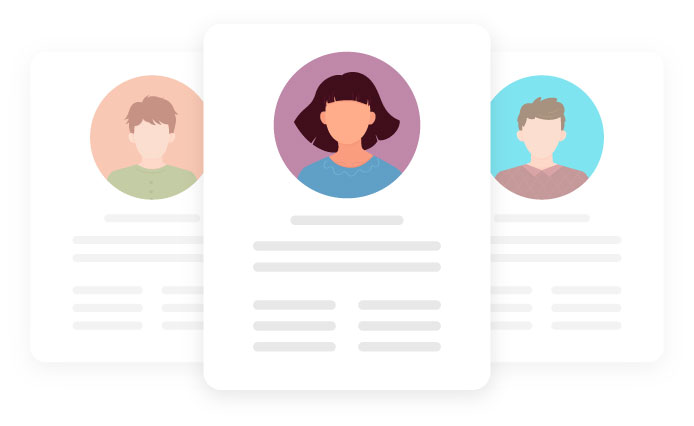
In today’s time, the most important part of customer engagement is personas. With the help of refined and shifting personas, marketing and sales teams can persuade consumers online and further enhance the customer experience.
But, on the other hand, if the personas used to encourage engagement are incorrect, marketers and sellers will strive to get traction online and eventually fail to engage. If you want to do customer journey optimisation, then make sure that you have accurate personas.
You must have the basics included in the information about your personas’ age, household earnings, marital status, location, gender, etc. However, there is other relevant data you require, such as:
- How do they want to communicate with vendors?
- What are other items they have bought in your niche?
- How do they hear about products/services like yours?
- Where are they active while looking for solutions to problems?
- What do they engage with about your competitors?
- What content formats do they involve?
The solutions to these questions will give you an insight into how your company can become a more reliable source of customer information.
Moreover, possible differences can contribute insight into a particular persona, such as concerns about the product/service or the integration ease into their present system.
Incorporating these as part of the persona to outline pain points and help put your product/service is necessary for helping them in their lives or roles.
2. Recognise all Touchpoints
Anytime potential or existing customers reach your business at specific touchpoints, the important information should be documented and assembled for easy access.
Usually, many companies focus on the purchasing decision, leaving them unaware of data that could change the customer experience.
However, pre-sale and post-sale experiences are also very crucial, as happy customers are equal to loyal ones and can give insight into areas that need improvement at both ends of the sales cycle.
While each company is diverse in nature, the most obvious touchpoints customers have gone through before, during, and after purchase include:
Prospect stage
- Testimonials
- Social Media Interactions
- Reviews
- Advertisements
- Word of Mouth
- Marketing/PR
Engagement
- Store/Office/Website
- Point of Sale
- Catalog/Brochure
- Staff/Sales Team Interaction
- Current Promotions
Post-sale
- Marketing Emails
- Invoice
- Online Help Desk/Live
- Service/Support Team
If you have any of these touchpoints in your customer journey map, your business needs to pull data out of it.
3. Create Multiple Customer Journeys
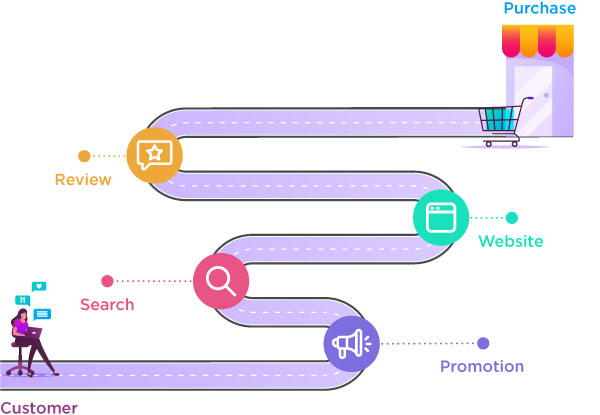
While planning to onboard customers and making them happy, keep in mind that every customer is not the same, and treating them in the same way can make them unhappy.
While customer feedback and reviews may confer a 90% satisfaction rate, the primary metric to measure is satisfaction across the whole journey from sale to onboarding to post-sale.
Therefore, organisations have to put themselves in their customer’s shoes and design scenarios that map out many journeys.
Moreover, customer journeys get more complicated; companies have to anticipate the routes they may need and optimise CX along with the various touchpoints rather than relying on one hypothetical journey.
To achieve this, you have to develop an understanding of what is working and what’s not. For instance, are there high abandonment rates at the purchasing stage?
Setting a change of mind aside, is the speed of the interaction a problem or the number of forms needed to fill out? Then, energise your marketing teams by taking those communications as customers, observing the experience, and prioritising the most critical gaps and opportunities.
The benefit of this kind of specificity is the driving force behind the rise of personalisation. However, your e-commerce website should adapt based on the data you’ve accumulated on an individual visitor (e.g., pages visited, purchases made, etc.).
4. Overlay Data
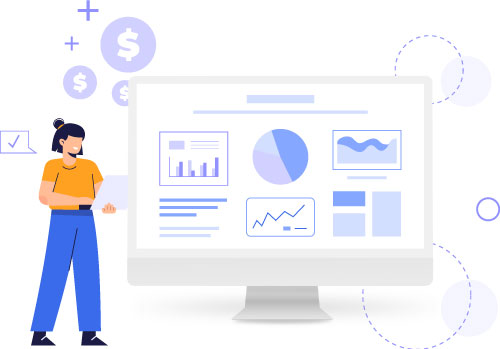
Today, big data is the new normal; companies are working hard to use the information that can help improve customer experience. Therefore, data from all business sources can be important, so the solution is to accumulate data from all touchpoints that have played a part in the customer journey.
The best way to do this is to overlay data from distinct parts of the business to get a complete view of how a customer communicates with your company, from your website to different social media networks to live chat support.
There are some overlay tactics that you need to keep in mind while mining a variety of data that can help you in customer journey optimisation.
- Analytical: This data has been used by most companies. Companies are already collecting data from social media platforms, digital marketing software, website interactions, and paid media channels. It further comprises data about a customer’s location, age, and purchasing habits. This data is important for determining broad trends and user behaviour.
- Anecdotal: This data can be collected from individual customers’ experiences and stories. But you can’t collect this data as easily as analytical information; some steps need to be considered while framing its objectives and gaining insight. One such good method is social media monitoring. In this method, you can collect anecdotal information, while customer service representatives entering feedback into a CRM can be invaluable to familiarizing the mapping process.
5. Identify the Gaps
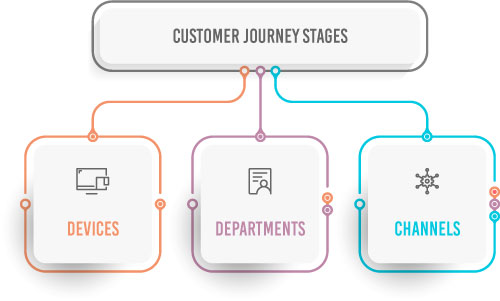
‘Gaps’ indicate any point within a journey when a customer may choose to take their business elsewhere, as friction blocks a steady path forward. Therefore, a customer map requires considering all possible journeys to avoid customers falling through the cracks or going elsewhere for their business.
Gaps can exist in three stages of the customer journey, which involve:
- Devices – Whenever a user switches from one device to another, e.g., mobile to tablet
- Departments – When one department hands over the customer to another without providing accurate data or information
- Channels – When the user journey goes from one channel to another (e.g., from the social media page to the website)
All the above does not indicate that the transitions are bad, but if you fail to manage them properly, they can become gaps, which is how you can miss potential customers. Recognising these gaps and removing them from your customer journey will further ensure that your customers are going through all sales process stages and onboarding with comparative ease.
6. Get Enterprise-Wide Buy-In
Commitment and Leadership from the top down are necessary for any marketing and sales efforts to achieve.
With customers now at the core of any business, principal decision-makers must be conscious of the value of customer journey mapping and how it can further change the customer experience.
As per McKinsey, while most managers understand the journey idea, many wonder whether that pays off in revenue.
The answer to that is evident through the outcomes many businesses that prioritise journey mapping have achieved:
- 55% of customers will pay more for a good customer experience
- 13% of consumers report that at least 15 people have had frustrating experiences with companies
- 72% will say at least six people when they have a positive experience
- Out of 26 troubled customers, only one will complain – the rest will go somewhere else, indicating ‘customer satisfaction reports may be over-representing positive reviews.
Again, this is where data collection and analysis become necessary.
7. Align with Sales
As marketing and sales automation expedites, teams must work together to push sales and revenue. New technologies allow unique ways to interact with customers. A mutual understanding of how they operate and their value in the customer experience is necessary for today’s marketers and sellers.
After all, misalignment is directly proportional to revenue, with lost marketing outlay and sales costing organizations approx $1 trillion every year. Furthermore, a lack of alignment leads to 61-71% of B2B content waste and a failure to convert 78% of marketing leads into sales.
The best example of this is how sales can push your marketing team to better understand your customers. Of course, eventually, salespeople are at the frontline and have to manage those last-minute objections.
But, sellers have insight into what diverse customers need to hear before they seem comfortable purchasing. This information can be invaluable to a marketing team looking to enhance customer experience and get a customer over the line.
This alignment should also refer to other businesses, such as finance, IT, and customer service.
8. Develop KPIs
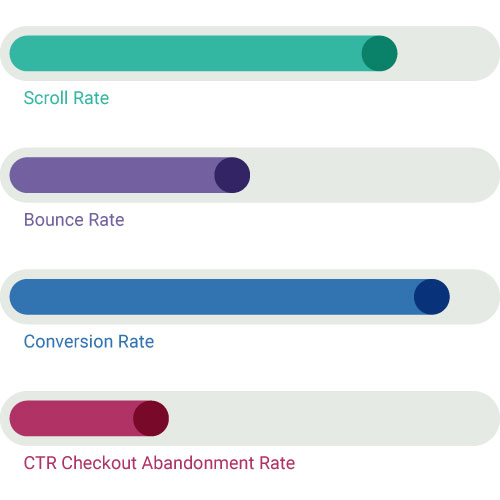
If you don’t measure the customer journey map’s success, you can’t expect it to improve much. Certainly, ‘revenue’ is the final KPI, but you can also monitor it to optimise customer journey mapping and its impact on customer experience.
In terms of an e-commerce website, some critical metrics to measure are:
- Scroll rate
- Bounce Rate
- Conversion Rate
- CTR Checkout Abandonment Rate
Introducing these as KPIs for marketing departments can further prioritise the customer journey and make sure that these metrics are part of reporting and analysis.
It can also give insight for the sales department as they learn different customer journey points and the stages that may require more attention and support.
Post-sales, KPIs are also worth controlling to determine how support staff is usually contacted, reviews received, ease of onboarding, and referrals.
9. Adapt and Change
Remember, don’t make your organisation commit the mistake of building a comprehensive customer journey map. As customer’s behaviours keep on changing, so will their journeys, especially with technologies emerging all the time.
As a result, an efficient customer journey map needed constant review and revision.
To avoid losing customers over their experience, designate time for the main players to come together and analyse the data on offer and insights across the business to serve in the customer journey.
Has anything broken or shifted? What changes have been made? What are customers saying about their experience, and is it different from 6 months ago? Are there any fresh gaps in the business that have come to light?
Taking the time to explore the evolution of the customer experience with your brand will serve to keep ahead of developments and make sure the relevant employees are informed and primed for any developments coming down the line.
Customer Journey Optimisation Infographic

Share this Infographic on your website
Wrapping it up
Customer experience is not all about touchpoints. Instead, it’s about how a customer communicates with a brand at all points along the customer journey.
This kind of thinking can expect an internal shift and the whole workforce to think about the journey rather than merely several interactions. Those organisations that learn it will enjoy improved customer satisfaction and loyalty, developments in cost and revenue, and an edge over competitors. We hope that you find this blog on customer journey optimisation helpful.
FaQs
What is customer journey optimisation?
It’s the ongoing work of fixing the points where customers get stuck while dealing with your brand, so fewer of them give up before buying. Basically, you’re making the trip from “never heard of you” to “buys from you regularly” less annoying.
What’s the difference between customer journey mapping and optimisation?
Mapping shows you the route and where people struggle on it. Optimisation is when you go in and fix those spots. You can have a beautiful map and still be losing customers, because a map doesn’t change anything by itself. You need the second step.
Why does customer journey optimisation matter in 2026?
Because people aren’t comparing you to your competitors anymore. They’re comparing you to whatever the smoothest experience they’ve had recently was, on any app at all. So a checkout that confuses them, or a support reply that takes two days, and they’re gone. A lot of buyers are also shopping through AI assistants now, which has changed how the journey even works.
How do you optimise a customer journey?
Start with personas you actually trust, then write down every touchpoint a customer hits before, during, and after they buy. Look at where they’re dropping off, fix those spots, and put a few KPIs in place so you can tell whether it worked. Then you do it again in a few months, because things change.
What metrics should I track?
For an online store, watch your bounce rate, scroll rate, conversion rate, and checkout abandonment. After the sale, look at how often people contact support, what your reviews say, how smooth onboarding feels, and whether anyone’s referring you. Revenue is the headline number, but these are the ones that tell you what’s actually going on.
Where do gaps usually show up in a customer journey?
Three common places. When someone switches devices, like starting on their phone and finishing on a laptop. When one team passes a customer to another, and the second team doesn’t get the full story. And when a customer jumps channels, say from your Instagram to your website. None of theseise problems on its own. They turn into problems when nobody’s managing the handoff.
How is AI changing customer journey optimisation?
Quite a lot. AI personalises content on the fly, pulls customer data together across channels, and, with agentic AI, it can run whole support conversations on its own and only pull in a human when it’s actually needed. Roughly 73% of shoppers already use AI somewhere when they buy, so it’s worth making sure an AI assistant can find and recommend your product.
Is customer journey optimisation a one-time task?
No, and that’s the part people get wrong. Customer behaviour keeps shifting, especially as new tech keeps showing up, so you have to keep revisiting the journey. Treat it like something you maintain, not something you finish once and file away.
Read more:
