














 Email
Email SMS
SMS Whatsapp
 Web Push
 App Push
 Audience Sync for Ads
 Popups
 Channel A/B Testing
  Control groups Analysis
 Frequency Capping
 Funnel Analysis
 Cohort Analysis
 RFM Analysis
 Signup Forms
 Surveys
 NPS
NPS Landing pages personalization
  Website A/B Testing
  PWA/TWA
 Heatmaps
 Session Recording
 Wix
Wix Shopify
 Magento
 Woocommerce
 eCommerce D2C
  Mutual Funds
 Insurance
 Lending
  Recipes
  Knowledgebase
 Developer Docs
 Product Updates
 App Marketplace
 Academy
 Ebooks
 Case Studies
 Blog
Blog Templates
 Alisha
Quick answer: Customer segmentation is the practice of dividing customers into groups based on shared characteristics like demographics, behavior, psychographics, or geography. The 4 main types are demographic, behavioral, psychographic, and geographic segmentation. According to HubSpot, segmented campaigns get 14.31% higher opens and 100.95% higher click-through rates than non-segmented ones, and Forbes reports companies using segmentation see a 760% lift in revenue from email campaigns.
What is Customer Segmentation: The word “segment” means “division“, or splitting something into parts based on shared characteristics. Customer segmentation is the process of dividing customers into meaningful groups based on factors like age, need, industry, behavior, or buying patterns.
It’s also known as Market Segmentation, though the two terms have slightly different applications in practice. Customer segmentation focuses on existing customers and prospects, while market segmentation looks at the broader addressable market.
Customer segmentation matters because it lets marketing and sales teams focus on specific customer subgroups rather than treating a vast potential audience as one big undifferentiated mass. McKinsey research shows 71% of consumers now expect personalized experiences, and 76% get frustrated when this doesn’t happen, which makes segmentation the foundation of nearly every modern marketing strategy.
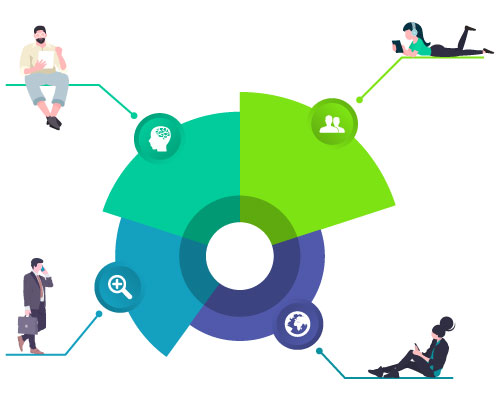
Segmentation matters most when you’re building content for specific audiences. Generic content treats everyone the same. Segmented content shows up with the right message for the right reader, which translates directly into measurably better marketing performance.
Marketing tactics like pay-per-click advertising (PPC), search engine optimization, email marketing, and social media marketing all start with one common element: content. Keep customer segmentation in mind throughout your content planning and creation, not just at the end.
Say you’re about to launch an email marketing campaign. You need customized content for each user group so the messaging actually lands. That’s where customer segmentation earns its keep, even at small scales. A welcome flow for a brand-new subscriber should look nothing like a re-engagement message for a customer who hasn’t opened an email in 90 days.
4 Main Types of Customer Segmentation
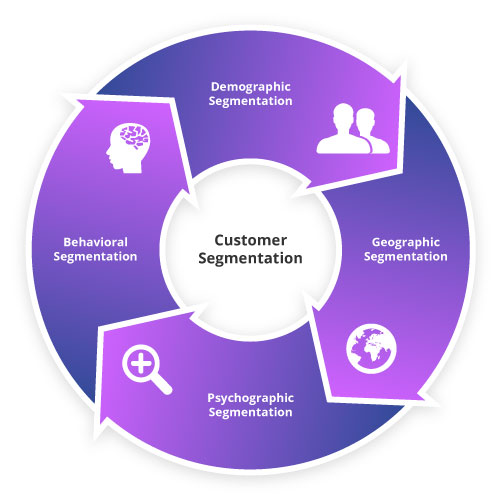
No single segmentation method tells the whole story. That’s why most businesses worth paying attention to mix at least two or three of the four core types together. One tells you who someone is, another reveals how they shop, and a third might explain why they buy in the first place. Using them in combination gives you a much sharper picture of your audience than any one approach alone. Plugging this layered data into customer engagement platforms lets you actually act on those segments instead of just staring at spreadsheets.
| Type | What It Captures | Best For | Real Brand Example |
|---|---|---|---|
| Demographic | Age, gender, income, education | Mass-market personalization | Banking products by age tier |
| Geographic | Country, region, city, climate | Localized offers and inventory | Uber Moto launch in India |
| Psychographic | Lifestyle, values, interests | Brand affinity and identity-led | Nike “athlete identity” |
| Behavioral | Purchase patterns, engagement | Personalization at scale | Netflix recommendations |
1. Demographic Segmentation
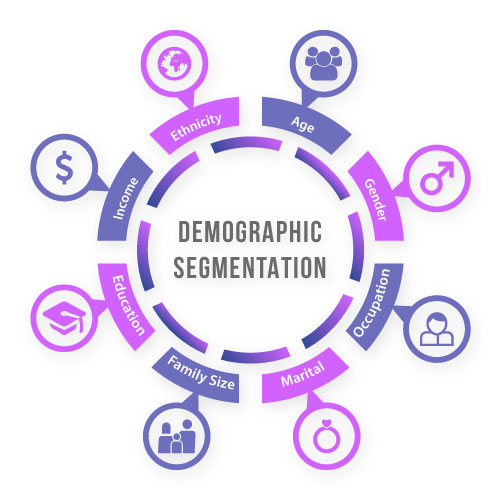
The word “demographic” refers to a specific section of the population, or the statistical characteristics that describe human populations: age, race, gender, marital status, income, education, and employment. You can divide consumers using these factors to improve sales targeting and tailor messaging that resonates with each group’s lived reality.
Example: A textile company that sells woolen wear knows different gender and age groups prefer different fabric types and styles. Segmenting the audience by gender + age lets them push warmer styles to one group, lighter blends to another, and youth-oriented designs to a third. For deeper coverage of how this type works specifically, see our breakdown of demographic segmentation.
Advantages
- Saves time by avoiding sending irrelevant products to mismatched audiences.
- Targeted messaging tends to improve customer retention and loyalty over time.
- Marketers can adapt products or services faster to suit the specific target segment.
Disadvantages
- Limited production runs because each segment caps out at a smaller customer base.
- Costs can rise because shorter production runs and product variations are more expensive per unit.
- Demographic data alone is surface-level and misses why people actually buy.
2. Geographic Segmentation
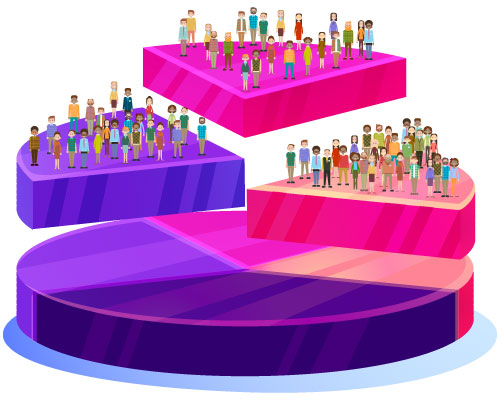
Geographic segmentation is pretty straightforward you group customers by where they live. That could mean splitting them by country, state, city, or region, and some businesses go even more granular with climate zones or population density. A sunscreen brand targeting coastal cities is going to message differently than one selling to mountain towns. Rural, urban, and suburban splits also matter depending on what you’re selling. The tricky part is actually acting on this data at scale, which is where tools like customer support software help — you can tailor responses and offers based on where someone is located without manually sorting through every ticket.
Example: A UK clothing brand like Superdry sells funky T-shirts, trousers, and swimwear in Mumbai during November while shipping blazers, trench coats, and long coats to London in the same month. One brand sells different styles based on local weather and culture, which only works because geographic segmentation drives the assortment decisions.
Advantages
- Geographic boundaries are well-defined (borders, population, density, topography), which makes it easier for companies to spot customer needs and produce accordingly.
- Companies can group people with similar regional needs and preferences without complex behavioral data.
- Densely populated areas open large market potential, where a company can earn more by offering a wide range of products.
Disadvantages
- Weather can only be predicted, not guaranteed, so brands betting heavily on weather-based geographic segments take on real risk.
- Geographic segmentation alone misses buying behavior. Two people in the same city can have completely different needs and shopping patterns.
3. Psychographic Segmentation
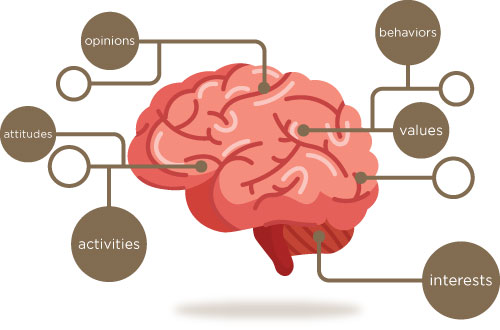
Psychographic segmentation groups target segments, whether prospects, past customers, or current customers, based on beliefs, traits, attitudes, interests, lifestyle, social class, and other psychological factors. The art of this segment type is identifying patterns that connect people who don’t necessarily share obvious demographic similarities. Done well, psychographic segmentation lets marketers build content that feels personally written rather than mass-distributed.
Example: A textile company designing clothes for different lifestyles (athletes, office-goers, students) groups customers by what they do, not who they are demographically. Athletes pull toward sportswear, office workers gravitate to formal pieces, students often want casual style at accessible price points. The manufacturer can then produce SKUs that match how each group actually lives.
An Athlete Management System can help track athlete preferences and performance data, letting manufacturers design apparel that improves comfort and functionality based on real usage signals. Retailers can also use POS system customer experience insights to understand lifestyle-based buying habits and personalize promotions in-store.
Advantages
- Captures consumer preferences, beliefs, and thought processes that surface-level data misses entirely.
- Marketers can create satisfaction and loyalty by catering to varied interests and opinions in a way that feels personal.
- This segment type performs best when products or services involve customization or identity expression.
Disadvantages
- Harder to implement than demographic or geographic segmentation because the data is messier and slower to collect.
- Each psychographic segment usually covers fewer customers, which means lower volume per campaign.
4. Behavioral Segmentation
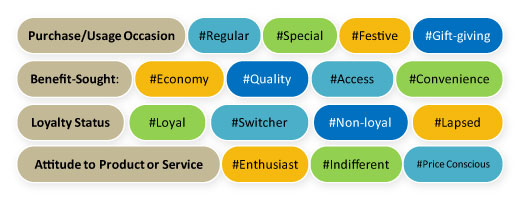
Behavioral segmentation divides consumers based on how they actually interact with a company. Their browsing patterns, purchase history, engagement frequency, channel preference, and loyalty behavior all feed into the segments. The goal is to address specific needs each customer group is showing through behavior rather than assuming what they want based on profile data.
Example: Fashion designers like Sabyasachi, House of Masaba, and Vedika M tailor clothes based on customer needs and desires. They customize dresses according to specific orders, which is behavioral segmentation taken to its logical extreme. Netflix and Spotify run the same pattern at much larger scale, where recommendation engines decide what each individual sees next based on what they’ve watched or listened to before.
Advantages
- Lets brands use time and resources more efficiently because the signals are concrete rather than assumed.
- Helps develop smarter marketing strategies to improve and expand the customer base.
- Behavioral patterns help predict future customer actions and likely outcomes, which improves campaign timing.
Disadvantages
- Behavior changes constantly, which makes static behavioral segments quickly outdated.
- Covers fewer potential consumers per segment because behavior is granular.
- Harder to measure cleanly because much of the behavior is qualitative and subjective.
Companies can build a much sharper understanding of consumer needs by combining segmentation types rather than picking just one, then adjusting pricing and messaging strategies for each combined segment.
Advanced Customer Segmentation Models
Beyond the four core types, three advanced segmentation models matter most for serious marketing programs in 2026. Each one builds on the basics but adds analytical depth that drives better activation.
RFM (Recency, Frequency, Monetary)
RFM segmentation scores each customer on three dimensions: how recently they bought (Recency), how often they buy (Frequency), and how much they spend (Monetary). The combined score sorts customers into segments like “VIP”, “loyal”, “at-risk”, “churned”, and “new”. RFM is one of the most-used segmentation models in ecommerce because the data is straightforward to collect and the segments translate immediately into campaign decisions.
Customer Lifetime Value (CLV) Segmentation
CLV segmentation groups customers by predicted total lifetime spend. The typical breakdown is VIP, mid-value, and low-value tiers, with each tier receiving different acquisition cost budgets, service levels, and retention investment. CLV segments matter because they tell you which customers actually deserve white-glove treatment and which ones should get cost-efficient self-service.
Predictive AI Segmentation
Predictive segmentation uses machine learning to surface segments humans wouldn’t have thought to define. Churn risk scores, purchase intent predictions, and propensity-to-upgrade segments all fall in this category. The brands using AI agents for segmentation in 2026 are pulling measurably ahead because the segments adapt in real time based on behavior rather than sitting frozen for months.
10 Real Customer Segmentation Examples from Top Brands
Theory matters, but real-world execution teaches more. Here are 10 named brands running customer segmentation programs worth studying:
- Netflix: Behavioral segmentation based on viewing history powers content recommendations across 33+ million different versions of the homepage.
- Spotify: Behavioral segmentation (listening data) combined with milestone events like Spotify Wrapped turns user data into viral retention moments.
- Amazon: Combines RFM scoring, behavioral signals, and purchase intent prediction to power “frequently bought together” and personalized product recommendations.
- Sephora: Demographic + behavioral + loyalty tier segmentation drives the Beauty Insider program that syncs across web, app, and stores.
- Nike: Psychographic segmentation by athlete identity (runner, basketball player, lifestyle athlete) combines with behavioral signals from Nike App and SNKRS activity.
- Starbucks: RFM segmentation drives Rewards tier progression, combined with behavioral signals (mobile order frequency) and location-based offers.
- Airbnb: Geographic and behavioral segmentation tied to trip planning patterns lets the platform surface relevant listings before users finish their search.
- HubSpot: B2B firmographic segmentation (industry, company size, revenue) plus behavioral lifecycle stage scoring drives content and product targeting.
- Mailchimp: Behavioral engagement scoring sorts subscribers into active, lapsed, and at-risk segments for tailored re-engagement flows.
- Bank of America: Demographic + behavioral + life-stage segmentation drives proactive financial guidance and product recommendations tied to specific customer moments.
B2B vs B2C Customer Segmentation Differences
Customer segmentation plays out differently in B2B versus B2C contexts, and treating them the same is one of the most common mistakes teams make:
- B2B segmentation: Centers on firmographic data (industry, company size, annual revenue, geography), technographic data (tech stack), account-based segmentation, and decision-maker role within the buying committee. Deal cycles are longer and each account is worth significantly more.
- B2C segmentation: Combines demographic, behavioral, psychographic, geographic, life-stage, and value-based approaches. Volume is much higher per segment but per-customer value is lower, which changes the economics of how much personalization makes sense.
Customer Segmentation by Industry
The “right” segmentation approach varies by industry. Here’s how the priorities shift:
- Ecommerce and retail: RFM, behavioral, and cart abandonment segments drive the most measurable ROI.
- SaaS: Lifecycle stage, product usage, plan tier, and churn risk segments matter most.
- BFSI and banking: Life stage, risk profile, and product holding segments drive cross-sell and retention.
- Travel and hospitality: Trip type, loyalty tier, and booking lead time segments improve targeting.
- Media and subscription: Engagement level, content preference, and churn risk segments reduce voluntary churn.
How to Build a Customer Segmentation Strategy (5-Step Framework)
Building a segmentation program from scratch can feel overwhelming. This 5-step framework is the practical sequence most successful programs follow:
- Step 1: Define your segmentation goal. Acquisition, retention, upsell, or churn prevention? Each goal calls for different segmentation variables.
- Step 2: Unify your customer data. Segmentation breaks when data sits in silos. Pulling everything into a Customer Data Platform is usually step one before any serious segmentation work begins.
- Step 3: Choose your segmentation variables. Pick which of the 4 types (or advanced models like RFM, CLV, AI) actually fit your goal. Don’t try to use all of them at once.
- Step 4: Create and validate segments. Each segment needs to be sizeable enough to matter, actionable enough to act on, and accessible through your existing channels.
- Step 5: Activate segments across channels. Use customer journey orchestration tools to send the right message to each segment via the right channel (email, SMS, push, in-app, ads).
Customer Segmentation Tools and Technology
A complete segmentation tech stack usually includes five categories of tools:
- Customer Data Platforms (CDP). The foundation layer that unifies customer data across sources and creates single customer profiles to segment against.
- Analytics tools. Google Analytics, Mixpanel, Heap, and Amplitude help define behavioral segments based on real product usage.
- CRM platforms. HubSpot, Salesforce, and similar CRMs store the customer relationship data that powers firmographic and lifecycle segments.
- Marketing automation platforms. Trigger campaigns based on segment membership and behavior changes in real time using campaign personalization across channels.
- AI/predictive segmentation tools. Machine learning models that surface segments humans wouldn’t have created manually (churn risk, propensity, predicted CLV).
For a deeper comparison of tools available today, see our roundup of Best Customer Segmentation Software.
AI and Predictive Customer Segmentation in 2026
The biggest shift in customer segmentation heading into 2026 is the move from static rule-based segments to dynamic AI-driven ones. The old pattern: marketing operations defines a segment (“customers who bought twice in 90 days and live in tier-1 cities”), the segment runs for months, and nobody updates it until something breaks. The new pattern: AI models continuously score every customer on multiple dimensions, segments adapt automatically, and the system gets smarter with each new data point.
Predictive segments (churn risk, purchase intent, predicted CLV, next-best-action) outperform static ones because they capture what customers are about to do rather than what they’ve already done. This matters most for retention and upsell programs where timing is everything. A churn-risk segment that updates daily catches at-risk customers two weeks earlier than a quarterly review would, which means more saves and less wasted retention budget.
The catch worth saying out loud: AI segmentation only works on clean, unified customer data. Adding AI to fragmented data just generates bad segments faster. The data foundation has to come first.
How Customer Segmentation Benefits Your Business
Customer segmentation lets you use marketing strategies more efficiently, save time and money, and avoid wasting resources on mismatched audiences. Marketers gain a sharper understanding of customer needs and preferences, which usually translates into measurable sales growth with a more cost-effective strategy. HubSpot’s data is instructive here: segmented campaigns get 14.31% higher opens and 100.95% higher click-through rates compared to non-segmented blasts.
Customer segmentation also builds credibility by letting you focus on what truly matters to each customer group. By using a customer data platform, businesses can unify and analyze customer information more effectively, which leads to sharper segmentation strategies and fewer manual data reconciliation headaches.
This helps identify high-value audiences and lets you engage customers with the right message, at the right time, in the right format. The downstream effect is better customer experience scores and stronger business outcomes across the board.
Common Customer Segmentation Mistakes
Six mistakes show up repeatedly in segmentation programs that underperform. Worth flagging because the failure modes are predictable:
- Too many segments. 50 micro-segments looks sophisticated until your team can’t actually run a campaign for each one. Start with 5-10 and expand based on what actually delivers ROI.
- Too few segments. Three giant segments lose all the personalization power. The sweet spot for most B2C brands is 10-25 active segments.
- Using only demographic data. Demographics tell you who customers are but not why they buy. Behavioral and psychographic data add the missing context.
- Static segments that never refresh. Customer behavior shifts constantly. Segments built last quarter often don’t match this quarter’s customer reality.
- No measurement plan per segment. If you can’t tell which segments are actually driving ROI, you can’t optimize the program.
- Building segments without channel activation in mind. A beautifully crafted segment is useless if you can’t actually reach it via your existing channels.
Frequently Asked Questions
What is customer segmentation?
Customer segmentation is the practice of dividing customers into meaningful groups based on shared characteristics like demographics, behavior, psychographics, geography, or value. The goal is to deliver more relevant messaging, products, and experiences to each group rather than treating all customers as one undifferentiated audience.
What are the 4 types of customer segmentation?
The 4 main types of customer segmentation are demographic (age, gender, income), geographic (country, region, city), psychographic (lifestyle, values, interests), and behavioral (purchase patterns, engagement, usage). Most modern programs combine 2 or 3 of these types rather than relying on just one, because each type captures something different.
What is the customer segment definition?
A customer segment is a group of customers who share one or more characteristics that influence how they buy, what they value, or how they engage with a brand. Examples include “first-time buyers in tier-1 cities”, “lapsed VIP customers”, or “B2B SaaS companies with 50-200 employees”. Segments make marketing more efficient because each one can be targeted with messaging tuned to its specific traits.
What are some customer segmentation examples?
Real customer segmentation examples include Netflix (behavioral segments by viewing history), Spotify (behavioral + milestone segments like Wrapped), Amazon (RFM + behavioral + intent), Sephora (loyalty tier + behavior), Nike (psychographic athlete identity), Starbucks (RFM + location), HubSpot (B2B firmographic + lifecycle), and Bank of America (life-stage + product holding).
How do you segment customers?
Segment customers by defining a clear goal (acquisition, retention, upsell), unifying customer data across sources, choosing relevant segmentation variables (demographic, behavioral, psychographic, geographic, or advanced models like RFM or AI predictive), creating and validating segments for size and actionability, activating segments across your marketing channels, and measuring performance per segment to iterate over time.
What is the difference between market segmentation and customer segmentation?
Market segmentation looks at the broader addressable market and divides potential buyers into groups before any of them become customers. Customer segmentation focuses on existing customers and known prospects, dividing them based on actual behavior and characteristics. Market segmentation is wider in scope but shallower in data depth. Customer segmentation is narrower but uses richer first-party data.
What is RFM customer segmentation?
RFM (Recency, Frequency, Monetary) is a behavioral segmentation model that scores each customer on three dimensions: how recently they purchased, how often they purchase, and how much they spend. The combined score sorts customers into segments like VIP, loyal, at-risk, and churned. RFM is widely used in ecommerce because the data is easy to collect and the resulting segments translate directly into campaign decisions.
How does AI improve customer segmentation?
AI improves customer segmentation by surfacing segments humans wouldn’t have thought to create, scoring customers continuously rather than in periodic batches, and predicting future behavior (churn risk, purchase intent, predicted CLV) instead of just describing past behavior. AI-driven segments adapt in real time as customer behavior shifts, which catches at-risk customers earlier and identifies upsell opportunities sooner.
What are types of customer segmentation in marketing?
The main types of customer segmentation in marketing are demographic, geographic, psychographic, behavioral, RFM (recency, frequency, monetary), CLV (customer lifetime value), firmographic for B2B (industry, company size, revenue), technographic (tech stack), and AI-driven predictive segmentation (churn risk, purchase intent). Most teams combine 2-4 of these for any given campaign or program.
What’s the difference between B2B and B2C customer segmentation?
B2B segmentation focuses on firmographic data (industry, company size, revenue), technographic data, account-based criteria, and decision-maker roles. B2C segmentation centers on demographic, behavioral, psychographic, geographic, and life-stage factors. B2B segments are usually smaller in volume but higher in per-account value. B2C segments are larger and per-customer value is lower, which changes the economics of personalization.
What customer segmentation tools are best in 2026?
The best customer segmentation tools in 2026 combine a Customer Data Platform (CDP) for unified data, marketing automation for activation across channels, analytics tools for behavioral signal collection, and AI-driven predictive models for advanced segments. Specific tools to evaluate include warehouse-native CDPs, composable CDPs, and dedicated segmentation platforms with built-in predictive capabilities.
Conclusion
Companies that try to target a massive undifferentiated population rarely survive in the long run. Even email marketing needs customer segmentation to actually work. Segmentation lets a business cater to customer needs and preferences across different audiences without losing the personalization that drives modern marketing performance.
Get the foundation right with unified data, pick 2-3 segmentation types that fit your goal, validate segments for size and actionability, and activate them across the channels your customers actually use. The brands that win with customer segmentation in 2026 are usually the ones that pick fewer segments, ship them well, and iterate based on what actually drives revenue rather than what looked clever in a planning meeting.
Also Read:
