














 Email
Email SMS
SMS Whatsapp
 Web Push
 App Push
 Audience Sync for Ads
 Popups
 Channel A/B Testing
  Control groups Analysis
 Frequency Capping
 Funnel Analysis
 Cohort Analysis
 RFM Analysis
 Signup Forms
 Surveys
 NPS
NPS Landing pages personalization
  Website A/B Testing
  PWA/TWA
 Heatmaps
 Session Recording
 Wix
Wix Shopify
 Magento
 Woocommerce
 eCommerce D2C
  Mutual Funds
 Insurance
 Lending
  Recipes
  Knowledgebase
 Developer Docs
 Product Updates
 App Marketplace
 Academy
 Ebooks
 Case Studies
 Blog
Blog Templates
 Afreen Sheikh
Quick answer: A customer engagement platform (CEP) is software that orchestrates personalized interactions across email, SMS, push, in-app, and web channels from a single platform. According to Salesforce, 76% of customers expect consistent personalized engagement across every channel they use. The top picks for 2026 include Nvecta for CDP-native engagement, Braze for enterprise omnichannel, MoEngage for mobile-first apps, and Klaviyo for ecommerce. This guide covers 14 of the best platforms with features, pricing, AI capabilities, and use-case recommendations.
Building real connections with customers matters more than ever for every business. These connections go far beyond transactions and create the kind of loyalty that compounds over years. As the digital environment gets noisier, brands need smarter ways to keep customers engaged across every channel they use.
Customer engagement platforms make this possible at scale. These platforms use data and automation to make sure every interaction is personalized, relevant, and timed right.
The right technology turns occasional buyers into loyal supporters, lifts satisfaction, and builds the kind of trust that drives long-term revenue. According to Salesforce State of CX research, 76% of customers expect consistent personalized interactions across every channel, and McKinsey reports that companies excelling at personalization generate 40% more revenue than competitors who don’t.
This blog covers what customer engagement platforms actually are, why businesses need them in 2026, and the 14 best options worth evaluating today.
Understanding Customer Engagement Platform
A customer engagement platform is a software solution that helps businesses connect and interact with customers at every touchpoint in the lifecycle. It combines tools for messaging, data analysis, and personalization to create tailored experiences that actually feel personal rather than templated.
These platforms unify communication across multiple channels including email, SMS, in-app notifications, push, WhatsApp, and social media so the experience stays consistent regardless of where the customer engages. For managing social channels effectively, businesses often pair their CEP with all-in-one SMO tools that handle scheduling, analytics, and content optimization across platforms. Most CEPs also include behavioral analytics, advanced customer segmentation, and automation to compress what used to be manual marketing work into hours rather than weeks.
The short version: a customer engagement platform gives businesses the tools to understand customer behavior in real time and deliver meaningful, timely interactions that lift loyalty, satisfaction, and revenue together.
CEP vs CRM vs CDP vs Marketing Automation
Most teams confuse these four categories, but they solve genuinely different problems. Understanding the difference helps you pick the right tool rather than buying overlapping software:
CRM (Customer Relationship Management) manages sales relationships and pipeline. Salespeople log calls, track deals, and forecast revenue. CRM is built for the sales team.
CDP (Customer Data Platform) unifies customer data from every system into a single profile. The customer data platform sits underneath everything else and feeds clean data to all your marketing tools. It’s the foundation, not the activation layer.
Marketing automation triggers campaigns based on behavior. Welcome series, cart abandonment, lead nurturing. Marketing automation focuses primarily on email workflows and is great at what it does, but it’s narrower than a full CEP.
CEP (Customer Engagement Platform) orchestrates cross-channel engagement in real time. It coordinates email, SMS, push, in-app, web, and WhatsApp so customers experience one brand voice rather than fragmented messages from disconnected tools. The best CEPs sit on top of a CDP and use AI to make decisions in real time.
Importance of Customer Engagement Platforms for Businesses
Customer engagement platforms have become essential for any business serious about building long-term customer relationships. They simplify what would otherwise be incredibly complex work: managing multi-channel campaigns, analyzing behavior across millions of touchpoints, and personalizing every message at scale.
The time you get back is the real win here. Once automation handles the repetitive stuff — sending emails, segmenting lists, updating records — your team can actually spend their hours on strategy and creative work that makes a difference. And because everything runs on real-time data, you’re not waiting until the end of a campaign to figure out what flopped. You can adjust on the fly, double down on what’s working, and cut what isn’t. That same responsiveness is why more teams are building out WhatsApp message templates alongside their email flows — it’s another channel where fast, automated responses keep conversations moving without someone manually typing every reply.
Companies running mature CEPs consistently see measurably higher retention rates, better customer satisfaction scores, and revenue lifts in the 15-25% range compared to fragmented stacks. Pairing solid CEP infrastructure with strong customer retention strategies is usually what separates brands that grow predictably from brands that stall after the first few thousand customers.
Key Features to Look For in 2026
Not every “customer engagement platform” actually delivers on the full promise. The platforms worth evaluating in 2026 share a specific feature set worth checking off during your shortlist:
- Omnichannel orchestration across email, SMS, push, in-app, web, and WhatsApp from a single platform rather than stitching tools together.
- Real-time segmentation that reacts to behavior in the moment, not on a 24-hour batch cycle.
- AI-driven decisioning that picks the right channel, right content, and right send time per individual recipient.
- Native CDP layer or deep CDP integration so personalization runs on clean, unified data.
- Journey orchestration with branching logic that adapts the path per customer based on actions and signals.
- A/B and multivariate testing built into every campaign, not bolted on as a separate tool.
- Behavioral analytics and clean reporting that surface what’s actually working and what isn’t.
- Integrations with your CRM, ecommerce platform, ad accounts, and analytics stack.
- Compliance support for GDPR, CCPA, and emerging regulations like India’s DPDP Act.
How to Choose the Right Customer Engagement Platform
Picking a CEP isn’t about chasing the longest feature list. It’s about matching the tool to your actual workflow and growth stage. This 5-step framework is how most successful teams approach the decision:
Step 1: Define your team size and complexity. A 5-person marketing team has totally different needs than a 100-person operation. SMB-focused tools like HubSpot Marketing Hub work brilliantly for smaller teams but hit ceilings as the customer base scales past a few hundred thousand. Enterprise platforms handle millions of customers but bring overhead that smaller teams don’t need yet.
Step 2: Identify your essential channels. Are you primarily email and SMS? Or do you need full omnichannel including push, WhatsApp, in-app, and on-site? Match the platform’s native channel support to what your customers actually use, not what you think they might use someday.
Step 3: Assess your data foundation. Do you already have a CDP underneath? If not, prioritize platforms that include CDP capabilities natively. Bolting personalization onto fragmented data just generates inconsistent customer experiences faster.
Step 4: Evaluate AI capabilities for 2026. Every platform now markets AI, but the depth varies enormously. Look for platforms with AI that actually makes decisions (predictive send times, next-best-action, content selection) rather than AI-flavored buzzwords with no real automation underneath. The AI agents running on mature platforms today are pulling measurably ahead of basic chatbot-style features.
Step 5: Pilot before committing. Every major platform offers a free trial or proof-of-concept. Run a real 2-4 week pilot with your actual team and actual data. Platforms that look identical on paper often feel completely different in daily use.
How Internal Communication Supports Customer Engagement
Customer engagement isn’t just about external communication. Strong internal collaboration matters just as much, especially when support, sales, and marketing teams need to stay aligned on the customer story. When teams move together, response times tighten, messaging stays consistent, and customers actually feel the difference.
Tools like Troop Messenger, a team chat and collaboration platform, help teams communicate in real time, share files quickly, and streamline the workflows that ultimately translate into better customer experiences downstream.
14 Best Customer Engagement Platforms in 2026
1. Nvecta
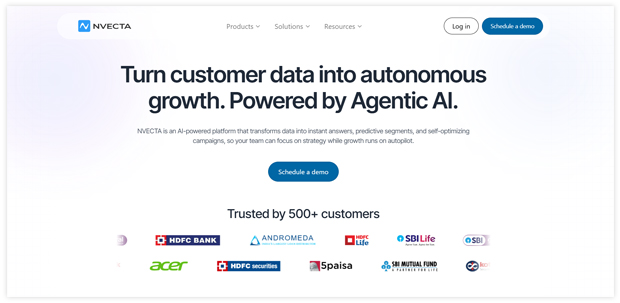
Nvecta stands out as a versatile customer engagement platform built to handle the full range of modern engagement needs. Trusted by brands across SaaS, ecommerce, BFSI, and DTC, Nvecta delivers the kind of unified engagement layer most teams piece together from 4-5 separate tools elsewhere.
The platform is known for its clean interface, depth of analytics, and true multi-channel orchestration. Every feature is designed around the principle that customer experiences should be consistent regardless of where the customer is engaging from. Pair that with the broader customer journey orchestration infrastructure and most teams get a complete engagement stack in one platform.
Nvecta specializes in delivering personalized experiences powered by behavioral data and predictive AI. Teams can target the right audience at the right time across the right channel without needing to manually maintain dozens of segments. Whether you’re sending welcome emails, push notifications, SMS campaigns, or in-app messages, Nvecta makes the workflow feel natural rather than templated.
The platform is built for scale, which means it works well for early-stage startups but doesn’t break when you hit millions of customers. Automation handles the repetitive heavy-lifting so marketers can spend time on strategy and creative rather than fighting their tools. The result is the kind of long-term customer loyalty that compounds across quarters, not the short-term campaign spikes that fade by Monday.
Features
- AI-Powered Insights: Nvecta uses AI to analyze customer data and surface actionable recommendations. This helps teams create smarter campaigns that resonate with the right audience and drive better outcomes.
- Dynamic Journey Builder: Build tailored customer journeys visually with a drag-and-drop interface. Every step in the journey adapts to the customer’s actual behavior rather than running on fixed schedules.
- Multi-Channel Engagement: Nvecta covers email, SMS, RCS, WhatsApp, in-app messages, and push notifications from one platform. The experience stays unified regardless of how the customer is engaging.
- Advanced Segmentation: Segment audiences by demographics, behavior, plan tier, and preferences. Granular segmentation translates directly into higher conversion rates and lower unsubscribe rates.
- A/B Testing: Test different campaign and website variations side-by-side to find what actually works. Built-in statistical significance prevents teams from acting on noisy results.
- Customizable Templates: Pre-built templates that adapt to your brand voice, colors, and tone. Teams ship campaigns in hours rather than days without giving up brand consistency.
- Behavioral Analytics: Track and analyzes customer behavior in real-time. The insights feed directly back into segmentation and targeting decisions.
- Real-Time Updates: Campaigns can be updated instantly to reflect changing trends or customer signals. No waiting hours for batch updates to propagate.
- Lifecycle Management: Manage engagement across the entire customer lifecycle from onboarding through retention and reactivation, without switching tools.
- Funnel Analytics: Detailed reports on customer journeys, dropoff points, and conversion stages. Use the data to systematically optimize what isn’t working.
Pros
- Easy-to-use interface that minimizes ramp time for new team members.
- Comprehensive analytics for data-driven decisions across every channel.
- Supports multiple engagement channels for a truly unified customer experience.
- Advanced automation that saves measurable hours per week per marketer.
- Scales gracefully from startups through enterprise without painful migrations.
- Responsive customer support that actually solves issues rather than logging tickets.
2. Emitrr
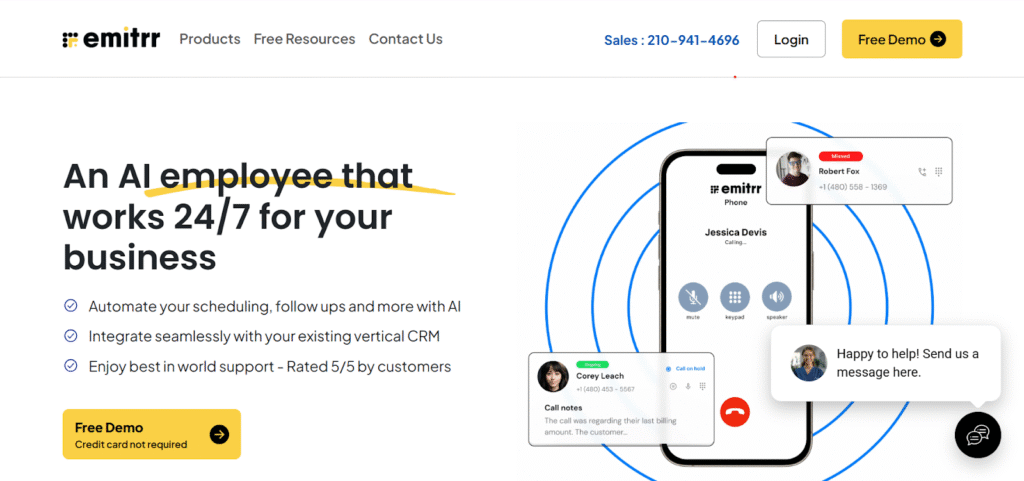
Emitrr is an AI-powered customer engagement and automation platform designed to help businesses connect with customers through text, voice, and chat. The platform compresses a lot of fragmented communication tools into one workflow, which makes it especially useful for service-based businesses where customer touchpoints span multiple channels.
The strongest fit is healthcare practices, home services, and local businesses. Emitrr helps these teams reduce no-show rates, tighten response times, and deliver personalized experiences at a scale that would be impossible manually. The AI chatbot handles inquiries, bookings, and reminders, which means staff can focus on the work that actually requires a human touch.
Emitrr also integrates with leading CRMs and practice management systems, which keeps data flowing between systems and gives the team a complete view of every customer interaction without extra setup work.
Features
- Two-way texting and AI-powered chat for real-time engagement.
- Automated appointment reminders and confirmations.
- Review collection and reputation management tools.
- Native integrations with EHR Software, CRMs, and scheduling systems
- Detailed analytics that track customer interactions and team performance.
3. Zendesk

Zendesk is a leading customer engagement platform with a heavy focus on customer service and support. The platform’s ticketing system has been the category benchmark for years, and most modern support teams will find the workflow immediately familiar.
Zendesk unifies customer communication across multiple channels including email, live chat, and social media. It’s built to let teams deliver fast, personal, efficient support without forcing agents to switch between five different tools to handle one customer.
The reporting layer is genuinely strong too. Managers can track performance, spot bottlenecks early, and improve service workflows over time using actual data rather than gut feel. It’s the right pick for teams where customer support is the core differentiator.
Features
- Ticket management system for efficient query resolution.
- Multi-channel support integration for unified communication.
- AI-powered chatbots for 24/7 customer support.
- Customizable customer portals for self-service.
- Advanced reporting and analytics for performance monitoring.
4. Klaviyo

Klaviyo is a marketing automation platform built specifically for ecommerce brands that want to personalize communication at scale. The platform is especially strong on email and SMS campaign building, with tight personalization rooted in actual purchase and browse behavior.
The integrations are where Klaviyo really shines for ecommerce teams. The platform connects natively with Shopify, WooCommerce, BigCommerce, and most other major ecommerce systems, which means every campaign can leverage real customer data without manual exports or cobbled-together integrations.
The focus on automation and behavioral personalization makes Klaviyo a default pick for ecommerce brands looking to drive conversions and build loyalty through meaningful, personalized interactions rather than blast emails.
Features
- Customizable email templates that adapt to your brand style.
- Automated SMS marketing for instant engagement.
- Native integration with popular ecommerce platforms.
- Granular audience segmentation for targeted campaigns.
- Real-time analytics dashboards to track campaign success.
5. MoEngage

MoEngage is an AI-driven customer engagement platform that helps businesses understand customer behavior and connect with them across channels in a way that feels personal. The platform is particularly strong on mobile-first engagement, which makes it a popular pick for app-driven businesses.
The predictive analytics layer is genuinely useful. Teams can anticipate customer needs and design campaigns proactively rather than reactively, which translates into higher satisfaction scores and stronger retention over time.
MoEngage’s journey orchestration and campaign optimization tools make it a strong fit for companies focused on delivering exceptional customer experiences at scale, especially in mobile-heavy verticals like fintech, ecommerce apps, and consumer SaaS.
Features
- AI-powered customer segmentation for precise targeting.
- Multi-channel engagement for consistent cross-channel communication.
- Real-time campaign optimization based on engagement signals.
- User journey orchestration tools that map and optimize customer paths.
- Predictive analytics that turn raw data into actionable decisions.
6. Netcore Cloud
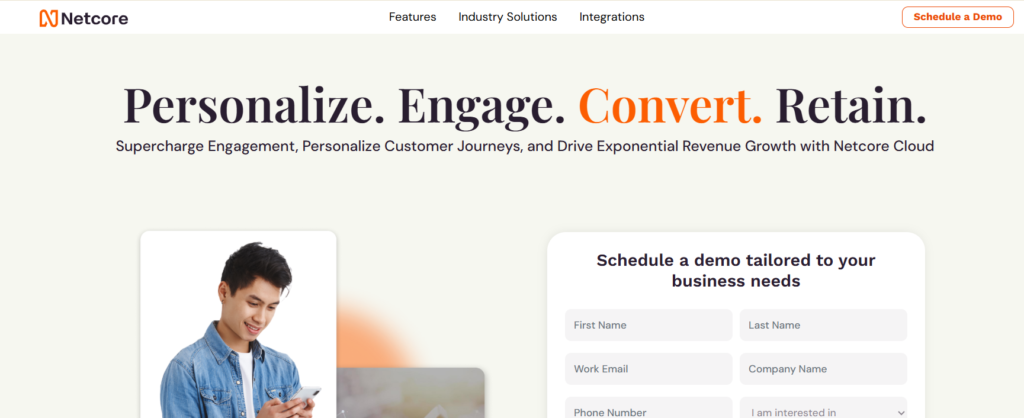
Netcore Cloud is a full-stack customer engagement platform built for high-growth industries like ecommerce, BFSI, and telecom. The platform handles the technical heavy-lifting for teams running engagement programs at serious scale.
Powered by AI and real-time data, Netcore lets brands craft deeply personalized, context-aware experiences across the entire customer lifecycle from acquisition through retention. The omnichannel orchestration covers email, app, web, SMS, WhatsApp, and emerging channels, all from a single unified platform rather than separate point solutions.
The journey builder, dynamic segmentation, and real-time optimization tools help businesses drive higher conversions, reduce churn, and deliver the kind of customer-centric experiences that compound over time rather than driving short-term spikes that fade quickly.
Features
- AI-led personalization engine for tailored customer experiences.
- Omnichannel orchestration across email, push, SMS, WhatsApp, and more.
- Customer journey builder to automate and optimize user flows.
- Advanced segmentation and behavioral analytics.
- Real-time campaign performance insights with actionable dashboards.
7. HubSpot

HubSpot is the all-in-one option that excels when businesses want marketing, sales, and customer service in a single platform rather than three separate tools. It’s a particularly strong pick for SMBs and growing teams that want capability without complexity.
Built for businesses of all sizes, HubSpot integrates a wide range of tools so teams can collaborate around the same customer data rather than fighting over which spreadsheet is current. The platform is built around making customer relationships easier to manage as the team grows.
HubSpot focuses on helping businesses deliver personalized experiences through targeted campaigns, with all customer data accessible alongside every interaction. That visibility makes every conversation feel informed rather than starting from scratch each time.
The platform also handles repetitive tasks well, which lets teams spend more time on strategy and less on busywork. Reporting and analytics round out the picture, giving teams the data they need to actually adapt strategies rather than just gut-check.
Features
- Centralized customer data management across marketing, sales, and service.
- Marketing automation that streamlines campaigns end-to-end.
- Email marketing tools for personalized communication.
- Social media management to lift online engagement.
- Analytics and reporting that track performance across every channel.
8. UserGuiding

UserGuiding specializes in customer onboarding and engagement, offering tools to create interactive guides and tutorials inside your product. The primary goal is to simplify the user experience so customers can navigate features without needing to read documentation or ping support.
The platform is built for businesses that want to engage customers from the very first interaction. Interactive onboarding flows and tooltips guide users through complex features step by step, which lifts satisfaction and measurably reduces churn during the activation window.
The interface is intuitive enough that businesses can ship in-app tutorials and feedback collection in days rather than weeks. Customers stay engaged with the product longer, and the company gets continuous signal about which features are landing.
Features
- Interactive onboarding for smooth first-run user experiences.
- Customizable tooltips that guide users through key features.
- Feedback collection to continuously improve product offerings.
- Analytics that monitor user interactions and feature adoption.
- Integration with popular tools like Slack and Zapier.
9. Twilio Engage

Twilio Engage is a developer-friendly customer engagement platform that unifies communication across multiple channels. The platform provides the building blocks for personalized interactions via SMS, email, and voice, with deep API access for teams that want custom workflows.
The scalability is genuinely strong, which makes it a fit for businesses ranging from small startups all the way to large enterprises with complex omnichannel needs. Twilio Engage focuses heavily on real-time, data-driven campaigns that respond to customer behavior as it happens.
The integration capabilities and robust APIs let businesses customize workflows extensively, which is especially valuable for engineering-led teams that want engagement infrastructure to fit their stack rather than the other way around.
Features
- Multi-channel communication via SMS, email, and voice.
- APIs for fully customizable workflows.
- Real-time data insights for tighter targeting.
- Scalable infrastructure for businesses of all sizes.
- Integration with CRM and marketing tools.
10. UserPilot

UserPilot is built specifically for SaaS companies that want to lift user engagement and onboarding experiences. The platform provides tools for in-app messages, walkthroughs, and feature announcements, all targeted at users at exactly the right moment in their journey.
The focus is on enhancing user adoption by helping businesses guide customers through their products without overwhelming them. Behavioral targeting makes sure messages and prompts arrive when they’re actually relevant rather than firing at random times.
UserPilot’s analytics layer tracks user behavior at the feature level, which gives product teams the data they need to make informed decisions about which experiences to invest in further and which need to be reworked.
Features
- In-app messaging for real-time communication with users.
- Interactive walkthroughs that lift onboarding completion rates.
- Behavioral targeting for personalized prompts at the right moment.
- Feature adoption tracking to lift user retention over time.
- Analytics that surface user behavior patterns clearly.
11. Optimizely

Optimizely is a category leader in experimentation and optimization, offering deep tools for A/B testing and personalization. The platform lets businesses test different strategies against each other and let real data decide what actually resonates with the audience.
The focus on data-driven insights helps businesses optimize campaigns, content, and user experiences in a systematic way rather than relying on hunches. Optimizely fits especially well for companies that want to continuously refine their strategies based on hard evidence rather than gut feel.
The integration capabilities let businesses combine Optimizely with other marketing tools, which creates a cohesive marketing ecosystem that supports growth across multiple channels rather than optimizing one channel in isolation.
Features
- A/B testing to identify best-performing strategies.
- Personalization tools for tailored customer experiences.
- Real-time analytics for quick decisioning.
- Integration with marketing and analytics tools.
- Experimentation tools for continuous improvement.
12. Mixpanel

Mixpanel is a product analytics platform focused on helping businesses understand exactly how customers interact with their product. The platform delivers detailed insights into user behavior that translate into smarter product decisions and tighter engagement strategies.
The platform is especially valuable for product teams that need to understand which features drive engagement and which fall flat. The tools for tracking user journeys and surfacing dropoff points help teams systematically improve the product experience.
Mixpanel’s real-time analytics let businesses act quickly when something starts working (or breaking), which makes it especially useful for fast-moving product organizations that can’t wait days for batch reports to come in.
Features
- Real-time analytics for immediate insights into user behavior.
- Funnel analysis to spot dropoff points across the journey.
- Cohort analysis to track user behavior trends over time.
- Customizable dashboards for clear reporting across teams.
- Integration with tools like Slack and Salesforce.
13. Enterpret
Enterpret is an AI-powered customer feedback analysis platform that helps businesses make sense of feedback at scale. The platform aggregates unstructured feedback from support tickets, reviews, communities, and survey responses, then organizes it into something actionable.
The advanced AI models categorize feedback automatically, analyze sentiment, and surface emerging trends so product, CX, and customer success teams get a clear picture of what customers actually want. That clarity makes it easier to prioritize the roadmap, reduce churn, and strengthen long-term customer loyalty.
Enterpret integrates with Zendesk, Intercom, Gong, Amplitude, and Snowflake, which keeps feedback centralized without disrupting existing workflows. The platform turns raw input into structured insights, which helps teams align product development and customer experience with what customers are actually telling them.
Features
- Multichannel data ingestion from surveys, support tickets, reviews, and communities.
- AI-powered categorization that groups feedback into themes like product issues or feature requests, with sentiment and intent analysis layered in.
- Trend detection that identifies emerging issues and opportunities early.
- Dashboards and reporting for sharing insights across teams.
14. Sender
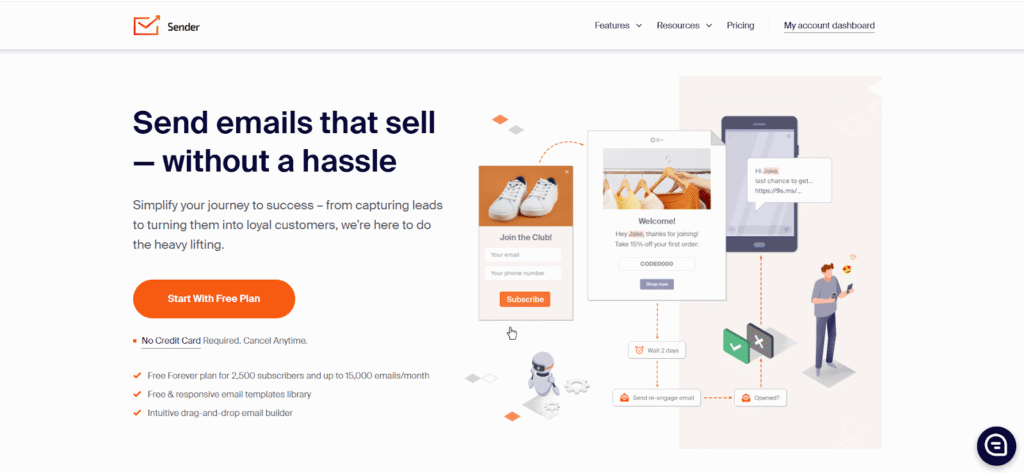
Sender is an email marketing platform built for startups, small businesses, and ecommerce brands that want to engage audiences through email and SMS campaigns. The platform combines automation, advanced segmentation, and real-time analytics into one accessible dashboard.
Sender covers the entire customer journey from onboarding through promotions to transactional messaging, all within a single dashboard. The unified email and SMS approach lets teams build consistent omnichannel experiences while tracking performance and optimizing campaigns with actionable insights along the way.
Features
- Email and SMS marketing for omnichannel customer engagement.
- Automation workflows that deliver timely, personalized messages.
- Advanced audience segmentation based on behavior and preferences.
- Drag-and-drop builder with responsive templates.
- Real-time analytics to monitor engagement and campaign performance.
- Integration with Shopify, WooCommerce, and more.
- 24/7 friendly customer support.
AI-Powered Customer Engagement in 2026
The most significant shift in customer engagement heading into 2026 is the move from rule-based workflows to AI-driven decisioning. The old approach scheduled campaigns on fixed days regardless of how customers actually behaved. The new approach watches behavior continuously and adjusts timing, content, and even channel based on what each individual customer is most likely to respond to.
Modern customer engagement platforms now include AI-generated content variants tested continuously, predictive send-time optimization that picks the best moment per recipient rather than averaging across the list, behavioral scoring that refines which triggers fire for which customers, and next-best-action engines that recommend the right channel at the right time.
For brands looking to study how AI engagement plays out in real-world examples, the deeper coverage in our roundup of customer engagement examples walks through specific brand patterns worth modeling. The combination of mature AI and clean engagement infrastructure is what separates brands generating measurable lift from brands that just talk about AI in their marketing.
The catch worth stating clearly: AI optimization only works on clean customer data and well-structured workflows. Adding AI to a fragmented setup just generates bad decisions faster. The foundation has to come first.
Customer Engagement Platforms by Industry
The right CEP depends heavily on industry. Different verticals have meaningfully different priorities, and matching the platform to the use case usually beats picking the most-featured platform overall:
Ecommerce and retail teams prioritize behavioral triggers, cart abandonment recovery, and post-purchase sequences. Klaviyo, Bloomreach, and Nvecta tend to dominate this space because they integrate natively with ecommerce platforms.
SaaS teams care most about in-app engagement, trial activation, and churn prevention. UserPilot, Intercom, HubSpot, and Mixpanel fit this segment well because they surface product usage data alongside engagement campaigns.
Banking and financial services need compliance, security certifications, and case management for complex multi-touch resolutions. Salesforce Marketing Cloud and Adobe Experience Platform dominate enterprise BFSI because they meet regulatory requirements and integrate with core banking systems.
Mobile apps need push notifications, in-app messaging, and behavioral triggers tied to app sessions. MoEngage and CleverTap dominate the mobile-first segment because they were built around these use cases from day one.
SMBs typically need affordable, easy-to-deploy options that don’t require a dedicated marketing operations team. HubSpot, WebEngage, and Sender fit this segment well with reasonable pricing and gentle learning curves.
Customer Engagement KPIs to Track
The strategies above only matter if you measure whether they’re moving the right numbers. Six metrics matter most for any modern customer engagement program:
- Engagement rate across channels (open rate for email, response rate for SMS, click rate across all channels). Aim for industry-relevant benchmarks rather than vanity targets.
- Customer Lifetime Value (CLV) measures the total revenue from each customer over the full relationship. Strong CEPs lift CLV by 15-25% within 6-12 months of proper deployment.
- Channel attribution lift tells you which channels are actually driving conversions vs which just look busy in dashboards. Without proper attribution, teams over-invest in vanity channels.
- Time-to-first-engagement measures how quickly new customers become active. Faster activation correlates strongly with long-term retention.
- Churn rate reduction is the cleanest measure of whether your engagement program is actually working. Mature CEP programs typically cut churn by 10-25% within the first year.
- Revenue per customer ties engagement spend directly to business outcomes. The metric that decides whether the CEP investment is justified.
Common Mistakes When Picking a Customer Engagement Platform
Six mistakes show up repeatedly across CEP buying decisions that underperform. Catching them early saves teams from painful migrations 12-18 months later:
The first mistake is picking based on features rather than workflow fit. Two platforms with identical feature lists can feel completely different in daily use. Always pilot before committing.
The second mistake is no CDP foundation underneath. Engagement platforms that run on fragmented customer data deliver inconsistent experiences no matter how good the platform itself is.
The third mistake is underestimating integration timelines. Even “easy” CEP integrations typically take 4-8 weeks for mid-market deployments. Plan for it.
The fourth mistake is picking too cheap or too expensive for your stage. Cheap tools force migrations as you grow. Enterprise tools create overhead that smaller teams can’t justify.
The fifth mistake is no measurement plan per campaign. Aggregate metrics hide which campaigns are actually driving revenue and which are quietly underperforming. Track each program independently.
The sixth mistake is ignoring AI capabilities. Platforms with mature AI today will keep extending their lead. Picking a tool with weak AI in 2026 means re-evaluating in 18 months. Comparing strong contenders like CleverTap alternatives and similar shortlists during the buying cycle helps prevent this.
Frequently Asked Questions
What is a customer engagement platform?
A customer engagement platform is software that orchestrates personalized interactions across email, SMS, push, in-app, web, and WhatsApp from a single platform. It combines messaging, behavioral analytics, segmentation, and automation so brands can deliver consistent experiences across every touchpoint rather than fragmented messages from disconnected tools.
What are the best customer engagement platforms in 2026?
The best customer engagement platforms in 2026 include Nvecta for CDP-native engagement, MoEngage for mobile-first apps, Klaviyo for ecommerce, HubSpot for SMB all-in-one, Zendesk for support-led engagement, Twilio Engage for developer-friendly setups, and Netcore Cloud for enterprise omnichannel. The right pick depends on team size, industry, and integration needs.
What’s the difference between a CEP and a CRM?
A CRM (Customer Relationship Management) manages sales relationships and pipeline. Salespeople log calls, track deals, and forecast revenue. A CEP (Customer Engagement Platform) orchestrates cross-channel marketing engagement in real time. CRMs are built for sales teams. CEPs are built for marketing, customer success, and engagement teams.
What’s the difference between a CEP and a CDP?
A CDP (Customer Data Platform) unifies customer data from every system into a single profile, but it doesn’t activate campaigns directly. A CEP uses that unified data to orchestrate engagement across channels. The best engagement programs run a CDP underneath as the foundation, with a CEP sitting on top as the activation layer.
How much do customer engagement platforms cost?
Customer engagement platform pricing varies widely. SMB-focused platforms like HubSpot Marketing Hub and Sender start at $20-30 per month. Mid-market platforms like Klaviyo, ActiveCampaign, and CleverTap typically run $200-1,000 per month based on contact volume. Enterprise platforms like Braze, Iterable, Salesforce Marketing Cloud, and Adobe Experience Platform usually start at $1,500 per month and scale into six figures for large deployments.
What’s the best customer engagement platform for ecommerce?
The best customer engagement platforms for ecommerce are Klaviyo (deep Shopify and WooCommerce integration), Bloomreach (commerce-focused personalization), Insider (AI-led ecommerce engagement), and Nvecta (CDP-native engagement with ecommerce templates). The right pick depends on store size, channel mix, and existing data architecture.
What’s the best customer engagement platform for SaaS?
The best customer engagement platforms for SaaS include Intercom (in-app messaging and conversational support), HubSpot (all-in-one marketing and sales), UserPilot and UserGuiding (onboarding and feature adoption), and Customer.io (mid-market behavioral engagement). The decision usually comes down to whether you want primarily marketing engagement, product onboarding, or both unified.
What’s the best customer engagement platform for enterprise?
Enterprise customer engagement platforms prioritize scale, compliance, and integration depth. Top picks include Salesforce Marketing Cloud, Adobe Experience Platform, Braze, and Iterable. The decision usually comes down to existing CRM stack alignment and the specific compliance requirements of your industry.
What’s a real-time engagement platform?
A real-time engagement platform reacts to customer behavior instantly rather than running on batch schedules. When a customer abandons a cart, the platform fires a message within minutes. When sentiment shifts negative, the platform escalates to a human agent. Real-time engagement is what separates modern CEPs from legacy marketing automation tools that ran on daily batch jobs.
How does AI improve customer engagement?
AI improves customer engagement in several measurable ways. AI-generated content variants get tested continuously to find the best-performing copy. Predictive send-time optimization picks the best moment per recipient rather than the best moment on average. Behavioral scoring refines which triggers fire for which customers. Next-best-action engines recommend the right channel and message in real time. The result is higher engagement, lower message fatigue, and personalization at the individual level.
What’s a digital engagement platform?
A digital engagement platform is essentially another term for a customer engagement platform, with slight emphasis on digital channels (email, SMS, push, web, in-app) rather than voice or in-person channels. The functional definition is the same: software that orchestrates personalized interactions with customers across multiple touchpoints.
What’s an omnichannel customer engagement platform?
An omnichannel customer engagement platform unifies communication across every channel a customer uses (email, SMS, push, in-app, web, WhatsApp, voice) and presents a consistent experience regardless of where the customer is engaging from. The difference between omnichannel and multichannel is that omnichannel platforms share data and context across channels, while multichannel platforms simply support multiple channels without unifying them.
Conclusion
Customer engagement platforms have genuinely changed how businesses connect with customers. They enable personalized, efficient, meaningful communication across every channel, which means customers feel valued rather than blasted by generic messages. The platforms covered above represent the strongest options across SMB, mid-market, and enterprise segments in 2026.
These platforms simplify the work of connecting with customers while surfacing the data businesses need to build long-term loyalty and satisfaction. For teams that also need transactional emails for automated system notifications, checking out Postmark alternatives can help find the right email delivery solution to pair with your engagement stack.
Each platform offers a unique combination of features matched to different business needs, from automation depth to multi-channel coverage to data analytics. Picking the right one for your stage and industry can meaningfully lift customer experiences and contribute directly to long-term revenue growth. Pair the right CEP with a strong customer experience strategy and the results compound across quarters rather than fading after the first big campaign.
Ready to take your customer engagement to the next level? Explore Nvecta today and discover how its advanced tools can turn customer interactions into long-term loyalty and predictable growth.
