














 Email
Email SMS
SMS Whatsapp
 Web Push
 App Push
 Audience Sync for Ads
 Popups
 Channel A/B Testing
  Control groups Analysis
 Frequency Capping
 Funnel Analysis
 Cohort Analysis
 RFM Analysis
 Signup Forms
 Surveys
 NPS
NPS Landing pages personalization
  Website A/B Testing
  PWA/TWA
 Heatmaps
 Session Recording
 Wix
Wix Shopify
 Magento
 Woocommerce
 eCommerce D2C
  Mutual Funds
 Insurance
 Lending
  Recipes
  Knowledgebase
 Developer Docs
 Product Updates
 App Marketplace
 Academy
 Ebooks
 Case Studies
 Blog
Blog Templates
 Tanya
Tanya📌 Quick Answer: E-Commerce vs E-Business
E-commerce is the buying and selling of goods and services online. E-business is the broader category that covers all electronic business operations including ecommerce, plus internal systems like CRM, ERP, supply chain management, and customer relationship management. All e-commerce is e-business, but not all e-business is e-commerce. Amazon and Flipkart are e-commerce. IBM and SAP are e-business platforms. The two terms get used interchangeably, but they describe very different scopes of online business activity.
We’re living through a period where information and communication technology has changed almost every part of daily life. Banking, education, shopping, healthcare. The internet has shifted from being a useful tool to being the actual infrastructure underneath most modern business activity.
Today you can run a global business, complete a transaction, or close a deal with a few clicks from anywhere in the world. Online business has become more transparent, more accessible, and cheaper to operate than the brick-and-mortar version it grew out of.
The rise of e-commerce has fueled massive growth in small businesses and online-first brands. But there’s genuine confusion around two terms that get tossed around interchangeably: e-business and e-commerce. The two overlap, but they’re not the same thing, and the difference matters when you’re planning where to invest.
This guide breaks down the critical difference between e-commerce and e-business, with real brand examples, a 12-parameter comparison table, and the AI shifts changing both categories in 2026.
What Is E-Commerce?
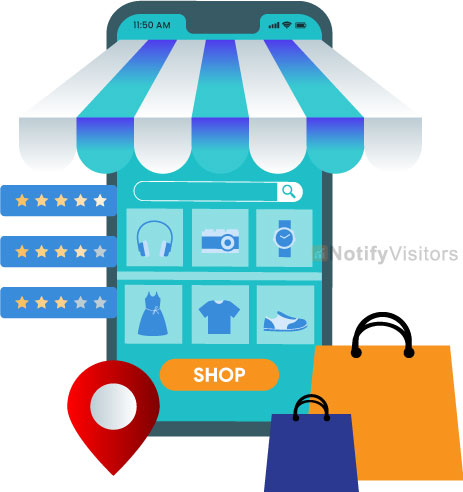
In simple terms, e-commerce refers to the transaction of goods and services on the internet. It’s also called electronic commerce, and it usually covers monetary transactions completed online. Several big e-commerce retailers operate in India, including Amazon, Flipkart, Myntra, Meesho, and Nykaa.
The scale here is genuinely huge. Statista reports global e-commerce sales hit roughly $7.4 trillion in 2025, with mobile commerce accounting for about 65% of that volume. eMarketer projects e-commerce will account for 21% of all retail purchases globally in 2026, up from 14% just five years ago.
The total sales of e-commerce in some regional markets alone is estimated at almost $765 billion, which gives you a sense of how far this category has grown from its early days of online catalogs and slow shipping.
Benefits of E-Commerce
- Expansion of markets — Reach customers globally without opening physical stores
- Low cost of operations — No rent, lower staffing requirements, automated checkout
- Small firms can compete with large ones — A solo founder can sell to the same customer base as a Fortune 500 retailer
- Competitive advantage — Brands with strong digital presence consistently outperform offline-only competitors
- 24/7 availability — Customers can browse and buy at any hour from any timezone
- Better customer insights — Every interaction generates data that can be used to improve targeting and personalization
Limitations of E-Commerce
- Security and fraud risks — Payment fraud, data breaches, and cybersecurity threats are real costs of doing business online
- No physical interaction — Customers can’t touch or try products before buying, which raises return rates in some categories
- Logistics complexity — Shipping, returns, and last-mile delivery add costs that brick-and-mortar stores don’t face
- High competition — Low barriers to entry mean thousands of competitors fight for the same audience
- Dependence on internet infrastructure — Site downtime directly translates to lost revenue, sometimes by the minute
- Customer trust barriers — First-time buyers often hesitate without strong reviews, social proof, or refund guarantees
E-Commerce Models
E-commerce takes several distinct forms depending on who’s selling to whom. Understanding the models matters because each one has different operational requirements, marketing approaches, and economics.
1. Business to Consumer (B2C)
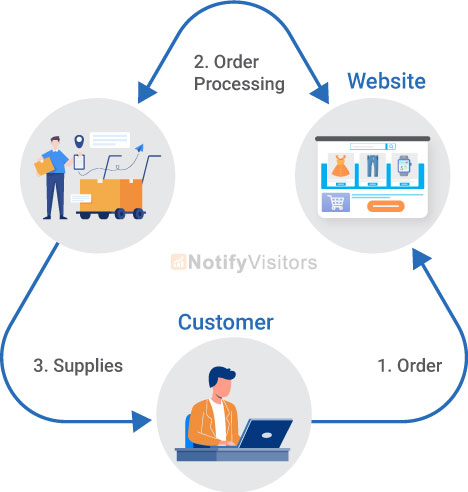
The e-commerce business sells goods or services directly to individual consumers. This is the model most people picture when they think “e-commerce.” Examples include Amazon, Flipkart, Nykaa, Myntra, and any DTC brand selling through its own website. The buying decision is usually made by one person, the transaction value tends to be smaller, and emotional or visual marketing works well here.
2. Business to Business (B2B)
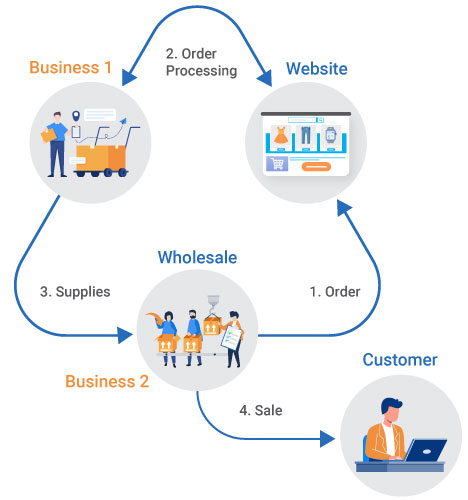
In the B2B e-commerce model, a business sells its goods or services to another business. For example, an online business selling video editing services to other agencies, or a wholesale supplier shipping bulk orders to retailers. Examples include Alibaba, IndiaMART, and Shopify Plus enterprise stores. B2B transactions usually involve larger order values, longer sales cycles, and multiple decision-makers in the buying committee. Scaling a B2B storefront to that level typically calls in a dedicated Shopify Plus ecommerce agency to handle the added complexity
3. Consumer to Consumer (C2C)
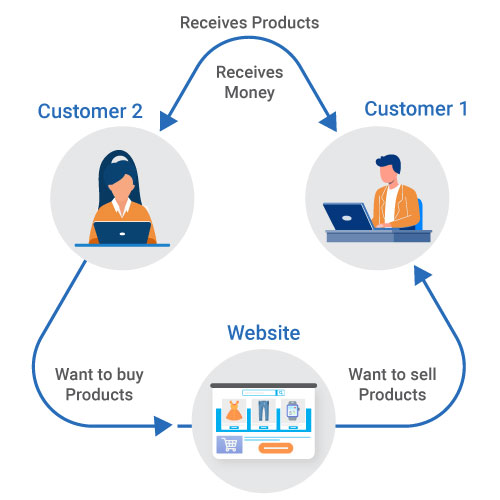
In this e-commerce business model, individual consumers sell their goods or services to other consumers. A person selling old furniture through OLX, used books on eBay, or vintage clothing on Etsy all fit C2C. The platform handles trust, payments, and dispute resolution while taking a small cut of each transaction.
Sellers in this space are increasingly using tools like ecommerce chatbots, AI product recommendations, and automated inventory systems to simplify their day-to-day operations. These tools handle common buyer questions, surface relevant products, send quick status updates, and even predict demand. The result is a buying and selling process that feels faster and smarter even when there’s just one person running the shop.
4. Consumer to Business (C2B)
An individual consumer sells their goods or services to a business. For example, freelancers offering services through Upwork or Fiverr, photographers licensing stock images, or influencers promoting a business to their audience on social media (often using business quotes to build trust and drive engagement with their brand messaging). C2B has grown faster than almost any other model thanks to the creator economy.
5. Intra-B Commerce
Here, both parties involved in the electronic business are inside the same business organization. Internal procurement systems, employee marketplaces, and intra-departmental transactions all fall under this category. It’s less visible than B2C or B2B but powers a lot of how large enterprises actually operate internally.
What Is E-Business?
E-business refers to a type of business where all business activities are conducted through the internet, not just buying and selling. It covers a much wider range of activities including procuring raw materials, educating customers, managing supply chain operations, and running internal systems entirely online.
The term was actually coined by IBM in 1996 to describe the full digital transformation of business operations, not just the storefront. Gartner research shows 89% of enterprises now run e-business systems across core operations in 2026, and McKinsey reports that digitized e-business operations deliver 20-30% productivity gains over traditional setups.
To run an e-business properly, you typically need websites, applications, a unified customer data platform, Customer Relationship Management software, ERP systems, and integration tooling that ties everything together. The infrastructure investment is higher than pure e-commerce, but the operational lift compounds across every function in the company.
Several activities sit inside e-business:
- Setting up an online store
- Customer education and onboarding
- Buying and selling products online
- Monetary business transactions
- Supply Chain Management
- Email marketing and customer communication
- Customer data integration across systems
- Internal collaboration via intranet platforms
- External partner coordination via extranet
Real e-business platforms include IBM, SAP, Salesforce, Oracle, and Microsoft Dynamics. These aren’t just selling things online. They power the operational backbone of how modern enterprises actually run day-to-day.
Advantages of E-Business
- Cost-effective: E-business helps companies do things faster, cheaper, and more efficiently. It’s the difference between doing more with less and burning through capital. You save time, money, and effort across nearly every operational function.
- Instantaneous medium: The biggest advantage of e-business is how it speeds up work and communication. It runs on electronic communication, which means faster decisions, quicker information exchange, and shorter feedback loops between teams.
- Better way to market: E-business gives companies a far cheaper way to market products. Lower marketing costs translate into lower consumer prices, which drives more sales. Brands also get more control over how they’re portrayed across digital channels, which lifts positive consumer reviews and word-of-mouth advertising in ways traditional marketing simply can’t match. Pairing this with smart customer journey orchestration makes the marketing engine genuinely scalable.
- Easy formation: An e-business is genuinely easier to set up than a traditional brick-and-mortar business. The internet makes launching small or large operations relatively quick. Many restaurants without physical space run their entire business online by showcasing menus and taking orders through delivery platforms.
- Convenience: E-business runs 24×7, 365 days a year. Staff can work from wherever they are, whenever they need to. The flexibility shows up in both customer experience and team productivity.
- Global access: E-business has genuine global reach. Sellers can access international markets without opening foreign offices. Buyers can choose products from anywhere in the world that ships to them. Pair this with strong customer engagement workflows (see our customer engagement examples guide) and you can build a real cross-border brand without massive overhead.
Limitations of E-Business
Every business model has its risks, and running e-business isn’t easy. Knowing the limitations upfront is what separates a sustainable digital operation from a failed one:
- Low or no personal touch: E-business lacks the warmth of in-person interaction. The model may not suit products or services that genuinely require a high level of personal connection, like luxury consulting or wealth management.
- Increased risk: Every business carries risk, but e-business faces specific concerns around cyber resilience and digital identity. Establishing the identity and location of parties can be tricky. Issues like hacking, data breaches, and payment fraud are real costs of doing business this way.
- Resistance to change: Many people still haven’t fully adjusted to digital commerce and remain hesitant to conduct business entirely online. This is especially true in older demographics and in industries with strong traditions of face-to-face relationships.
Difference Between E-Commerce and E-Business (12-Parameter Comparison)
These two terms get used interchangeably, but a precise comparison makes the distinction clear. E-business is the broader category that includes e-commerce alongside all other electronic business activities. Here’s how they actually differ across 12 important parameters:
| S.no | Parameter | E-Commerce | E-Business |
| 1. | Definition | Online buying and selling of goods or services | All electronic business activities including commerce |
| 2. | Scope | Narrow concept, transactional focus | Much wider concept, operational focus |
| 3. | Subset relationship | Subset of e-business | Encompasses e-commerce |
| 4. | Activity type | Commercial transactions only | All business activities |
| 5. | Transactions | Limited to buy/sell flows | Not limited, covers full operations |
| 6. | Tools used | Single website with shopping cart | Multiple websites, CRMs, ERPs, intranets |
| 7. | Network used | Internet only | Internet, intranet, and extranet |
| 8. | Context | Appropriate in B2C context | Appropriate in B2B context |
| 9. | Business processes | External business processes | Internal and external business processes |
| 10. | Required investment | Lower (storefront + payment gateway) | Higher (full operational stack) |
| 11. | Real-world examples | Amazon, Flipkart, Myntra, Nykaa | IBM, SAP, Salesforce, Oracle |
| 12. | Primary goal | Revenue from sales | Overall business efficiency |
How E-Commerce and E-Business Actually Relate
The cleanest way to think about it: e-business is the outer circle and e-commerce sits inside it as one important slice. Every e-commerce transaction is part of e-business by definition. But e-business covers many activities that aren’t strictly commercial transactions, including supply chain coordination, internal HR systems, customer education flows, and partner collaboration tools.
Here’s a practical way to spot the difference. If a company only sells things online through a website or marketplace, that’s e-commerce. If a company runs its entire customer-facing AND internal operations through digital systems (sales, support, supply chain, finance, HR, and more), that’s e-business. Amazon does both, but a small boutique selling through Shopify is purely doing e-commerce.
E-Business vs Traditional Business
Traditional businesses operate through physical locations and face-to-face transactions. E-business operates primarily through electronic and digital channels. The differences run deeper than just “having a website” though:
- Reach: Traditional businesses serve a local or regional customer base. E-businesses can serve customers globally from day one.
- Operating hours: Traditional businesses operate during fixed hours. E-businesses operate 24×7 without additional staffing.
- Cost structure: Traditional businesses carry fixed costs like rent, utilities, and in-person staffing. E-businesses trade those costs for technology infrastructure and digital marketing spend.
- Data and analytics: Traditional businesses rely on observation and customer surveys for insight. E-businesses capture detailed behavioral data on every customer interaction.
- Speed of change: Traditional businesses adapt slowly. E-businesses can ship pricing, product, or marketing changes in minutes. Strong benefits of a CDP become clear here: real-time customer data is what makes that speed possible.
- Customer relationship depth: Traditional businesses build trust through repeat in-person visits. E-businesses build trust through reviews, personalization, and consistent digital experiences.
The trend is clearly moving toward hybrid models. Even traditional businesses now run digital systems for inventory, accounting, and customer outreach. Pure traditional businesses are rare in 2026 and getting rarer every year.
AI Commerce and the Future in 2026
The biggest shift in both e-commerce and e-business heading into 2026 is the integration of AI across nearly every operational layer. The old approach used rule-based automation. The new approach uses machine learning to predict customer behavior, optimize pricing dynamically, surface relevant content per individual, and coordinate operations across channels without manual intervention.
For e-commerce specifically, AI is reshaping product recommendations, personalized search, dynamic pricing, fraud detection, and post-purchase upsells. Brands using mature AI in their e-commerce stack consistently outperform competitors who are still running on rule-based systems. For deeper coverage of how e-commerce brands are using these capabilities, see our guide on ecommerce repeat purchases driven by smart customer data.
For e-business, AI is being embedded into CRM, ERP, supply chain forecasting, customer support automation, and internal collaboration tools. Modern AI agents can autonomously handle multi-step workflows, surface insights, and even take actions across systems without human intervention at every step.
The 2026 differentiator is agentic AI, which goes beyond simple recommendation engines to make actual decisions and execute workflows. Brands deploying agentic AI in commerce report significant productivity gains, faster decision cycles, and measurably better customer experiences compared to brands still relying entirely on human operators.
The catch worth stating clearly: AI only works on clean, unified data foundations. Adding AI to fragmented systems generates worse outcomes faster, not better ones. The CDP layer has to come first, then AI optimization compounds on top.
Which One Should You Choose for Your Business?
The honest answer is that it usually isn’t an either-or decision. Most modern businesses start with e-commerce and gradually grow into full e-business as they scale. Here’s a quick framework for figuring out where to invest:
- Start with e-commerce if: You’re a small business or solo founder selling products to consumers, you need to start generating revenue quickly, you have limited capital, and your operations are simple enough to run with a few tools.
- Invest in full e-business when: You have multiple departments coordinating across functions, supply chain complexity is real, you’re selling B2B with longer sales cycles, you need internal collaboration tools, or you’re scaling beyond what a basic ecommerce stack can handle.
Most growing brands transition naturally from one to the other. The point at which it makes sense to invest in full e-business infrastructure varies by industry, but it usually happens around the time you’re hitting consistent revenue but starting to feel operational friction across teams.
Conclusion
Hopefully this guide cleared up the concept and the most important points of difference between E-Commerce and E-Business. Both categories matter, but they describe different scopes of digital business activity, and knowing the difference helps you decide where to invest capital and attention.
For practical help on any e-commerce or e-business automated marketing setup, you can schedule a demo with Nvecta. We can walk you through how a unified data platform supports both motions end-to-end.
Frequently Asked Questions
What is the difference between e-commerce and e-business?
E-commerce is the buying and selling of goods and services online. E-business is the broader category that covers all electronic business operations, including e-commerce plus internal systems like CRM, ERP, supply chain, and customer relationship management. All e-commerce is e-business, but not all e-business is e-commerce.
Is e-commerce a subset of e-business?
Yes, e-commerce is a subset of e-business. E-business is the outer category that includes e-commerce as one important slice, plus many other electronic business activities like supply chain management, internal HR systems, customer education, and partner coordination through extranet platforms.
Can ecommerce and ebusiness be used interchangeably?
The two terms often get used interchangeably in casual conversation, but they describe different things. E-commerce is specifically about online buying and selling. E-business covers the full scope of running a business through electronic systems. Using them interchangeably is technically incorrect, even though many marketers and articles still do it.
What is the difference between e-commerce and e-business with examples?
E-commerce examples: Amazon, Flipkart, Myntra, Nykaa, Shopify stores. These platforms are primarily about online buying and selling. E-business examples: IBM, SAP, Salesforce, Oracle. These platforms cover the full operational stack including CRM, ERP, supply chain, internal collaboration, and partner coordination. Amazon also runs full e-business operations internally, which makes it both an e-commerce and an e-business example simultaneously.
How is e-commerce different from e-business?
The four main differences: (1) Scope — e-commerce is narrow, e-business is broad. (2) Activity — e-commerce focuses on transactions, e-business covers all operations. (3) Tools — e-commerce needs a website and payment gateway, e-business needs full operational tooling. (4) Investment — e-commerce requires less upfront capital than full e-business infrastructure.
What is e-business?
E-business is the conduct of all business activities through electronic and internet-based systems. It includes online buying and selling, supply chain management, customer relationship management, internal collaboration, customer education, and external partner coordination. The term was coined by IBM in 1996 to describe full digital transformation of business operations rather than just online storefronts.
What is e-commerce?
E-commerce is the buying and selling of goods or services through the internet. It covers monetary transactions completed online and includes models like B2C (business to consumer), B2B (business to business), C2C (consumer to consumer), C2B (consumer to business), and intra-B (within a single organization). Real examples include Amazon, Flipkart, Myntra, and any DTC brand selling through its own website.
What is the full form of e-business?
The full form of e-business is electronic business. The term was coined by IBM in 1996 to describe the broader category of running business operations electronically, not just selling things online. E-business covers ecommerce plus internal systems, supply chain management, customer relationship management, and external partner coordination.
What is the difference between traditional business and e-business?
Traditional businesses operate through physical locations with face-to-face transactions. E-businesses operate primarily through digital channels. Key differences include reach (local vs global), operating hours (fixed vs 24×7), cost structure (rent and physical staffing vs technology infrastructure), data capabilities (limited vs detailed customer behavioral data), and adaptability (slow vs fast).
What is C2C in e-commerce?
C2C (Consumer to Consumer) is an e-commerce model where individual consumers sell goods or services to other consumers. Examples include OLX, eBay, Facebook Marketplace, and Etsy. The platform handles trust, payment processing, and dispute resolution while taking a small cut of each transaction. C2C is one of the five main e-commerce models alongside B2C, B2B, C2B, and intra-B commerce.
What are the types of e-commerce?
The five main types of e-commerce are: B2C (Business to Consumer, like Amazon or Flipkart), B2B (Business to Business, like Alibaba or IndiaMART), C2C (Consumer to Consumer, like OLX or eBay), C2B (Consumer to Business, like Upwork or Fiverr), and Intra-B Commerce (within a single organization). Each model has different operational requirements, marketing approaches, and economics.
What are the types of e-business?
E-business operations break into several types: internal operations (intranet, HRM, ERP, internal collaboration), external operations (extranet, customer portals, partner systems), online commerce activities, supply chain management, customer relationship management (CRM), and knowledge management. Most enterprises run several of these simultaneously across the company.
What are the challenges of E-Commerce?
The main challenges of e-commerce include security and fraud risks, intense competition with low barriers to entry, order fulfillment and logistics complexity, return and refund management, customer trust barriers especially for first-time buyers, dependence on internet infrastructure, and the lack of physical product interaction which raises return rates in certain categories.
What is the impact of E-Business on a firm?
E-business enables a firm to improve its services and reach customers outside the local and regional market. It increases customer visibility, reduces marketing and transaction costs compared to a traditional business, lifts operational efficiency by 20-30% on average, and creates richer customer data for personalization. The flip side is higher upfront infrastructure investment and ongoing cybersecurity overhead.
Which is better: E-Commerce or E-Business?
E-commerce and e-business are two separate concepts with their own advantages and limitations, so this isn’t an either-or question. E-commerce is a subset of e-business. Small businesses and solo founders typically start with e-commerce because it’s faster and cheaper to set up. Larger enterprises need full e-business infrastructure to coordinate across departments, suppliers, and partners. Most growing brands transition naturally from one to the other as they scale.
How does AI change e-commerce and e-business in 2026?
AI is reshaping both categories in measurable ways. For e-commerce, AI powers personalized product recommendations, dynamic pricing, fraud detection, conversational shopping assistants, and post-purchase upsells. For e-business, AI is being embedded into CRM, supply chain forecasting, customer support automation, and internal collaboration tools. The 2026 frontier is agentic AI, which goes beyond recommendations to autonomously handle multi-step workflows and execute decisions across systems.
