














 Email
Email SMS
SMS Whatsapp
 Web Push
 App Push
 Audience Sync for Ads
 Popups
 Channel A/B Testing
  Control groups Analysis
 Frequency Capping
 Funnel Analysis
 Cohort Analysis
 RFM Analysis
 Signup Forms
 Surveys
 NPS
NPS Landing pages personalization
  Website A/B Testing
  PWA/TWA
 Heatmaps
 Session Recording
 Wix
Wix Shopify
 Magento
 Woocommerce
 eCommerce D2C
  Mutual Funds
 Insurance
 Lending
  Recipes
  Knowledgebase
 Developer Docs
 Product Updates
 App Marketplace
 Academy
 Ebooks
 Case Studies
 Blog
Blog Templates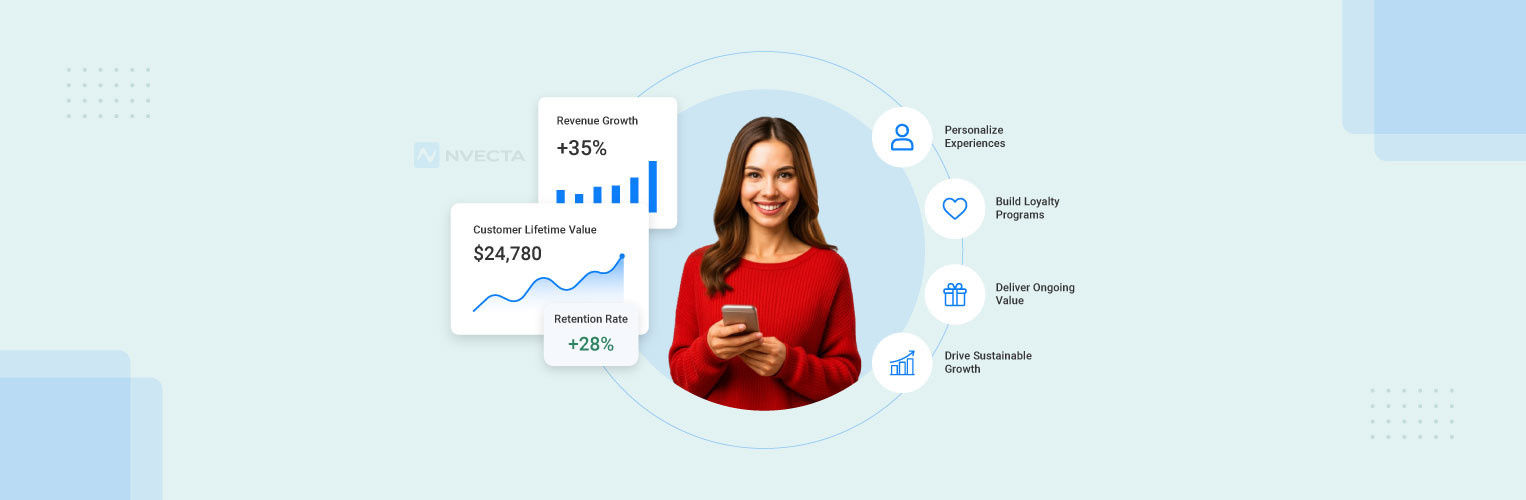
 Afreen Sheikh
Customer lifetime value is an important metric that every business must consider to achieve steady, long-term growth. Businesses in general run to acquire new customers, ignoring that a substantial revenue growth comes from increasing the value of the ones you already have.
For this, businesses have to prioritise retention, personalisation and meaningful engagement strategies to support lasting relationships with their existing customers. Increasing customer lifetime value requires a smarter use of customer data to analyse customer behaviour and deliver experiences that feel connected.
Simply put, when customers keep coming back, engage more and trust your brand, your revenue grows naturally without leaning to acquisition.
In this blog, we will break down 13 proven tactics that help businesses increase customer Lifetime Value (CLV). We will further see how NVECTA helps you turn customer data into long-term revenue.
What is Customer Lifetime Value & Why does it Matter?
Customer lifetime value is the total revenue a customer generates throughout their entire journey with your business.
It helps you understand how valuable a customer is over time and focuses on how relationships with them add to long-term revenue and profitability.
It is generally influenced by factors such as how often customers make purchases, how much they spend, and how long they stay connected with your brand.
If a customer buys more often and stays longer, their value increases. That is why brands focus on keeping customer satisfaction and happy through effective engagement strategies.
Why it matters
- Help you identify high-value customers
- Improve marketing and retention strategies
- Built long-term customer relationships and profitability
- Supports sustainable business growth
- Reduce customer acquisition cost
When businesses understand customer lifetime value, they create better customer experiences that motivate customers to return and engage with their brand, ultimately leading to enhanced business outcomes.
13 Proven Tactics to Increase Customer Lifetime Value
To increase customer lifetime value, brands need to make smarter decisions across customer journeys.
It requires identifying business goals and adopting strategies to achieve them. It is about doing the white thing consistently to keep customers satisfied and engaged.
Here are some effective tactics to help you strengthen relationships and drive consistent revenue from your existing customers-
Focus on acquiring the right customers from the beginning
The quality of customers you acquire from the start directly impacts the value they bring to your brand.
Focus on ideal customers, those who are most likely to engage, retain, and generate consistent outcomes.
Brands can identify ideal customers using data such as behaviour preferences and purchase intent.
This helps in accurate targeting and improves overall efficiency. Further, it saves a lot of time, effort and money in the long run.
Key actions include-
- Define clear customer segments
- Your status to identify high-intent users
- Align marketing efforts with customer preferences
Just follow a stronger acquisition strategy to acquire the right customers, leading to better retention and higher returns.
Identify and Invest in your Highest Value Customers
Not every customer contributes equally to business growth. Every business has a large base of customers that drives most of its revenue, and identifying those high-value customers allows it to focus its efforts where they matter most.
Customer data highlights shopping behaviour, such as purchase frequency, spending, and engagement patterns, to identify these customers.
Once identified, businesses can create more Tailored strategies to engage them. Giving them a better experience can generate more revenue, as they are already interested.
Simple ways to do it-
- Segment customers based on value and behaviour
- Offer personalised experiences for top segments
- Prioritise retention efforts for loyal customers
Making the high-value customers feel special naturally gives more back to your business
Create a Personalised Onboarding Experience
The initial interaction between the brand and customers is important. This is where a customer decides whether your product or service meets their expectations.
An easy and personalised onboarding helps them form a positive impression of the brand, as you are offering proper support from the beginning.
Generic onboarding can lead to confusion or drop-offs. Tailoring onboarding journeys makes the customer experience more relevant.
For example, an eCommerce app can recommend products based on a user’s browsing behaviour during sign-up.
To make onboarding effective-
- Customise onboarding based on customer segments
- Highlight Core features that deliver quick value
- guide users with clear and simple steps
A stronger onboarding experience builds a good first impression, making customers feel comfortable and encouraging continued engagement.
Use Real-Time Data to Personalise Every Customer Interaction
Brands can use live customer behavior analysis to send personalised messages at the right time. This helps businesses engage customers when their intent is at its peak.
This makes personalisation very effective, as it aligns with customers’ recent needs at that moment.
For example, someone visiting a product multiple times is clearly thinking about it. They can be engaged by showing reviews or a quick reminder at that moment, which helps them to make a decision.
What actually works-
- Identify important behaviour signals
- When the customer interest is high
- Keep communication relevant and timely
Real-time personalisation creates smoother experiences that naturally drive better engagement.
Create a Seamless Omnichannel Experience Across the Customer Journey
Customers use various apps and devices to connect with your brand and expect an easy, effortless experience.
Brands need to use an omnichannel approach that will ensure every customer interaction feels continuous and connected.
For example, when a customer browses a product on mobile and later receives a WhatsApp message about the same product, is likely to engage and continue their journey.
To make this work-
- Unify customer data across channels and systems
- Align messaging and timing
When brands deliver a consistent experience across channels, customers are more likely to move forward and stay longer with the brand.
Engage Inactive Customers with Targeted Campaigns
Customer drop-off does not happen instantly; it results from gradual inactivity over time.
You can spot inactivity early and send re-engagement campaigns with special offers or discounts to keep them engaged before they stop engaging with your brand entirely.
For example, sending a personalised recommendation based on previous behaviour can grab their attention again, and they may continue their journey with the brand.
To make it effective-
- Track customer inactivity
- Trigger timely campaigns based on inactivity
A simple message and the right moment can restore customers’ interest and support retention strategies.
Detect Early Churn Risk and Act Proactively
Customers do not leave suddenly; churn often starts with small behavioural changes, such as reduced activity, delayed actions, or limited feature use.
By noticing declining customer interest, brands can respond with timely support and relevant nudges to bring their attention back. A simple check or a helpful reminder can help them regain clarity.
To make this effective-
- Monitor engagement patterns closely
- Identify friction points
- Respond with targeted support
Such proactive engagement at an earlier stage helps retain customers and strengthen long-term relationships.
Boost Customer Value Through Smart Upselling and Cross-Selling
Upselling and cross-selling are effective ways to engage customers when driven by customer behaviour rather than business goals.
There is no need to push high-priced options; instead, guide customers towards a better choice that fulfils their needs.
Customer behaviour reveals their readiness; repeated product views, increased usage, or exploration of advanced features indicate their growing needs.
For example, if someone is looking for premium products, it means they may be ready to spend more.
Here, you can respond with a relevant message that shows the premium product or its complementary options at the moment to make the interaction feel intuitive.
To make it work-
Identify moments of readiness
Align recommendations with real needs
Focus on value, not price
Well-timed suggestions enhance the customer experience while paving the way for increased revenue.
Strengthen Loyalty with Meaningful Rewards
Loyalty is not always about discounts—it’s about how a brand makes its customers feel. True customer loyalty grows when people feel valued and recognised, not just incentivised.
Every reward you send should feel like a genuine acknowledgement of their interactions with your brand, reinforcing the relationship rather than simply driving another transaction.
Customers keep coming back when they get something extra. Exclusive benefits, such as early access to a few features, special rewards, or personalised work, can make them feel important.
To make this effective-
- Recognise and reward repeated customer behaviour
- Offer benefits beyond discount
- Create a sense of exclusivity
A well-designed loyalty program focuses on value and recognition, encouraging customers to stay longer and continue choosing your brand over others.
Turn Customers into Advocates with Referrals and Community
Customers who trust a brand or have a positive experience with it are more likely to recommend it to others and participate in the brand community.
Referrals and community together are a powerful way to engage and grow.
A simple referral can bring new customers through tested recommendations, while the community gives customers a sense of being involved and connected with the brand. Both work to create ongoing value.
To make this effective-
- Ask for referrals at the right time
- Create a space for customers to interact
With a strong referral and community strategy, customers will be engaged and involved, and growth will occur in a more natural and lasting way.
Improve Experience by Acting on Customer Feedback
Customers are quite wise when they use a product or avail a service. Their feedback is a direct insight into their experiences with your product or service.
It shows what works well and the challenges customers faced.
Collecting and analysing feedback regularly will help identify patterns and areas for improvement. If the same issues repeat again and again, customers are likely to disengage.
To make this effective-
Collect feedback across touch points
Notice common recurring issues
Act on insights and take clear actions
When customers notice that their feedback leads to real changes, they feel valued and are more likely to continue engaging with your brand.
Optimising Pricing to Support Long-Term Value
Pricing plays an important role in how customers perceive value. Use a well-structured pricing model that makes it easy for customers to choose, use and expand over time.
Different customers require different levels of value, so offering multiple plans based on usage or features can allow them to choose what fits them best. This improves both adoption and retention.
To make it more effective-
- Create simple and flexible pricing options
- Align plans with customer needs
When pricing aligns with common customer expectations, customers are more likely to continue using your product and expand their usage over time, leading to long-term relationships.
Unify Customer Data for Smarter Decisions
Customer data becomes more useful when it is unified and available in one place. It gives you a clear understanding of the full customer journey.
Brands can access a comprehensive view of each customer, including customer behaviour, preferences, and interactions, utilised to improve targeting, personalisation, and overall decision-making.
To make this effective-
- Connecting data across platforms
- Building a single customer view
- Use insights to improve actions
When data is organised and accessible, businesses can respond more accurately and optimise engagement strategies over time.
How NVECTA Helps you Increase Customer Lifetime Value
NVECTA is an AI-powered customer data platform designed to help businesses to understand, engage and retain their customers more effectively.
It offers advanced features such as smart insights, personalisation, and segmentation automation to simplify managing customer engagement. Let’s have a look at its features that help in increasing customer lifetime value-
Unified Customer Data for Better Understanding
NVECTA connects customer data spread across channels, giving a clear view of each customer.
This helps businesses understand customer behaviour and plan strategies for better engagement, leading to improved retention and long-term customer value.
Segment Customers with Precision
NVECTA provides detailed customer segmentation based on behaviour and value. This helps brands to target the right customer groups with relevant campaigns, keeping them engaged and interested over time.
Deliver a Personalised Experience at Scale
NVECTA supports real-time personalisation across channels. It means brands can send the right message at the right time, based on recent customer behaviour.
When customers receive tailored communication that aligns with their expectations, they are likely to engage more and remain loyal to the brand.
Orchestrate Seamless Customer Journeys
NVECTA has an automated journey builder that connects multiple touchpoints to deliver a seamless customer experience.
With well-timed, relevant communication, brands can reduce friction and maintain engagement throughout the customer lifecycle.
Detect Churn Signals and Act Early
NVECTA has an advanced analytics system that tracks changes in customer behaviour, eventually spotting early signs of declining engagement.
This helps businesses take timely actions, reducing churn and maintaining long-term customer relationships.
Automatic Engagement and Growth Strategies
NVECTA helps businesses to automate customer engagement based on real-time behaviour. Interactions such as onboarding, follow-ups or re-engagement can be triggered at the right moment.
It keeps customers engaged without any manual efforts while improving retention and building stronger long-term connections.
Conclusion
Building long-term growth comes down to how well a brand understands and engages its customers. When a business focuses on creating a better experience, customers are more likely to engage over the long term.
Each interaction, when done right, strengthens the relationship and leads to better outcomes.
NVECTA helps bring this approach to life by combining data, personalisation, and engagement together in one platform. It enables businesses to increase customer lifetime value by delivering better experiences through actionable insights, contributing to study and sustainable business growth.
To see how NVECTA helps increase customer lifetime value and drive long-term revenue, explore its features now.
