














 Email
Email SMS
SMS Whatsapp
 Web Push
 App Push
 Audience Sync for Ads
 Popups
 Channel A/B Testing
  Control groups Analysis
 Frequency Capping
 Funnel Analysis
 Cohort Analysis
 RFM Analysis
 Signup Forms
 Surveys
 NPS
NPS Landing pages personalization
  Website A/B Testing
  PWA/TWA
 Heatmaps
 Session Recording
 Wix
Wix Shopify
 Magento
 Woocommerce
 eCommerce D2C
  Mutual Funds
 Insurance
 Lending
  Recipes
  Knowledgebase
 Developer Docs
 Product Updates
 App Marketplace
 Academy
 Ebooks
 Case Studies
 Blog
Blog Templates
 Shivani Goyal
Email marketing works. If you’re not convinced by now, the numbers speak for themselves. It’s one of the best ROI channels you can use.
But once your business starts growing, picking an email tool gets harder. You start looking at options and realise people use “marketing automation” and “email service provider” to mean completely different things depending on who you ask.
So you end up overpaying for features you’ll never use. Or you get stuck with a tool that can’t do what you actually need. Both are annoying.
That’s exactly why platforms like NVECTA are built to remove the confusion, giving growing businesses the power of automation without unnecessary complexity—functioning as a seamless customer data platform that unifies insights and drives smarter decisions.
The difference between these two categories matters more than you’d think. Once you understand what each one actually does, choosing becomes way easier.
This guide breaks down what separates them and helps you figure out which one makes sense for your business right now. If you’re still unsure where to start, exploring the nuances of Marketing Automation vs ESP can give you a clearer picture of which approach aligns best with your current goals, resources, and growth plans.
What Is an Email Service Provider (ESP)?
An ESP does one thing. It sends emails. You write something, pick when it goes out, and it delivers to your list. That’s the whole point.
The features are pretty standard across most platforms. Templates to make emails look decent. A way to segment your list so different groups get different messages.
Reports showing opens, clicks, that kind of stuff. A calendar to schedule things out in advance. Nothing fancy.
ESPs are good for newsletters, promotions, product launches, and event invites. Anything where you need to send the same message to a bunch of people at once.
You probably don’t need anything more than an ESP if you’re just starting out or running a small operation. Solopreneurs, early-stage startups, small teams.
If your email strategy is straightforward, an ESP is all you need. You’re not paying for features you’ll never touch.
What Is Marketing Automation?
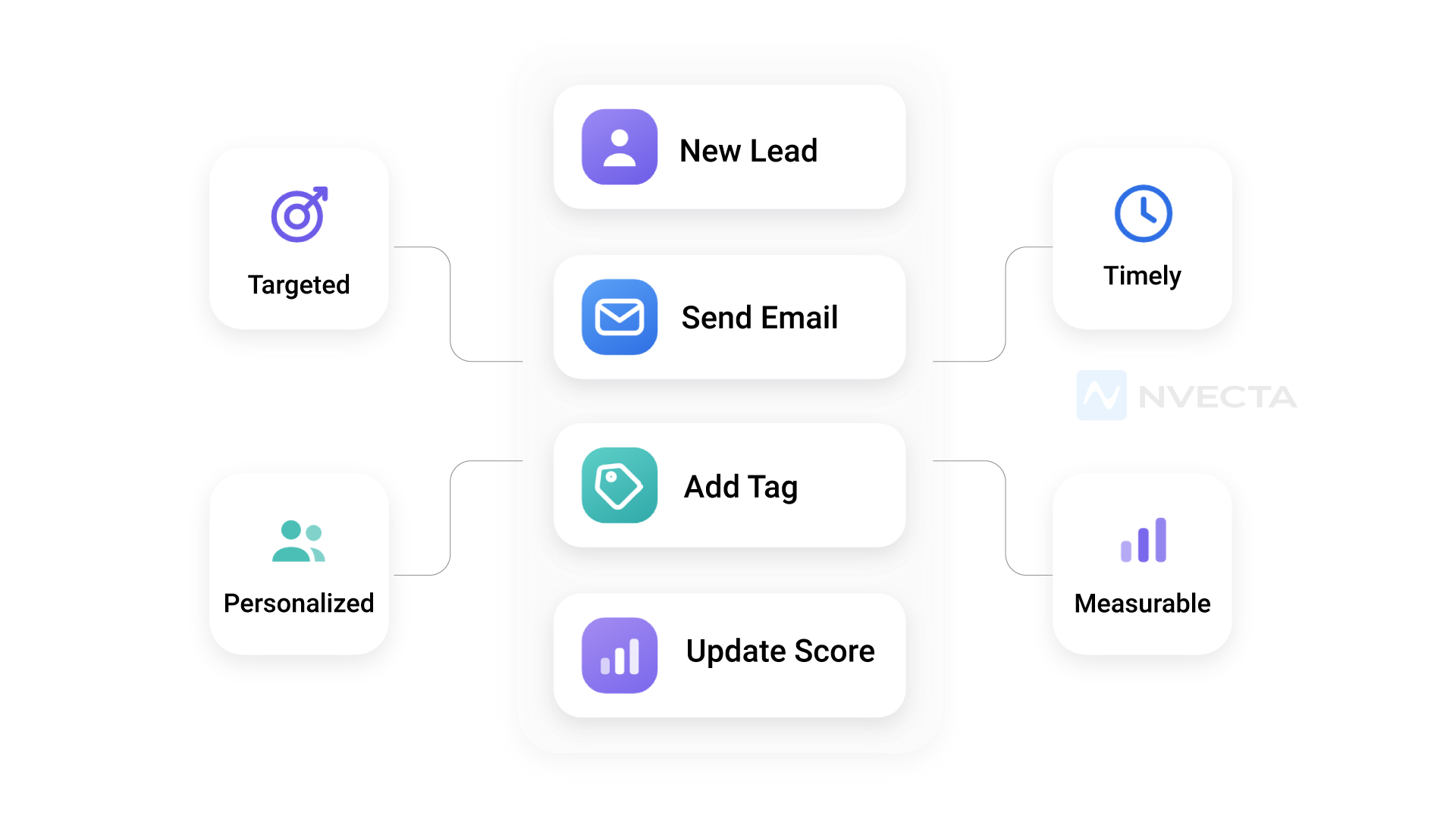
Marketing automation is completely different from an ESP. It’s not just about sending emails. It’s about automating the entire customer journey based on what people actually do.
Someone visits your website, downloads a guide, and opens an email you sent them. The platform notices all of this and triggers the next action automatically.
Maybe it sends them another email three days later. Or it adds them to a segment, changes their score, or alerts your sales team. It all happens without you lifting a finger.
What Marketing Automation Actually Does
You can set up workflows that react to specific behaviours. Someone abandons their cart, they get a reminder email. A prospect downloads your pricing page, their lead score goes up.
A customer completes their first purchase, and they automatically get onboarded to a retention sequence.
You can also build really specific audience segments based on actions, not just basic lists. Show different content to different people dynamically. Score leads so your sales team knows who’s actually ready to talk.
Connect it to your CRM so everything stays synced up. Send messages across email, SMS, ads, and push notifications, all coordinated together.
When You Actually Need Marketing Automation
This stuff is useful if you’re managing a lot of leads or trying to move people through a long sales cycle. E-commerce businesses use it for abandoned carts and customer retention.
B2B companies use it to nurture leads over months. Basically, if you’ve got a complex process where timing and behaviour matter, marketing automation handles it.
Who Should Invest in Marketing Automation
If your business is growing and you’ve got more leads than you can handle manually, it’s time to look at this. Same if you’re B2B and people take months to decide.
E-commerce brands cdp with multiple stages in the customer journey benefit too. Basically, if you’ve got a team actually managing marketing strategy and you need to scale what you’re doing, marketing automation makes sense.
Marketing Automation vs ESP: Key Differences
The biggest difference between email service providers and marketing automation platforms is scope.
| Feature | ESP | Marketing Automation |
|---|---|---|
| Email campaigns | ✔ | ✔ |
| Automation workflows | Limited | Advanced |
| Behavioral targeting | ❌ | ✔ |
| CRM integration | Rare | Standard |
| Multi-channel marketing | ❌ | ✔ |
| Complexity | Low | High |
| Cost | Lower | Higher |
In short:
- ESPs focus on sending emails
- Marketing automation focuses on customer journeys
Pros and Cons of Email Service Providers
The Good
ESPs are simple to get started with. You don’t need to spend weeks figuring things out. Log in, build a template, send an email. That’s it.
They’re cheap too, which matters when you’re bootstrapping. And you don’t need marketing expertise to use one. If you can write an email and schedule it, you’re good.
They’re solid for what they do. Newsletters work great. Regular campaigns work great. You get reliable delivery and decent reporting. Nothing breaks.
The Not So Good
The problem is they don’t scale with you. Automation is basically non-existent or super basic. You’re either sending the same email to everyone or doing manual work to segment lists. Personalisation is limited.
You can throw someone’s first name in a template, but that’s about it.
If you need to build a complex funnel where different actions trigger different responses, you’re out of luck.
If your sales cycle is long and you need to nurture people over time with the right message at the right moment, an ESP can’t really do that. You’d be manually moving people around, which defeats the purpose.
So if you’re small and simple, ESPs are perfect. But they hit a ceiling pretty quickly as you grow.
Pros And Cons of Marketing Automation Platforms
The Good
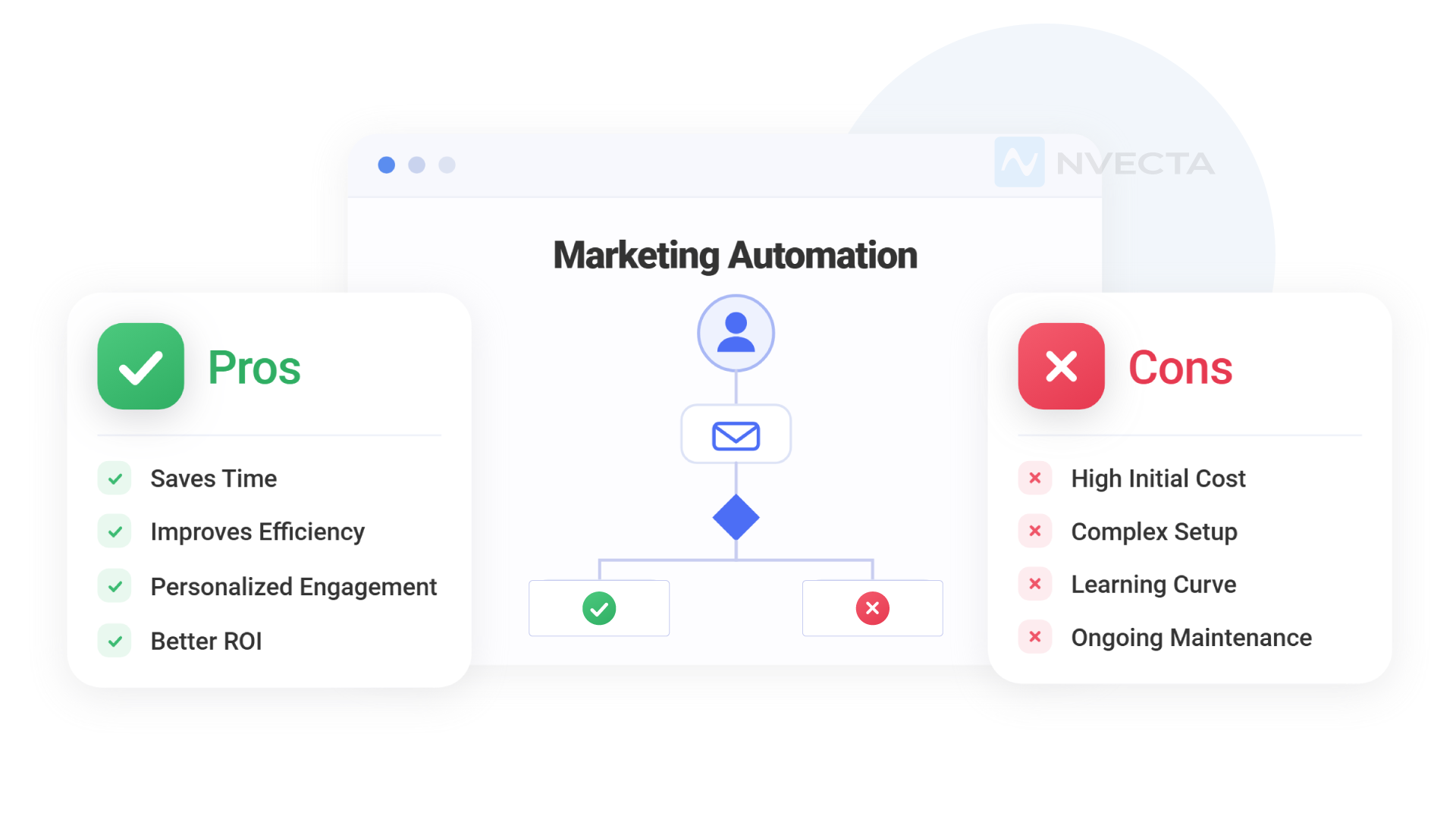
You can actually personalise at scale. Not just the first name in the subject line. Real personalisation based on what people do, where they are in their journey, and what they care about. Each person gets a different experience.
The automation is the real win. Set something up once, and it runs. Someone does something, the system reacts. You’re not manually doing anything. You build it right, and it works forever.
Marketing and sales actually talk the same language with one of these. Lead scores, pipeline visibility, handoff workflows. Everything syncs up, so salespeople know which leads to actually follow up with.
It also grows with you. When you get busier, the system gets busier. You’re not hiring five more people to manage everything manually.
The Not So Good
It’s expensive. Like, noticeably more than an ESP. If you’re running on a tight budget, it hurts.
You actually need to think through your strategy before you set it up. You can’t just log in and wing it. You need to figure out your workflows, your segments, and what triggers what. That takes time and planning.
Many businesses turn to startup consulting at this stage to map out the right strategy before committing to a platform.
There’s a real learning curve. These platforms do a lot. Menus, features, integrations. It’s not pick it up in ten minutes situation. Someone on your team needs to actually learn it.
And here’s the thing: if you’re a three-person startup sending a weekly newsletter, you’re paying for a Ferrari when you need a Honda. It’s overkill. You’re wasting money on features you’ll never use.
So marketing automation is powerful if you need it. But it’s only worth it if you actually have the strategy and the volume to justify it.
Which Do You Need: Marketing Automation or an ESP?
Here’s how to figure it out. Ask yourself what you’re actually trying to do.
Go with an ESP if
You’re sending newsletters or periodic promotions, and that’s pretty much it. Your customers decide fast, so you don’t need a long nurture process.
You’re not doing anything fancy with personalisation. And honestly, you don’t have a ton of budget to throw around. An ESP gets you to where you need to be without breaking the bank.
Go with Marketing Automation if
You’ve got leads that need time to warm up. They’re not buying today, but they might buy in three months. You want to send them different messages based on what they actually do, not just blast everyone the same thing.
Your customer journey has a bunch of steps, and different people need different paths through it. Your marketing team and sales team actually work together and need to be connected.
Or you’re growing fast and you know email marketing is going to be a bigger deal next year than it is today.
The Real Test
Think about whether you’re sending the same message to everyone or different messages to different people. Think about whether this is a one-time thing or an ongoing process.
Think about whether you have the budget and the team to manage something more complex. That’s usually enough to know which way to go.
Can You Use Both?
Yeah, you can. A lot of companies do.
Most people don’t start with marketing automation. It doesn’t make sense. You start with an ESP because it’s cheap and simple. You build your list, figure out what you’re doing with email, and get comfortable with it.
Then, as you grow and things get more complicated, you realise you need something that does more.
So the path usually looks like this. You’re sending newsletters with an ESP. Your list grows. You start thinking about lead nurturing. You realise your ESP can’t handle what you’re trying to do.
Then you get marketing automation. But you might keep the ESP for your regular newsletter because it works fine for that.
Some companies split it that way on purpose. Use an ESP for their weekly newsletter or promotional blasts. Use marketing automation for the behind-the-scenes lead nurturing and customer lifecycle stuff. Both tools are doing what they’re good at.
The nice thing about this approach is you’re not paying for a platform to do something it’s bad at. ESPs are cheap for sending emails at scale. Marketing automation is worth it for complex automation. Use each one for what it actually excels at.
How NVECTA Bridges the Gap
This is where NVECTA fits in. Instead of forcing you to choose between a basic ESP and an overly complex automation suite, NVECTA gives growing businesses the automation power they actually need without the bloated features they don’t.
You can run campaigns, build behaviour-based workflows, and scale customer journeys from one platform, without paying enterprise-level prices or dealing with enterprise-level complexity.
It’s built for teams that are scaling and want smarter marketing, not more software.
Final Thoughts
There’s no one right answer here. It depends on what you’re doing and how big you are.
If you keep things simple, an ESP works great. It’s cheap, it’s easy, it does what you need. Don’t overcomplicate it.
If you’re managing a bunch of different customer journeys and things are getting complex, marketing automation is worth the investment. You’ll get way more done, and you’ll do it smarter.
And if you’re somewhere in between, growing fast but not ready for enterprise-level complexity, that’s exactly where NVECTA makes sense. It gives you the automation power to scale without forcing you into a bloated, overcomplicated system.
Pick something that makes sense for right now. Not for where you think you’ll be in five years. Not for what you wish your business was doing. What are you actually doing today? Pick the tool for that. The nice part is you can always switch or add something later. You’re not locked in.
Ready to simplify your marketing and scale smarter? Explore NVECTA today.
