














 Email
Email SMS
SMS Whatsapp
 Web Push
 App Push
 Audience Sync for Ads
 Popups
 Channel A/B Testing
  Control groups Analysis
 Frequency Capping
 Funnel Analysis
 Cohort Analysis
 RFM Analysis
 Signup Forms
 Surveys
 NPS
NPS Landing pages personalization
  Website A/B Testing
  PWA/TWA
 Heatmaps
 Session Recording
 Wix
Wix Shopify
 Magento
 Woocommerce
 eCommerce D2C
  Mutual Funds
 Insurance
 Lending
  Recipes
  Knowledgebase
 Developer Docs
 Product Updates
 App Marketplace
 Academy
 Ebooks
 Case Studies
 Blog
Blog Templates
 Aparupa Saha
Omnichannel Marketing: According to the dictionary, Omni means ‘all the things’. We can compare the omnichannel to a grocery store. Sounds weird, right? Just like you get all the food items and utilities in one place, the same is the case with omnichannel.
It is like the integration hub of all the channels and platforms into a single mobile application or others.
From word of mouth to digital marketing and now onto multichannel and omnichannel marketing, the marketing strategies adopted by the businesses have come a long way. There is cut-throat competition in every industry, with technology being the only escape.
All the processes, including software development, marketing, and sales, wouldn’t be possible without having technology in hand.
After making hefty amounts of investment in the busine, nd setting up does not complete the job. The major challenge comes in building the online presence of the brand name in the industry. The only way to do this is by marketing your business the right way through the appropriate omnichannel strategies.
What is Omnichannel Marketing?
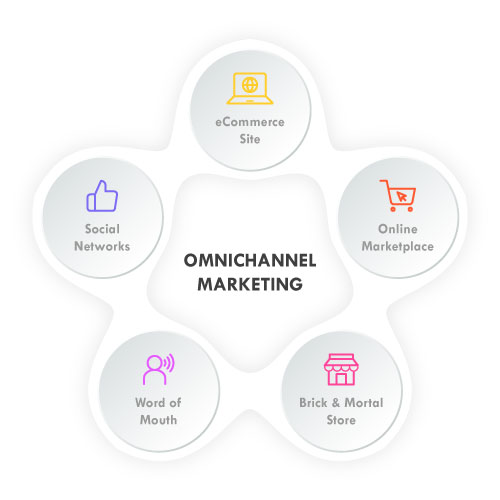
One of the most heard words in marketing nowadays is ‘omnichannel marketing’. But what exactly does it mean, and what are its benefits? In simple terms, it is cross-channel marketing by integrating various platforms. It integrates both traditional and digital marketing strategies for increased customer engagement.
Being carried out mostly by e-commerce businesses, it provides a personalised experience based on their preferences to the customers.
According to the dictionary, Omni means ‘all the things’. We can compare the omnichannel to a grocery store — just like you get all the food items and utilities in one place, the same is the case with omnichannel. It is like the integration hub of all the channels and platforms into a single mobile application or others.
Difference between Omnichannel and Multichannel Marketing
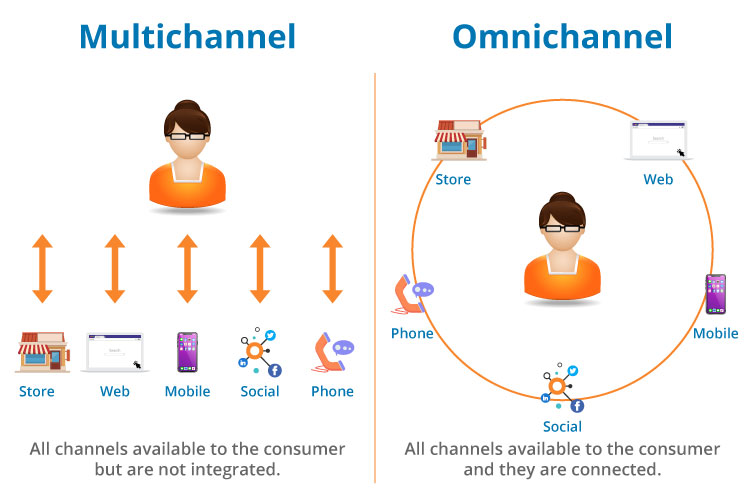
Omnichannel and multichannel marketing are often confused. But they are different. The omnichannel always includes multichannel; however, multichannel does not.
For a better understanding, multichannel marketing involves engaging customers separately across all the digital platforms. On the other hand, omnichannel is integrated marketing across all channels through a streamlined procedure. Omnichannel marketing is preferred over other marketing methods due to better efficiency and results.
With multichannel marketing, the business is at the centre of operation. While in omnichannel marketing, the customer is at the centre of the operation.
| Aspect | Multichannel Marketing | Omnichannel Marketing |
|---|---|---|
| Core Focus | Maximising reach across individual channels | Delivering a unified, seamless customer experience |
| Centre of Strategy | The business and its channels | The business and its channels |
| Channel Integration | Channels operate independently | All channels are interconnected and in sync |
| Messaging | May vary across channels | Consistent and personalised across all touchpoints |
| Data Usage | Channel-specific data silos | Unified customer data across all channels |
| Customer Experience | Fragmented — each channel feels separate | Fluid — experience continues across channels |
| Goal | Wider reach and brand visibility | Deeper engagement and long-term loyalty |
Best practices for the implementation of omnichannel marketing
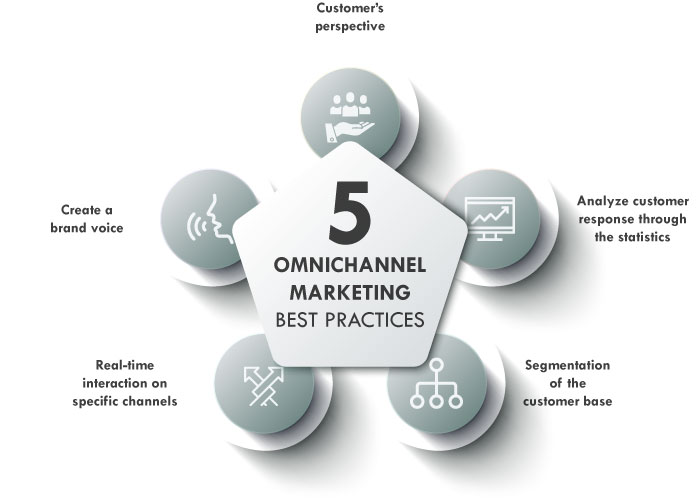
Investing your time, efforts, and money in omnichannel marketing is the right decision in the present day. However, nothing comes in handy. The marketing trends keep on transforming, and so do the demands of the customers.
This makes it important to implement omnichannel marketing strategies by following the right tactics and methods. Some practices to carry out the omnichannel marketing the right way include:
- Customer’s perspective: We recommend stepping into the customer’s shoes to better understand their requirements. However, the owner or businessmen view their business differently from the customer’s perspective. Whether it be a good or critical review, the business must correct it and make the changes on a positive note.
- Analyse customer response through the statistics: Try understanding the customer’s responsibility of feedback through surveys and check real-time statistics. No customer visits the website for the first time and buys goods until it is among the trusted ones. So, it is important to keep track of the CTR and lead generation, among others.
- Segmentation of the customer base: Depending on the target audience, divide the customer base into segments based on several factors. This brings ease of sending personalised messages and emails to the customers.
- Real-time interaction on specific channels: Customers being the priority of the business, being available for them is also of vital importance. The majority of the customers expect good customer service in case of any issues. Plus, this is the best way to build trust and a strong customer base. The option of real-time chat or customer support helps in this process.
- Create a brand voice: Building an online presence in the technology-driven world is no cakewalk. So, by implementing and integrating all the techniques, one can establish a good brand voice. This further acts as an essential tool for the growth and profitability of the business.
Elements to build an omnichannel
A proper infrastructure while developing the program or software is necessary to expand your business through this emerging concept. One must include the following elements while building an omnichannel:
- Listing of products and services
- Marketing strategies
- Record of sales
- Customer support
- Statistics on the success of satisfied and happy customers
Brands having well-established omnichannel marketing strategies
Even though omnichannel marketing is still an emerging concept, some well-known brands are carrying it out in the best possible ways. They include:
- Disney
- Starbucks
- Chipotle
- Bank of America
- Walgreens
- Sephora
- Pepperfry
- Benefit cosmetics
Benefits of omnichannel marketing
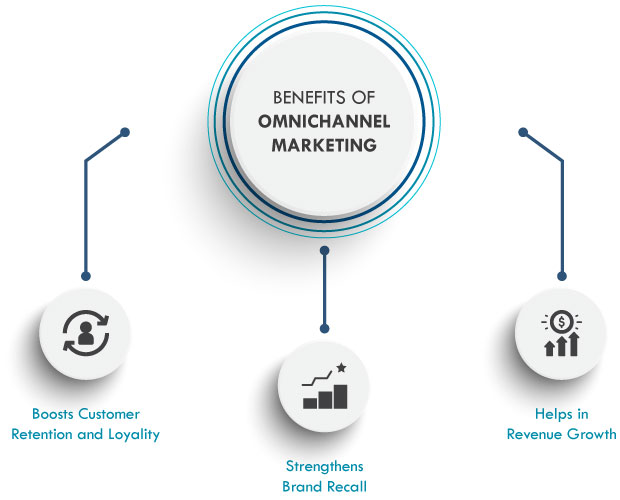
It has proved to be way better than the other marketing strategies, being a completely successful marketing method. It serves a list of omnichannel benefits, which include:
- Customer retention: One of the most important things is to establish a high level of trust among the customers and the brand. Having a reliable brand voice across all the channels allows building trust among the customer base. This further leads to customer retention.
- Brand recall: A good online presence through omnichannel marketing consistently reminds the customer about the brand. This further helps in recalling the brand in an hour of need.
- Revenue growth: The bottom line of all marketing strategies is the growth in business. The personalisation omnichannel strategies and a strong brand voice strengthen the customer base, leading to high profits and brand recognition.
Conclusion
With the positive impact that omnichannel marketing has on the digital platform, it is a win-win situation for the business. We offer you all the services required for establishing strong marketing. The services include:
- Referral software and marketing
- Customer engagement software
- Conversion rate optimisation software
- Omnichannel software
Right from designing your journey to marketing it, we’ve got you covered. With many trusted and satisfied clients, we help you prioritise your customers and serve them with the best.
With all the above-mentioned strategies, tips, and benefits, you’ve got it all served on a platter for you. So, do not wait for the right opportunity and get started with your business up and running.
FAQs
What is omnichannel marketing in simple terms?
Omnichannel marketing means connecting all your sales and marketing channels so customers get a seamless, consistent experience everywhere they interact with your brand. Whether they engage via email, social media, your website, or in-store, the experience feels connected and personalised.
What is the difference between multichannel and omnichannel marketing?
Multichannel marketing means being present on multiple channels, but each channel works independently. Omnichannel connects all channels around the customer journey, so every touchpoint is informed by the previous one. The key difference is integration. Multichannel is about reach. Omnichannel is about experience continuity.
Why is omnichannel marketing important for growing brands?
Today’s customers interact with a brand an average of six or more times before making a purchase decision. They switch between devices and channels constantly. Omnichannel ensures your brand is present, consistent, and relevant at every one of those moments. Businesses that do this well retain more customers and generate higher lifetime value.
Which industries benefit most from omnichannel marketing?
Retail, healthcare, automotive, and financial services see the highest impact from omnichannel because their customer journeys involve multiple touchpoints over extended periods. However, any business where customers research, compare, or interact across more than one channel before buying can benefit significantly from an omnichannel approach.
What are the key elements of a successful omnichannel strategy?
A successful omnichannel strategy needs five core elements: a unified customer data platform, real-time audience segmentation, cross-channel campaign automation, behavioural triggers, and consistent brand messaging. Without connected data at the foundation, the rest falls apart. Tools like NVECTA bring all of these together in one system.
How does AI improve omnichannel marketing?
AI improves omnichannel marketing by making personalisation scalable. Instead of manually creating segments or rules, AI analyses customer behaviour in real time to predict intent, trigger the right message, and recommend the next best action. NVECTA uses AI to automate segmentation, personalisation, and campaign orchestration across all channels simultaneously.
How does NVECTA support omnichannel marketing?
NVECTA is an AI-powered CDP and marketing automation platform that unifies customer data from all channels into a single profile, automates cross-channel campaigns, and delivers personalised experiences at scale. It supports email, SMS, push, WhatsApp, and paid channels from one platform, with real-time analytics to measure performance across every touchpoint
