














 Email
Email SMS
SMS Whatsapp
 Web Push
 App Push
 Audience Sync for Ads
 Popups
 Channel A/B Testing
  Control groups Analysis
 Frequency Capping
 Funnel Analysis
 Cohort Analysis
 RFM Analysis
 Signup Forms
 Surveys
 NPS
NPS Landing pages personalization
  Website A/B Testing
  PWA/TWA
 Heatmaps
 Session Recording
 Wix
Wix Shopify
 Magento
 Woocommerce
 eCommerce D2C
  Mutual Funds
 Insurance
 Lending
  Recipes
  Knowledgebase
 Developer Docs
 Product Updates
 App Marketplace
 Academy
 Ebooks
 Case Studies
 Blog
Blog Templates
 Shivani Goyal
In a world where consumers are bombarded with hundreds of messages every day, generic marketing no longer cuts through the noise. Personalised marketing examples from leading brands show us that relevance is everything.
When a message speaks directly to a customer’s needs, preferences, and behaviours, it does not just get noticed, it gets acted upon. At NVECTA, we have seen firsthand how businesses that embrace personalisation transform their customer relationships and, more importantly, their bottom line.
This blog walks you through 15 powerful personalised marketing examples that are not just clever ideas but strategies that drive real, measurable results.
What Is Personalised Marketing?
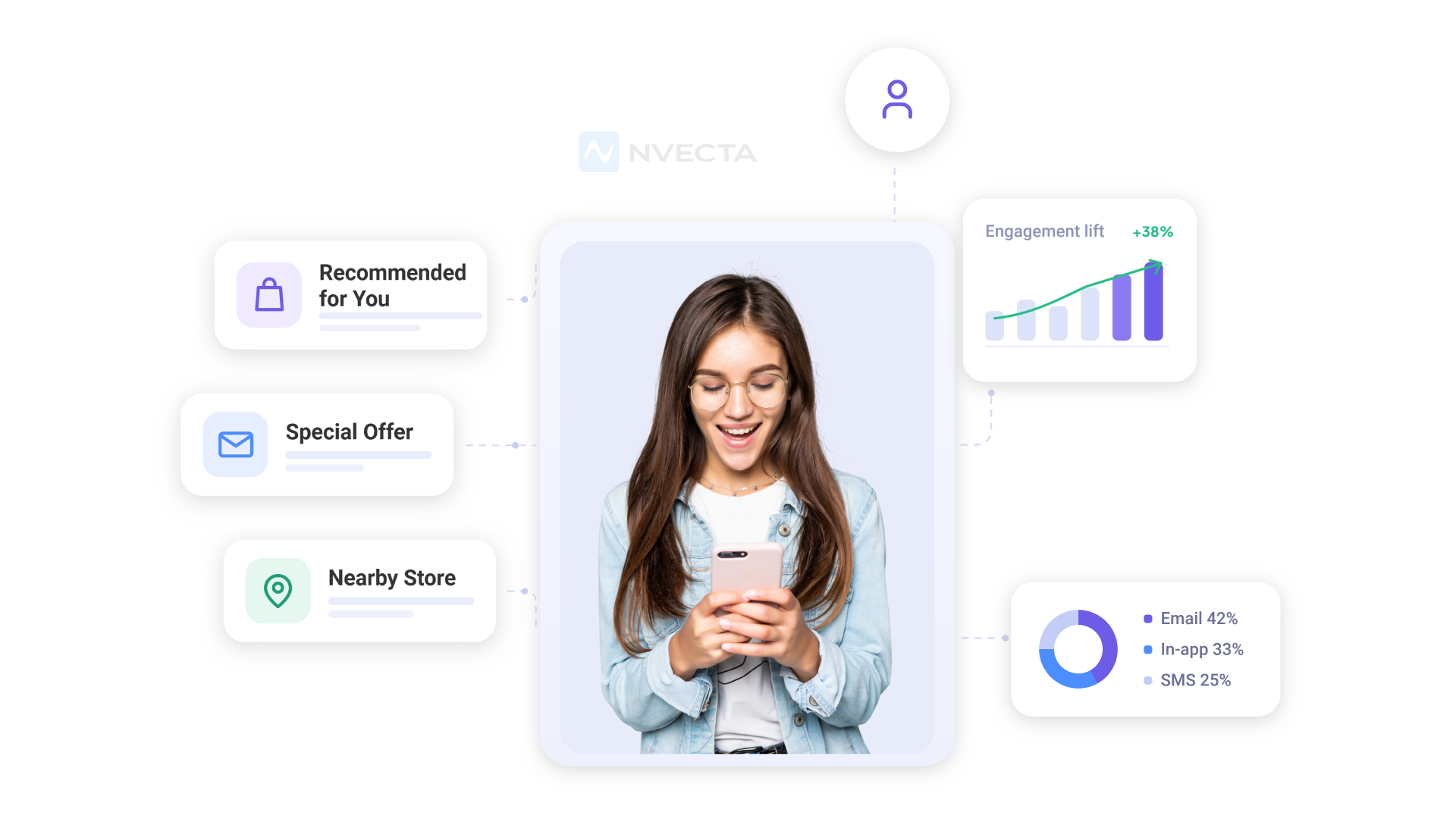
Personalised marketing is the practice of using data, technology, and customer insights to deliver messages, offers, and experiences that are tailored to the individual rather than the mass audience.
Instead of sending the same email to every customer, personalised marketing adapts the content, timing, and channel to match what a specific person is most likely to respond to.
It draws on signals like purchase history, browsing behaviour, location, demographics, and even real-time context to make every interaction feel relevant and intentional.
At its core, personalised marketing is about replacing the one-size-fits-all approach with a one-to-one conversation at scale, and when done well, it is one of the most powerful levers a brand can pull to build loyalty and drive growth.
Types of Personalised Marketing
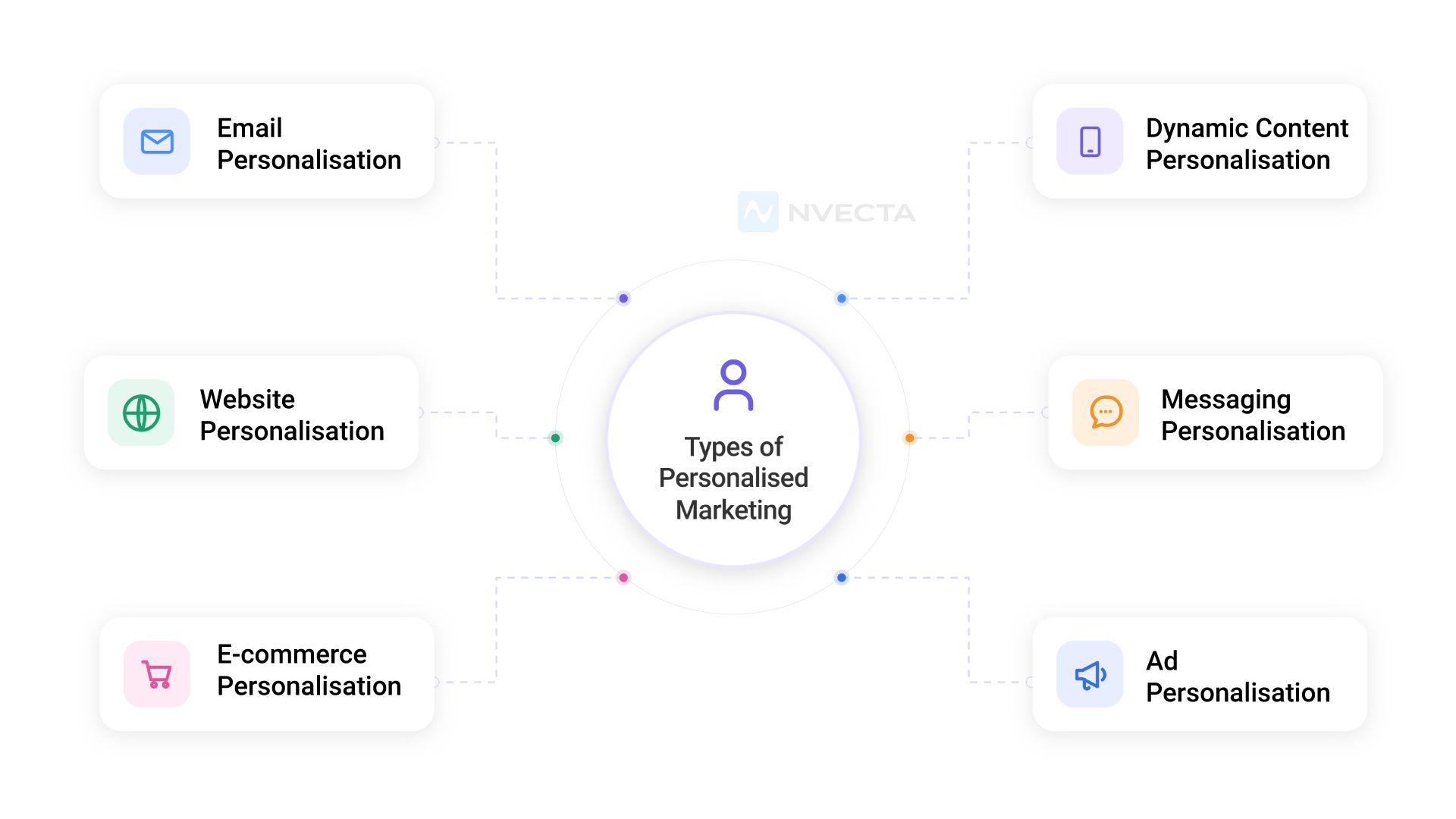
Personalised marketing is not a single tactic but a broad spectrum of approaches, each suited to different channels, goals, and customer touchpoints.
Email personalisation is one of the most widely used forms, going far beyond simply inserting a first name into a subject line.
It involves segmenting audiences by behaviour, purchase stage, or preferences and delivering content that speaks directly to where each subscriber is in their journey with the brand.
Website personalisation changes what a visitor sees based on who they are and how they have interacted with the site before.
Returning customers may see products related to past purchases, while first-time visitors might be greeted with introductory offers or educational content tailored to their traffic source.
Product recommendations use algorithms to analyse past behaviour and surface items a customer is statistically likely to buy next.
This type of personalisation is the engine behind the success of platforms like Amazon and Netflix, and it works equally well in retail, streaming, and even B2B contexts.
In Behavioural-triggered messages, automated messages or reminders are sent in response to specific actions such as an abandoned cart email,
A re-engagement message after a period of inactivity, or a congratulatory note when a loyalty milestone is reached—helping to increase customer engagement by delivering timely, relevant, and personalized communication that resonates with users.
These messages feel timely and relevant because they are directly connected to something the customer just did.
Predictive personalisation takes things a step further by using machine learning to anticipate future behaviour rather than just responding to past actions.
Brands using this approach can reach customers with the right message before the customer even realises they need it.
Dynamic advertising tailors ad creative, copy, and targeting in real time based on audience data, ensuring that different segments see versions of an ad most likely to resonate with them rather than a single static creative served to everyone.
Together, these types of personalised marketing form a toolkit that brands can mix and match depending on their resources, data maturity, and customer expectations.
Benefits of Personalised Marketing
The case for personalised marketing goes well beyond intuition. When brands invest in delivering relevant, individualised experiences, the returns show up across every meaningful metric.
The most immediate benefit is higher engagement. When customers receive content that actually reflects their interests and needs, they are far more likely to open an email, click through an ad, or spend time on a website.
Relevance removes friction and replaces indifference with attention.
Personalisation also drives stronger conversion rates. A customer who sees a product recommendation based on something they recently browsed, or receives a discount on an item they have been considering, is in a very different mental state than one encountering a generic promotion.
The closer the message is to the customer’s actual intent, the shorter the path to purchase.
Customer retention improves significantly when personalisation is done well. People are more likely to stay loyal to a brand that seems to understand them.
Personalised loyalty programs, milestone communications, and tailored re-engagement campaigns all signal to the customer that they are valued as individuals rather than just entries in a database.
Personalised marketing also tends to produce higher average order values.
When recommendation engines surface complementary products or when upsell messaging is timed to the right moment in the customer journey, customers naturally spend more because the suggestions feel helpful rather than pushy.
Beyond the numbers, there is a longer-term brand benefit. Customers who consistently have relevant, frictionless experiences develop a genuine affinity for a brand.
That affinity translates into word-of-mouth, repeat business, and reduced dependence on paid acquisition over time.
In short, personalisation does not just improve individual campaigns. It builds the kind of customer relationships that compound in value over time.
15 Personalised Marketing Examples That Drive Real Results
1. Netflix’s “Because You Watched” Recommendations
Netflix is perhaps the gold standard of personalised marketing. By analysing viewing history, ratings, and even the time of day a user watches, Netflix serves up hyper-relevant content suggestions under the “Because You Watched” label.
This keeps users on the platform longer and dramatically reduces churn. The lesson here is simple: use behavioural data to show customers what they want before they know they want it.
2. Amazon’s Product Recommendation Engine
Amazon’s homepage looks different for every single user. Its recommendation engine processes purchase history, browsing patterns, and wish lists to surface products that feel handpicked.
A significant portion of Amazon’s revenue has been attributed to these recommendations, making this one of the most financially impactful personalised marketing examples in existence.
In fact, various personalization statistics highlight that tailored product suggestions can drive a substantial share of e-commerce sales, reinforcing how powerful data-driven recommendations have become in shaping customer behavior and boosting revenue.
3. Spotify Wrapped
Every year, Spotify turns individual listening data into a deeply personal year-in-review experience called Spotify Wrapped.
Users share their results obsessively on social media, turning private data into public promotion.
This campaign is a masterclass in making customers feel seen while simultaneously generating massive organic reach for the brand.
4. Starbucks’ Loyalty App Personalisation
The Starbucks Rewards app goes well beyond a simple points tracker. It uses a combination of past order data, time of day, and even local weather conditions to deliver offers that feel genuinely timely and relevant to each customer.
Someone who consistently reaches for an iced beverage on a warm afternoon, for instance, might find a perfectly timed promotion waiting for them at exactly the right moment.
This level of contextual awareness is what makes the app so effective at encouraging customers to visit more often and spend more with each visit.
5. Sephora’s Personalised Beauty Recommendations
Sephora collects skin type, tone, and beauty preferences through its profile setup and then uses that data to recommend products, send targeted emails, and curate in-app content.
Its Beauty Insider program layers loyalty rewards onto this personalised experience, strengthening customer loyalty and creating a cycle of engagement that keeps customers coming back repeatedly.
6. Nike’s Custom Product Builder
Nike By You lets customers design their own sneakers, selecting colours, materials, and even adding personal text.
This is personalisation at the product level. By giving customers creative ownership, Nike deepens emotional investment in the purchase and commands a premium price.
The result is not just a sale but a story the customer wants to tell.
7. Airbnb’s Personalised Email Campaigns
Airbnb sends emails that reference destinations the user has searched for, trips they have previously taken, and experiences popular in their target cities.
Rather than broadcasting generic travel deals, Airbnb makes every email feel like it was written for that one person.
Open rates and click-throughs for these campaigns significantly outperform industry averages.
8. Coca-Cola’s “Share a Coke” Campaign
Replacing the iconic Coca-Cola logo with popular first names was a simple yet brilliant act of behavioural personalisation, turning an everyday product into something that felt uniquely tailored to each consumer.
Customers searched store shelves for their names and bought extra cans to share with friends.
The campaign drove a tangible increase in sales and social sharing, proving that personalisation does not always require sophisticated technology.
Sometimes it just requires understanding what makes people feel special.
9. HubSpot’s Dynamic Website Content
HubSpot uses smart content to change what different website visitors see based on their lifecycle stage, industry, or past interactions.
A first-time visitor sees introductory content, while a returning prospect sees case studies relevant to their sector.
This ensures every visitor gets the most persuasive version of the site for where they are in the buyer journey.
10. ASOS’s Personalised Homepage
ASOS tailors its homepage grid based on browsing and purchase history. A shopper who regularly buys streetwear sees different featured products than one who browses formal attire.
This keeps the discovery experience fresh and relevant, reducing the cognitive load of scrolling through thousands of products while increasing the likelihood of a purchase.
11. Grammarly’s Weekly Writing Reports
Grammarly sends personalised weekly emails showing users their productivity stats, accuracy scores, and vocabulary achievements.
These reports are unique to each user and tap into the psychological appeal of progress tracking, powered by a customer data platform that turns raw data into personalized insights.
Users who receive these emails are far more likely to stay active on the platform, making this a retention-focused personalised marketing win.
12. LinkedIn’s “People You May Know” and Job Alerts
LinkedIn draws on a rich mix of professional data points such as job title, skills, industry, location, and network connections to surface job alerts and people suggestions that feel genuinely relevant to each user.
Rather than flooding professionals with listings that miss the mark, the platform delivers opportunities that align closely with where someone is in their career.
This consistent relevance is what turns LinkedIn into a go-to career resource rather than simply a place to park an online resume.
13. Domino’s SMS and App Personalisation
Domino’s uses order history to pre-fill a returning customer’s favourite order and send them promotions around their typical order times.
A customer who orders every Friday evening might receive a discount on Thursday night, nudging them to act early.
This predictive, behaviour-driven timing is one of the subtler but most effective personalised marketing examples in the food and beverage space.
14. Zalando’s Personalised Fashion Feed
European fashion platform Zalando curates a personalised feed for each user based on style preferences, size, past purchases, and items saved to wish lists.
The feed functions more like a personal stylist than a product catalogue, and it significantly reduces the time users spend searching while increasing conversion rates.
15. Bank of America’s Personalised Financial Insights
Bank of America’s mobile application provides users with spending breakdowns, savings tips, and financial milestones tailored to their actual account activity.
Rather than generic financial advice, customers receive insights that reflect their own money habits.
This builds trust, encourages deeper engagement with app features, and positions the bank as a genuine financial partner rather than just a place to store money.
Bringing It All Together with NVECTA
These personalised marketing examples share a common thread: they all use data intelligently to make customers feel understood rather than targeted.
The difference between marketing that converts and marketing that gets ignored often comes down to relevance, timing, and context.
At NVECTA, we help businesses build exactly this kind of intelligence into their marketing strategy. From identifying the right data signals to designing campaigns that respond to customer behaviour in real time, NVECTA provides the strategic and technical foundation needed to make personalisation work at scale.
Whether you are just starting your personalisation journey or looking to take an existing program to the next level, NVECTA has the expertise to help you deliver experiences your customers will remember and return for.
