














 Email
Email SMS
SMS Whatsapp
 Web Push
 App Push
 Audience Sync for Ads
 Popups
 Channel A/B Testing
  Control groups Analysis
 Frequency Capping
 Funnel Analysis
 Cohort Analysis
 RFM Analysis
 Signup Forms
 Surveys
 NPS
NPS Landing pages personalization
  Website A/B Testing
  PWA/TWA
 Heatmaps
 Session Recording
 Wix
Wix Shopify
 Magento
 Woocommerce
 eCommerce D2C
  Mutual Funds
 Insurance
 Lending
  Recipes
  Knowledgebase
 Developer Docs
 Product Updates
 App Marketplace
 Academy
 Ebooks
 Case Studies
 Blog
Blog Templates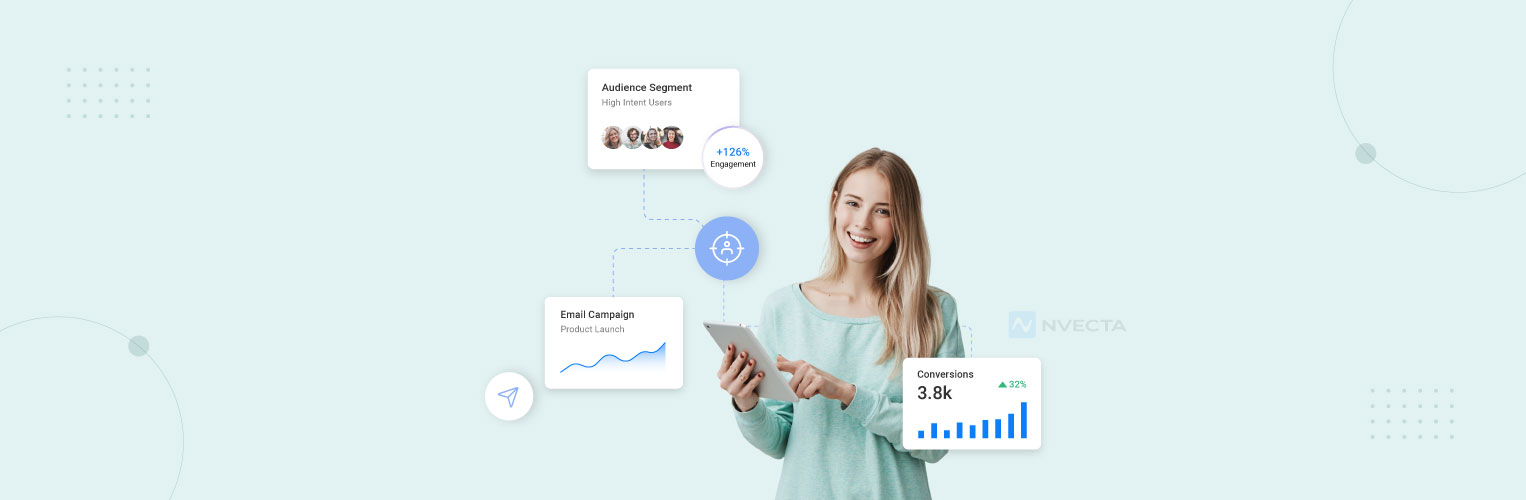
 Shivani Goyal
Most marketing budgets are wasted on the wrong people. Studies consistently show that a significant chunk of ad spend reaches audiences who have no real intention of buying.
The solution isn’t to spend more. It’s to spend smarter. Targeted marketing campaigns are how modern brands stop broadcasting to everyone and start speaking directly to the people most likely to convert.
And with a customer data platform (CDP) like NVECTA, building and executing those campaigns has never been more precise or powerful.
In this guide, we’ll break down exactly how to run targeted marketing campaigns that drive real results, with concrete examples you can adapt for your own business.
What Are Targeted Marketing Campaigns?
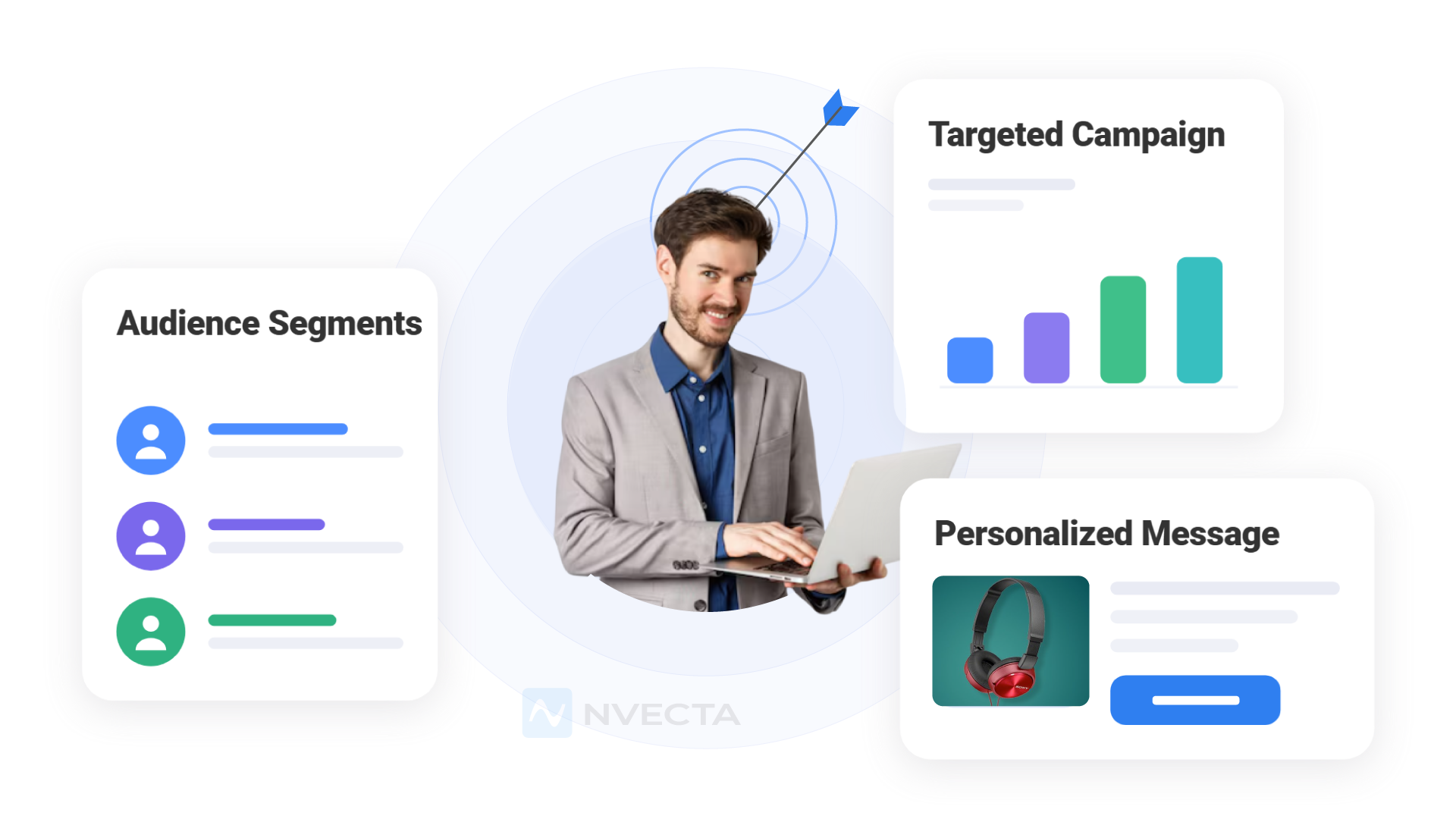
A targeted marketing campaign is a focused effort to reach a specific, well-defined audience segment with messaging tailored to their needs, behaviours, or demographics, rather than blasting the same message to everyone.
The difference between a generic campaign and a targeted one is the difference between a billboard on a highway and a one-on-one conversation.
One hopes the right person walks by. The other finds them, meets them where they are, and says exactly what they need to hear.
Effective targeted campaigns typically share four qualities:
They are built on real data. Assumptions about your audience are replaced by actual behavioural signals, purchase history, browsing patterns, and demographic data.
They are segmented. Rather than one monolithic audience, campaigns are broken into groups: high-value customers, lapsed buyers, cart abandoners, and new subscribers, each receiving distinct messaging.
They are channel-aware. The right message is delivered on the right platform, whether that’s email, SMS, paid social, push notifications, or a combination.
They are measurable. Every targeted campaign defines success upfront and tracks it rigorously.
Step 1: Build a Unified Customer Profile
You cannot target effectively without knowing who you’re targeting. The first step is consolidating everything you know about your customers into a single, clean profile.
This means stitching together data from your website analytics, CRM, e-commerce platform, support tickets, loyalty program, and any offline touchpoints.
A customer who browsed a product page three times, opened two emails, and abandoned a cart last Tuesday is telling you something but only if all those signals are connected.
This is the core problem that CDPs like NVECTA, solve. NVECTA ingests data from every source, resolves identities across devices and channels,
And creates a real-time unified profile for each customer. Instead of working with fragmented spreadsheets or siloed tools, your marketing team works from a single source of truth.
Example: A mid-size skincare brand integrates its Shopify store, email platform, and loyalty app into NVECTA.
Now they can see that a specific customer segment, women aged 28–40 who purchase moisturisers but have never tried their serum line, numbers 12,000 people. That’s a campaign waiting to happen.
Step 2: Define Your Segments
Once your data is unified, segmentation is where the magic begins. Not all customers are alike, and not all of them should receive the same message.
Here are the most effective segmentation approaches:
Behavioural segmentation groups customers by what they do, pages visited, products purchased, frequency of engagement, and time since last purchase. This is often the most powerful segmentation type because behaviour predicts intent.
Demographic segmentation uses age, location, gender, income bracket, or job title. Useful for broad strokes, but rarely sufficient on its own.
Psychographic segmentation goes deeper: values, lifestyle, interests. Harder to collect but enormously powerful for brand-level messaging.
Predictive segmentation uses machine learning to identify who is likely to buy, churn, or upgrade. This is where platforms like NVECTA add a serious competitive advantage. Their predictive models surface high-intent segments before those customers even raise their hand.
RFM segmentation (Recency, Frequency, Monetary value) is a classic for e-commerce. Customers are ranked by how recently they bought, how often they buy, and how much they spend. High scores on all three = your VIPs. Low recency + high historical frequency = your win-back candidates.
Example: An online fitness equipment retailer uses NVECTA to create four segments: VIP repeat buyers, one-time purchasers who haven’t returned in 90 days, cart abandoners in the last 7 days, and new subscribers who haven’t bought yet. Each gets a completely different campaign.
Step 3: Craft Messaging That Speaks to Each Segment
Segmentation is only half the work. The other half is writing copy, designing creatives, and choosing offers that are genuinely relevant to each group.
One of the key principles that separates effective campaigns from ineffective ones is relevance. Messages should feel tailored, not generic, which is why strong audience segmentation is essential in targeted email marketing.
Lead with the problem they have, not the product you sell. A lapsed customer doesn’t need to hear about your brand values. They need a reason to come back. Acknowledge the time that’s passed, offer an incentive, and make it effortless.
Effective messaging also starts with understanding why people are searching, not just what they’re searching for. A strategy built around search intent helps marketers create content that aligns with each stage of the customer journey, improving both engagement and conversion rates. Matebiz’s guide to Search Intent vs Keywords explains how businesses can use search intent to build more effective organic marketing campaigns.
Match the offer to the intent signal. A cart abandoner is close to buying a modest discount or a gentle reminder might be enough. A first-time visitor who only read a blog post needs education, not a 20%-off push.
Use first-party data to personalise at scale. If you know what a customer bought last time, what they browsed, or what category they favour, use it. “We thought you’d like these, based on your last order” outperforms “Here are our top picks” every time.
Example: The fitness equipment retailer sends the following:
- VIPs: Early access email to a new product line, no discount needed. They feel special.
- Lapsed buyers: “We miss you” email with 15% off and a highlight of what’s new since they last visited.
- Cart abandoners: A two-touch sequence a reminder after 4 hours, then a small urgency nudge (“Only 3 left in stock”) after 24 hours.
- New subscribers: A three-email welcome series that educates, builds trust, and introduces a starter bundle.
Step 4: Choose the Right Channels
A perfectly written email sent to someone who lives on Instagram is money left on the table. Channel selection should follow your audience, not your comfort zone.
Email remains the highest-ROI channel for most businesses, especially for lapsed customers, VIPs, and transactional triggers. It gives you space to tell a story and make an offer.
SMS is for urgency. Abandoned cart reminders, flash sale alerts, and appointment confirmations perform exceptionally well via text. Open rates exceed 90%. Keep it short and make the action obvious.
Paid social (Meta, TikTok, LinkedIn) excels for prospecting, re-engagement, and lookalike targeting. When your CDP exports your best customer segment into a lookalike audience, you’re finding new people who behave like your most valuable buyers.
Push notifications work for mobile-first brands with high app engagement. Highly time-sensitive offers or behaviour-triggered nudges belong here.
Direct mail is making a quiet comeback, particularly for high-value customers or industries where a physical touchpoint stands out.
NVECTA enables true omnichannel orchestration. You can build a single campaign that triggers an email, follows up with SMS if there’s no open, then fires a retargeting ad.
The customer experience feels seamless. The backend logic is centralised.
How to Run Targeted Marketing Campaigns That Actually Convert (With Examples)
Most marketing budgets get wasted on the wrong people. A big chunk of ad spend ends up in front of audiences who were never going to buy anyway.
The fix isn’t spending more. It’s spending on the right people. That’s exactly what targeted marketing campaigns are about: reaching the people who actually want what you’re selling, with a message that makes sense to them.
And when you pair that approach with an e-commerce CDP like NVECTA, you can execute it at a scale that’s hard to achieve otherwise.
This guide walks you through how to build targeted marketing campaigns that convert, with real examples along the way.
What Are Targeted Marketing Campaigns?
Simply put, a targeted marketing campaign means you’re not talking to everyone. You pick a specific group of people, figure out what they care about, and build your campaign around that.
Think of the difference between a highway billboard and a text from a friend who knows exactly what you need. One is a guess. The other hits home.
Good targeted campaigns have a few things in common. They use real customer data, not assumptions. They break audiences into smaller, meaningful groups.
They show up on the channels their audience actually uses. And they have clear goals so you can tell if they’re working.
Step 1: Get Your Customer Data in One Place
You can’t target the right people if you don’t know who they are. And most businesses have customer data scattered across a dozen different tools: their website, their CRM, their email platform, their loyalty program.
The problem is that none of these talk to each other by default. So you end up with a fragmented picture.
A customer who visited your product page four times, clicked two emails, and then left without buying is sending you a clear signal. But you’ll miss it if those signals are sitting in three separate places.
This is what NVECTA is built to solve. As a CDP, NVECTA pulls data from all your tools, connects the dots across devices and channels, and gives you one clean profile per customer that updates in real time.
Your team stops chasing spreadsheets and starts making decisions with the full picture in front of them.
Example: A skincare brand connects its Shopify store, email tool, and loyalty app to NVECTA. They quickly spot a segment of about 12,000 customers, women aged 28 to 40 who regularly buy moisturisers but have never touched the serum range.
That’s a ready-made campaign right there.
Step 2: Build Segments That Actually Mean Something
Once your data is in order, you need to split your audience into groups that share something relevant: a behaviour, a stage in the customer journey, or a product interest.
Here are the main ways to do it:
Behavioural segmentation is usually the most useful. It groups people by what they actually do: what they buy, how often, what they browse, and when they last purchased. Behaviour is a strong indicator of intent.
Demographic segmentation covers the basics like age, location, gender, and job title. It’s useful as a filter but rarely powerful on its own.
Psychographic segmentation digs into values, lifestyle, and interests. It takes more effort to get right, but it pays off when you’re trying to build a genuine connection with your audience.
Predictive segmentation uses past behaviour to forecast future actions: who’s about to buy, who’s about to churn, who might upgrade. NVECTA’s predictive models do this automatically, flagging high-intent customers before they even make a move.
RFM segmentation (Recency, Frequency, Monetary value) is a tried and tested approach for e-commerce. Score your customers on how recently they bought, how often they buy, and how much they spend. High on all three? That’s your VIP tier. High frequency, but haven’t bought recently? That’s your win-back list.
Example: The fitness equipment retailer uses NVECTA to build four clean segments: loyal repeat buyers, one-time customers who haven’t come back in 90 days, people who abandoned their cart in the last week, and new email subscribers who haven’t purchased yet. Four segments, four different campaigns.
Step 3: Write Messages That Feel Personal
Good segmentation falls flat if your message still feels generic. The real goal is to make each audience segment feel like you’re speaking directly to them like the message was crafted just for their needs, preferences, and context.
That’s where tools like WhatsApp MessageTemplates come in, helping you tailor communication at scale while still keeping it personal and relevant.
A few things that help:
Start with their problem, not your product. A customer who hasn’t bought in three months doesn’t need a product pitch. They need a reason to come back. Keep it simple, acknowledge the gap, and make them a straightforward offer.
Match your offer to where they are. Someone who has just abandoned a cart is close to buying. A small nudge or a reminder might be all they need. Someone who signed up last week and hasn’t bought anything yet needs to build trust first, not a discount.
Use what you already know. If their purchase history tells you they love a particular category, mention it. “Based on what you bought last time” goes a lot further than “Here are our top picks.”
Example: The fitness retailer tailors everything by segment. VIP customers get early access to a new product drop, no discount, just the feeling of being first in line. Lapsed buyers get a “we miss you” email with 15% off and a quick look at what’s new. Cart abandoners get a reminder four hours after they left, followed by a low-key stock alert the next day. New subscribers get a three-part welcome series that builds trust before asking for a sale.
Step 4: Pick the Right Channels
A great message on the wrong channel is wasted effort. Where your audience pays attention matters just as much as what you say.
Email is still the highest-ROI channel for most businesses. It’s best for lapsed customers, loyalty audiences, and anything that needs a bit of context to land well.
SMS works when timing is everything. Abandoned cart nudges, limited-time offers, event reminders, open rates are around 90%, but that also means people notice when it’s not relevant. Keep it short and make the next step obvious.
Paid social on Meta, TikTok, or LinkedIn is good for reaching new people or re-engaging those who’ve gone quiet. Exporting a high-value customer segment from NVECTA into a lookalike audience on Meta is one of the most effective ways to find new customers who actually resemble your best ones.
Push notifications make sense if you have an app and your users are engaged. Good for time-sensitive moments.
Direct mail sounds old-fashioned, but it’s making a comeback, especially for high-value customer tiers where standing out matters.
With NVECTA, you can run all of these from a single campaign. Set up an email, follow it up with an SMS for people who didn’t open, then retarget the rest with a paid ad. The logic lives in one place, and each customer gets a consistent experience regardless of where they see you.
Step 5: Trigger Campaigns at the Right Moment
Scheduled campaigns have their place, but behaviour-triggered campaigns usually outperform them. The reason is simple: when someone does something, that’s the best moment to respond.
Some triggers worth setting up:
- Cart abandonment, catch them within an hour or two, while the intent is fresh
- Browse abandonment, they looked but didn’t add anything to the cart, worth a gentle follow-up
- Post-purchase, great moment for a cross-sell, an upsell, or a review request
- Win-back typically fires 60 to 90 days after a customer’s last purchase
- Onboarding is triggered when someone signs up or makes their first purchase
- Milestones, loyalty tier upgrades, anniversaries, or a tenth order are all worth acknowledging
On timing, Tuesday and Thursday mornings tend to work well for B2B email. For D2C, weekend afternoons often perform better.
But honestly, your own data will tell you more than any benchmark. Test send times on a slice of your list before you scale.
Step 6: Test, Measure, and Keep Improving
No campaign gets it perfect the first time. The brands that see the best results are the ones that treat every send as a chance to learn something.
That mindset becomes even more powerful when paired with Privacy-First Marketing—where every insight is gathered responsibly, transparently, and with the customer’s trust in mind.
A few things worth testing regularly:
Subject lines have a huge impact on open rates. Try a curiosity angle versus a direct one. Try adding the customer’s name versus not. Short subject lines versus longer ones.
Offer structure matters more than people think. “20% off” and “$10 off” can land very differently on the same audience. Free shipping beats a discount for some segments. Test and see.
Creative and copy choices, lifestyle imagery versus product shots, emotional tone versus practical tone, can shift click rates noticeably.
On the measurement side, track open rates, clicks, and conversions for email. For paid, watch ROAS and cost per acquisition. For SMS, the opt-out rate is a useful signal that you’re either messaging too often or the content isn’t landing.
For the overall campaign, the number that matters most is whether the segment actually changed behaviour.
Did lapsed customers come back? Did one-time buyers purchase again? Did cart abandoners convert? That’s the real measure.
Real-World Example: End-to-End Targeted Campaign
Brand: A D2C coffee subscription company.
Goal: Get repeat buyers to upgrade to a monthly subscription.
Segment: Using NVECTA, the team finds 8,400 customers who’ve bought at least twice in the last 60 days but haven’t subscribed yet. These are warm, engaged buyers, just not committed.
Message: The campaign leads with convenience. “You’re already ordering regularly. Let us make it automatic.” The offer is a first month at 20% off with free shipping, locked in for three months.
Channel sequence: Email goes out on Day 1. People who open but don’t subscribe get an SMS on Day 3. Anyone who clicked but still didn’t convert sees a retargeting ad on Day 5.
Personalisation: The email pulls in each customer’s most-ordered roast. If you’ve been ordering the Ethiopian Yirgacheffe, that’s what shows up in your email.
Result: 14.3% conversion rate. The category average for upsell campaigns sits around 3 to 6%. The difference came from targeting a warm, relevant segment and making the message feel personal.
How NVECTA Makes This Easier
Every part of this process, pulling data together, building segments, triggering campaigns, personalising at scale, measuring results, gets harder without the right infrastructure underneath it.
NVECTA is a CDP built specifically for this kind of work. Here’s what that means in practice:
Your data from every tool, your store, your CRM, your email platform, your ad accounts, flows into NVECTA and gets tied to individual customer profiles. Those profiles update continuously, so you’re always working with current information.
Building audiences doesn’t require a data team. Marketers can filter by behaviour, purchase history, predictive scores, or any combination, and push those segments straight to their email tool, their ad platforms, or their SMS provider.
NVECTA’s predictive models score customers for purchase likelihood and churn risk automatically. So instead of reacting to behaviour, you can get ahead of it.
And because everything runs through one platform, attribution is cleaner. You can actually see which touchpoints are driving conversions, not just which ones got the last click.
Targeted marketing campaigns are only as sharp as the data behind them. NVECTA gives your team a foundation that makes the whole process faster, smarter, and a lot less manual.
Final Thoughts
Targeted marketing campaigns aren’t complicated in theory. Find the right people, say the right thing, show up where they are. The hard part is doing that consistently and at scale.
The brands that get this right aren’t necessarily the ones with the biggest teams or budgets. They’re the ones that know their customers well and have the tools to act on that knowledge quickly.
A CDP like NVECTA is what makes that possible, scattering data into clear segments and clear segments into campaigns that actually convert.
Start with your data. Know your audience. Make every message feel like it was written for them. That’s the whole game.
