














 Email
Email SMS
SMS Whatsapp
 Web Push
 App Push
 Audience Sync for Ads
 Popups
 Channel A/B Testing
  Control groups Analysis
 Frequency Capping
 Funnel Analysis
 Cohort Analysis
 RFM Analysis
 Signup Forms
 Surveys
 NPS
NPS Landing pages personalization
  Website A/B Testing
  PWA/TWA
 Heatmaps
 Session Recording
 Wix
Wix Shopify
 Magento
 Woocommerce
 eCommerce D2C
  Mutual Funds
 Insurance
 Lending
  Recipes
  Knowledgebase
 Developer Docs
 Product Updates
 App Marketplace
 Academy
 Ebooks
 Case Studies
 Blog
Blog Templates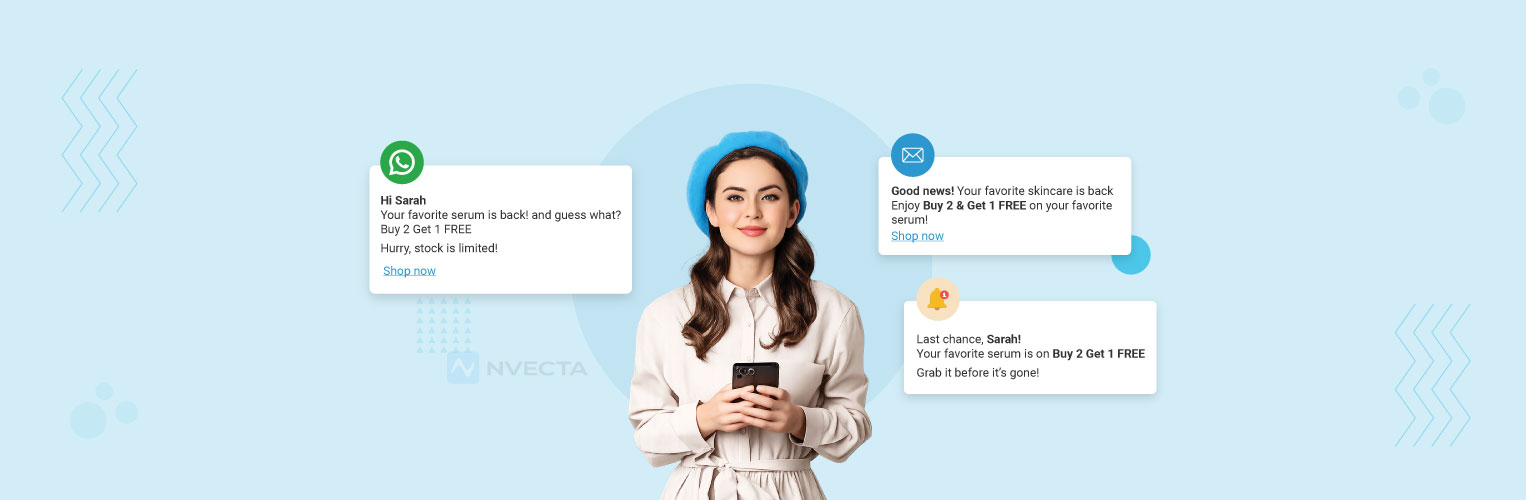
 Aparupa Saha
Customers don’t sit still anymore. They check email when they wake up, browse products during lunch breaks, reply to WhatsApp messages on the train home, and see push notifications pop up while they’re cooking dinner.
Their day is split across a dozen different screens and apps. So when you send them a cookie-cutter promotional message that could’ve gone to anyone, they ignore it. That’s why businesses need a Unified messaging strategy one that connects every touchpoint, keeps conversations consistent across channels, and delivers messages that feel timely, relevant, and personal, no matter where or when customers engage.
Simple as that. People respond to messages that feel relevant to what they’re doing right now, not some generic blast you clearly sent to 50,000 people at once.
What Is a Unified Messaging Strategy and Why Does It Matter for Retail Brands?
A unified messaging strategy is an approach where email, WhatsApp, push notifications, SMS, and other customer communication channels work together using shared customer data, consistent messaging, and coordinated timing to create a seamless customer experience across every touchpoint.
Instead of treating each channel as a separate marketing tool, businesses use them as part of a connected customer journey. The goal is to deliver the right message, through the right channel, at the right time, based on customer behaviour, preferences, and engagement history.
The problem is that most retailers treat Email, WhatsApp, and push like three totally separate things. Different teams run them, different strategies are used, different timing are fixed. So customers end up getting random, disconnected messages that have nothing to do with each other. Or you hit them with the same promotion three different ways and wonder why they’re annoyed.
What if you stopped doing that? What if these three channels actually worked together instead of against each other? Email is good for longer content when people have time to read. WhatsApp feels more personal, like texting back and forth with someone who gets you. Push notifications work when something’s time sensitive, and you need their attention right now.
Here’s how it could look: someone checks out a jacket on your site. You send a quick WhatsApp message asking if they have questions about the fit. A day later, a push reminder that it’s low stock. Then an email with styling tips and what other customers said about it. Each step makes sense. Each one moves them closer to making a purchase.
That’s not annoying. That’s helpful. And helpful sells. Implement this, and you’ll see people actually engage with what you send. They’ll buy more and stick around longer. Because instead of throwing messages into the void and hoping something sticks, you’re meeting them where they already are.
Why Retailers Need a Unified Messaging Strategy?
Think about how your customers actually shop. They’re on your website at midnight browsing. They check their email over breakfast.
They get a WhatsApp message while commuting. They see a push notification during their lunch break. Then maybe they walk into your store on the weekend.
If you’re only using one or two of these channels, you’re basically invisible for huge chunks of their day.
And when your channels aren’t connected? That’s when things get awkward. Someone buys something and still gets three emails trying to sell it to them.
Or they ask a question on WhatsApp, and your email team has no clue, so they send something completely unrelated. It looks bad.
Getting everything working together changes the game:
- People see the same story from you, no matter where they are
- Your open rates go up because you’re not sending random stuff
- You stop spamming people with duplicate messages across every platform
- Customers stick around longer and spend more because it’s not a headache dealing with you
- You can reach them at every stage, whether they’re just looking or ready to buy
When Email, WhatsApp, and Push actually coordinate, it stops feeling like three different companies are trying to talk to the same person. It just flows.
Email, WhatsApp, and Push Notifications: What Each Channel Does Best in Retail
Customers don’t interact with Email, WhatsApp, and Push Notifications in the same way. They expect different things depending on where the message shows up.
That’s why a good unified messaging strategy doesn’t treat every channel equally. It uses each one where it makes the most sense. Here is a quick comparison of where each channel fits best:
| Channel | Best For | Key Strength | Watch Out For |
|---|---|---|---|
| Long-form content, newsletters, sales announcements, loyalty campaigns | Cheap, scalable, rich media, easy to track opens and clicks | Not instant; overuse leads to unsubscribes | |
| Order updates, tailored deals, cart nudges, post-purchase check-ins | Very high open rates, quick replies, feels personal and trusted | Needs API access, message templates, and per-message fees | |
| Push Notifications | Flash sales, back-in-stock and price-drop alerts, app re-engagement | Instant, hard to ignore, ideal when timing is critical | Easily seen as intrusive if not relevant or well-timed |
Email Marketing: Best for Long-Form Content, Newsletters, and Loyalty Campaigns
Email still works. It’s been around forever, but there’s a reason retailers keep using it.
What you should use it for:
- Announcing new products or running sales
- Seasonal stuff like holiday campaigns and regular newsletters
- Loyalty rewards and those automated emails based on where someone is in their customer journey
Why it’s useful: Cheap to send. You can reach thousands of people at once. Easy to see who opened what and who clicked. Plus, you’ve got room to include pictures, details, links, the whole package.
The downside: Nobody checks email instantly. And if you send too much, people stop paying attention or just unsubscribe.
WhatsApp Business API: Why It Has the Highest Open Rate and How Retailers Use It
WhatsApp is different. People actually open these messages. It doesn’t feel like advertising; it feels like someone’s genuinely reaching out.
What you should use it for:
- Letting people know their order has shipped or is arriving today
- Sending deals that feel tailored to them specifically
- Nudging someone about stuff sitting in their cart
- Answering questions or checking in after they receive their order
Why it’s effective: Almost everyone reads WhatsApp messages. Replies come back quickly. There’s an inherent trust there that you don’t get with promotional emails.
The WhatsApp Business API (now part of Meta’s Cloud API) is the programmatic interface that enables businesses to send and receive WhatsApp messages at scale through third-party software platforms. It is distinct from the free WhatsApp Business App, which is designed for small businesses managing conversations manually. Via the API, retailers can automate order notifications, cart abandonment nudges, and personalised promotions using pre-approved message templates. Access requires a Meta Business Account, a verified phone number, and integration through a Business Solution Provider (BSP) or a marketing platform such as NVECTA. Messages sent via the API are subject to a 24-hour customer service window and a per-message fee that varies by country and message category (utility, marketing, authentication).
Web and App Push Notifications: Best for Time-Sensitive Offers and Re-Engagement
Push is for when you need attention immediately. Something’s happening right now, and they need to know.
What you should use it for:
- Flash sales ending in a few hours
- Items they wanted are available again
- Prices dropped on something they looked at
- Reminding them that your app exists when they haven’t opened it lately
Why it’s effective: Pops up on their screen instantly. Can’t really ignore it. When timing is everything, this is what you use.
What Are the Benefits of a Unified Messaging Strategy?
Deliver More Consistent Customer Experiences
Nobody likes feeling like they’re talking to three different brands at once. When your channels work together, every interaction feels connected, familiar, and easier to trust.
Increase Engagement Across Communication Channels
People engage differently depending on where they are and what they’re doing. A unified approach helps you reach them through the channel they’re most likely to respond to.
Improve Customer Retention and Loyalty
Customers are more likely to stick around when communication feels relevant and helpful. Consistent experiences build trust, and trust is what keeps people coming back.
Drive Higher Conversions and Revenue
The right message at the right time can make all the difference. Coordinated communication helps move customers closer to a purchase instead of overwhelming them.
Create More Efficient Marketing Operations
Running separate campaigns across different channels creates extra work. A unified strategy helps teams stay aligned, reduce duplication, and spend less time fixing mistakes.
Strengthen Long-Term Customer Relationships
Strong customer relationships aren’t built through one message. They’re built through a series of relevant interactions that make people feel understood over time.
How to Run Email, WhatsApp, and Push as a Coordinated Retail Campaign: A Unified Messaging Strategy
Using all three channels together isn’t about blasting the same promotion on Email, WhatsApp, and Push at the same time. That’s just annoying in triplicate.
It’s about knowing which channel does what best and using them in sequence.
Product Discovery Through Email
You send an email showing off your new spring arrivals. Someone opens it, clicks around, and looks at a few dresses.
That’s exactly where email shines. It gives customers room to browse, compare options, and explore at their own pace. Nobody feels pressured. They can skim through a collection, save something for later, or come back when they have more time. Email is often where interest starts.
Behaviour-Based Personalisation on WhatsApp
The next day, they get a WhatsApp with three specific dresses based on what they browsed. It includes their size and a quick “need help deciding?” message.
Now the conversation becomes more relevant. Instead of showing them fifty products again, you focus on the items they already care about. It feels less like marketing and more like helpful guidance. That’s usually the difference between getting ignored and getting a response.
Time-Sensitive Engagement Through Push Notifications
They’re interested but haven’t pulled the trigger. Then their phone buzzes with a push: those dresses are part of a 6-hour flash sale starting now.
Push notifications work best when there’s a reason to act right now. A price drop, limited stock, a flash sale, or an expiring offer. The goal isn’t to interrupt people for no reason. It’s to give them a timely nudge when timing actually matters.
Post-Purchase Customer Communication
They order. WhatsApp sends the tracking link and delivery confirmation. A week after it arrives, an email shows up with outfit ideas and points added to their account.
Most retailers stop talking to customers after the sale. That’s a mistake. The post-purchase experience is where trust gets built. Helpful updates, product recommendations, loyalty rewards, and useful content keep the relationship moving instead of ending at checkout.
Channel Roles in a Unified Messaging Strategy
Every touchpoint has a purpose. Email gets attention with the big picture. WhatsApp makes it personal and handles updates. Push gives them a reason to act fast.
The channels are doing different jobs, but they’re all working toward the same goal. When each message has a clear purpose, customers don’t feel overwhelmed. They simply get the information they need when they need it.
Creating a Seamless Customer Journey
The customer doesn’t feel harassed because each message actually adds something. You’re guiding them through, not shouting at them from every direction.
That’s what a unified messaging strategy is supposed to feel like. The experience flows naturally from one interaction to the next. Customers don’t think about channels. They just see a brand that understands what they’re interested in and communicates accordingly.
How Data & Personalisation Power a Unified Messaging Strategy
None of this works if you’re guessing. You need actual data to pull it off.
Creating a Single Customer View
You need one complete picture of each customer that pulls from all your platforms. Not three separate profiles that don’t talk to each other.
Using Customer Behaviour to Improve Relevance
Group people based on what they actually do. Someone who browses every week but never buys needs different messages than someone who bought twice last month and hasn’t been back.
Triggering Messages Based on Real-Time Actions
Set up automations that fire based on real behaviour. Cart abandoned? Trigger a message. Hasn’t opened your app in two weeks? Send a nudge. Don’t wait around to do this manually.
Giving Customers Control Over Communication
Let people control how often they hear from you and through which channels. Some want daily deals. Others want to hear from you once a month. Respect that.
Delivering Personalised Experiences Across Channels
When retailers actually personalise what they send across Email, WhatsApp, and push instead of spraying generic messages everywhere, the numbers speak for themselves. More opens. More clicks. More sales.
It’s not complicated. Use what you know about people to send them stuff that matters to them. That’s it.
Compliance, Consent, and Customer Trust
Don’t message people without asking first. Sounds obvious, but plenty of retailers still screw this up and wonder why they’re getting complaints.
Explicit Opt-In and Customer Consent
Ask before you send. Email, WhatsApp, Push, whatever. People have to say yes. Not some buried checkbox they didn’t notice. An actual, clear opt-in.
Easy Opt-Out and Preference Management
Let them leave whenever they want. One click and they’re out. No “email us to unsubscribe” nonsense. No making them log in to change settings that are buried four menus deep.
Regulatory Compliance and Data Privacy
Know the laws where your customers live. Different countries have different rules about this stuff. Break them, and you’re looking at fines that’ll make your eyes water.
Communication Frequency Preferences
Give people control over how often you contact them. Not everyone wants to hear from you every day. Some do.
Some want once a week. Some want you to only message when there’s actually something important. Let them choose.
Building Long-Term Customer Trust
The reality is simple: earning trust takes forever. Losing it takes one spammy message at 3 am. Abuse these channels, and people won’t just unsubscribe. They’ll tell their friends you’re annoying. They’ll leave bad reviews. They’ll be gone for good.
Don’t be that brand.
Key Metrics to Measure Across Email, WhatsApp, and Push
Open Rates and Click-Through Rates
Start with the basics. Are people opening your emails? Are they clicking the links inside them? High opens, but no clicks usually mean your subject line did its job, but the actual message didn’t. If nobody’s opening your emails in the first place, you’ve got a different problem.
WhatsApp tells a slightly different story. Did people read the message? Did they reply? If they’re reading everything you send and never responding, that’s a sign the conversation isn’t giving them a reason to engage.
Push notifications are even simpler. People either tap them or ignore them. If they’re getting ignored, the message probably isn’t relevant, or you’re sending it at the wrong time.
Conversion Rates
Attention is nice. Sales are better.
A conversion rate tells you how many people actually did what you wanted them to do, whether that’s making a purchase, signing up, booking a demo, or completing some other action. You can get plenty of opens, clicks, and replies, but if nobody converts, none of it really matters.
Customer Retention Rate
Getting someone to buy once is hard. Getting them to come back is where things get interesting.
Customer retention rate shows how many customers stick around over time instead of disappearing after their first purchase. If people keep coming back, it usually means they’re happy with the experience you’re creating across every touchpoint.
Repeat Purchase Rate
This one answers a simple question: how often do customers buy from you again?
A healthy repeat purchase rate is a sign that your messaging isn’t just driving one-off sales. It’s helping build habits, trust, and long-term relationships. New customers are great. Customers who keep returning are even better.
Customer Lifetime Value (CLV)
Some customers buy once and disappear. Others keep coming back for months or even years.
Customer Lifetime Value helps you understand how much revenue a customer generates throughout their relationship with your business. When CLV goes up, it usually means your personalisation, retention efforts, and customer experience are working.
Revenue Generated From Automated Journeys
At the end of the day, this is the number that matters most.
You want to know whether your automated journeys are actually generating revenue. Someone might receive an email, a WhatsApp message, and a push notification before making a purchase. Which journey influenced that sale? Which campaigns are producing results?
Engagement metrics look good in reports, but revenue tells you whether the strategy is paying off. If something isn’t pulling its weight, either improve it or stop spending time on it.
Common Mistakes Retailers Should Avoid
Most retailers mess this up in predictable ways.
Channel Silos and Disconnected Communication
Running each channel as its own separate thing, with no connection to the others. Your email team doesn’t know what your WhatsApp team is doing. Your app people are sending push notifications that contradict yesterday’s message. Customers notice this more than you think.
Duplicate Messaging Across Channels
Sending the same promotion three times across three platforms within an hour. That’s not a strategy. That’s spam with extra steps.
Message Fatigue and Overcommunication
Bombarding people without thinking about whether it makes sense. Five messages in two days about random products they’ve never looked at? You’re just training them to ignore you.
Ignoring Customer Preferences and Consent
Completely disregarding what people told you they want. Someone opts out of promotional emails, but you keep sending them anyway. Someone said they only want order updates on WhatsApp, but you’re pitching products. Why even ask for preferences if you’re going to ignore them?
Lack of Customer-Centric Communication
Here’s the test: when you message someone, does it actually help them, or are you just making noise? If it’s noise, you’re doing it wrong.
How NVECTA Helps Retailers Build a Unified Messaging Strategy
This kind of unified messaging does not happen by accident. It takes the right data, the right timing, and the right infrastructure behind it.
NVECTA helps retailers bring Email, WhatsApp, and Push together in one place, making coordinated customer communication practical. Here are its features that support a unified messaging strategy-
Omnichannel Identity Resolution
You cannot coordinate messages if every channel is working from different customer data. NVECTA gives retailers a single customer view, so Email, WhatsApp, and Push are all working with the same information instead of making assumptions.
Cross-channel Orchestration
This kind of coordination does not happen on its own. NVECTA helps retailers connect channels and customer journeys, so messages work together instead of showing up randomly and competing for attention.
Behavioural Trigger Automation
Customers are constantly giving signals through their actions. NVECTA helps retailers respond automatically to browsing behaviour, cart activity, purchases, and engagement, so messages arrive when they actually make sense.
Customer Segmentation and Personalisation
Not every customer wants the same thing. NVECTA makes it easier to group customers based on behaviour, preferences, and purchase history, so communication feels more relevant and less like a generic promotion.
Preference and Consent Management
People are usually happy to hear from brands when they get the type of communication they signed up for. NVECTA helps retailers respect customer preferences across channels instead of sending messages customers never asked for.
Cross-Channel Analytics and Attribution
If you’re not measuring results, you’re guessing. NVECTA helps retailers see how Email, WhatsApp, and Push work together, making it easier to understand what is driving engagement, conversions, and revenue.
Final Thoughts: The Future of Retail Messaging
More messages won’t save you. Better ones will. People are already drowning in notifications, emails, and chat messages. Adding to the pile doesn’t help. What cuts through is stuff that’s actually relevant to them, timed right, and doesn’t feel like you’re just checking a box.
When Email, WhatsApp, and Push work as one coordinated effort rather than three separate campaigns, customers notice. They engage. They buy. They come back.
The problem is doing this without it becoming a logistical mess. Different tools, scattered data, trying to manually coordinate timing across channels. Most teams give up or half-commit because it’s too complicated.
Platforms like NVECTA solve that. Everything runs from one spot. Messages fire based on real customer actions, not scheduled blasts. The automation handles the heavy lifting, so you don’t have to manually trigger every message.
Get the setup right once, and it just runs. While your competition is still talking about omnichannel strategy in quarterly planning meetings, you’re actually executing it daily. That gap adds up fast.
FAQs
How does a unified messaging strategy actually work?
A unified messaging strategy is one that brands use to send coordinated messages over communication channels, such as email, SMS, WhatsApp, and push notifications via a single platform. It ensures messages are consistent, non-repetitive, and triggered by real customer behaviour.
What data is required to personalise messaging across channels?
Effective cross-channel personalisation requires a unified customer profile that includes transactional data (purchase history, average order value), behavioural data (pages viewed, products browsed, cart events), and demographic data (location, device type).
Can retailers use the same customer consent across Email, WhatsApp, and Push Notifications?
Each channel requires its own explicit opt-in under GDPR (EU), TCPA (US), and equivalent regulations. An email opt-in does not authorise WhatsApp marketing messages, and vice versa. Push notification permissions are managed at the device OS level (iOS/Android) and must also be renewed if a user previously denied them.
What metrics matter most when measuring unified messaging performance?
Focus on the metrics that connect directly to business outcomes. Customer lifetime value (CLV), repeat purchase rate, customer retention, revenue generated across channels, and cross-channel attribution all provide useful signals. Looking at how customers behave before and after implementation often gives the clearest picture of the strategy’s impact.
