














 Email
Email SMS
SMS Whatsapp
 Web Push
 App Push
 Audience Sync for Ads
 Popups
 Channel A/B Testing
  Control groups Analysis
 Frequency Capping
 Funnel Analysis
 Cohort Analysis
 RFM Analysis
 Signup Forms
 Surveys
 NPS
NPS Landing pages personalization
  Website A/B Testing
  PWA/TWA
 Heatmaps
 Session Recording
 Wix
Wix Shopify
 Magento
 Woocommerce
 eCommerce D2C
  Mutual Funds
 Insurance
 Lending
  Recipes
  Knowledgebase
 Developer Docs
 Product Updates
 App Marketplace
 Academy
 Ebooks
 Case Studies
 Blog
Blog Templates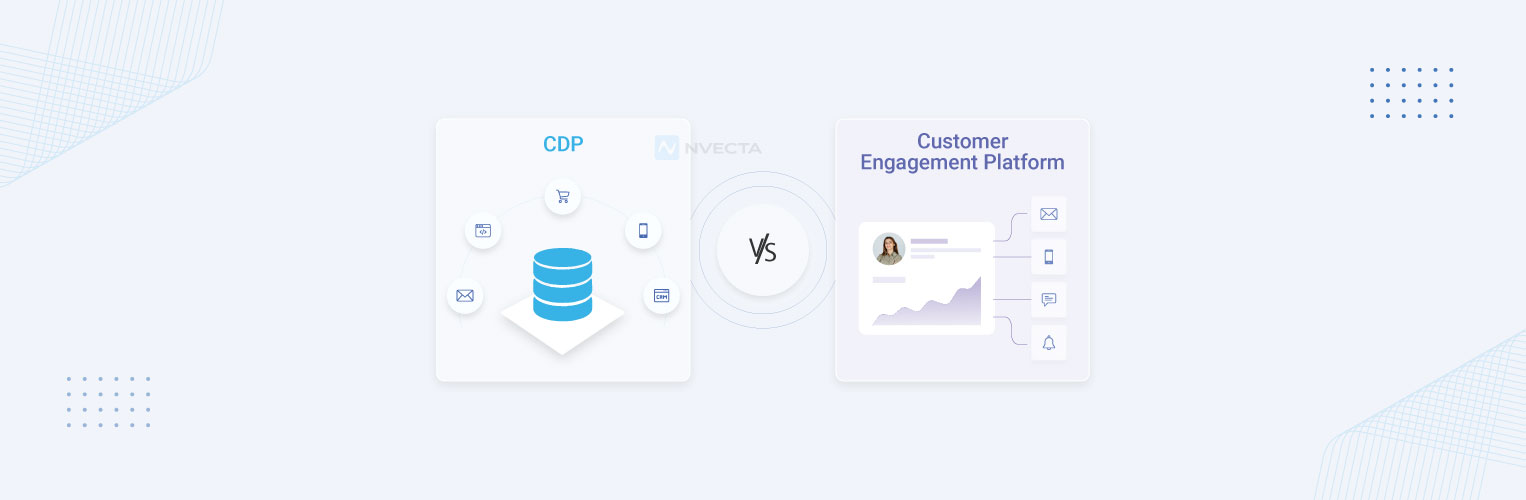
 Afreen Sheikh
With rising customer expectations and growing competition, marketers are under pressure to deliver relevant experiences, which is why businesses are adopting technologies to manage data and engage their audiences more effectively.
Customer Data Platforms and Customer Engagement Platforms are two such important tools that businesses consider.
They sound similar and are often confused. But each serves a different purpose in data handling and audience engagement. Knowing the difference can actually help you build effective strategies.
In this blog, we will explore their key differences, use cases, and how they work together to support marketing efforts, including a closer look at CDP vs customer engagement platform.
What is a Customer Data Platform?
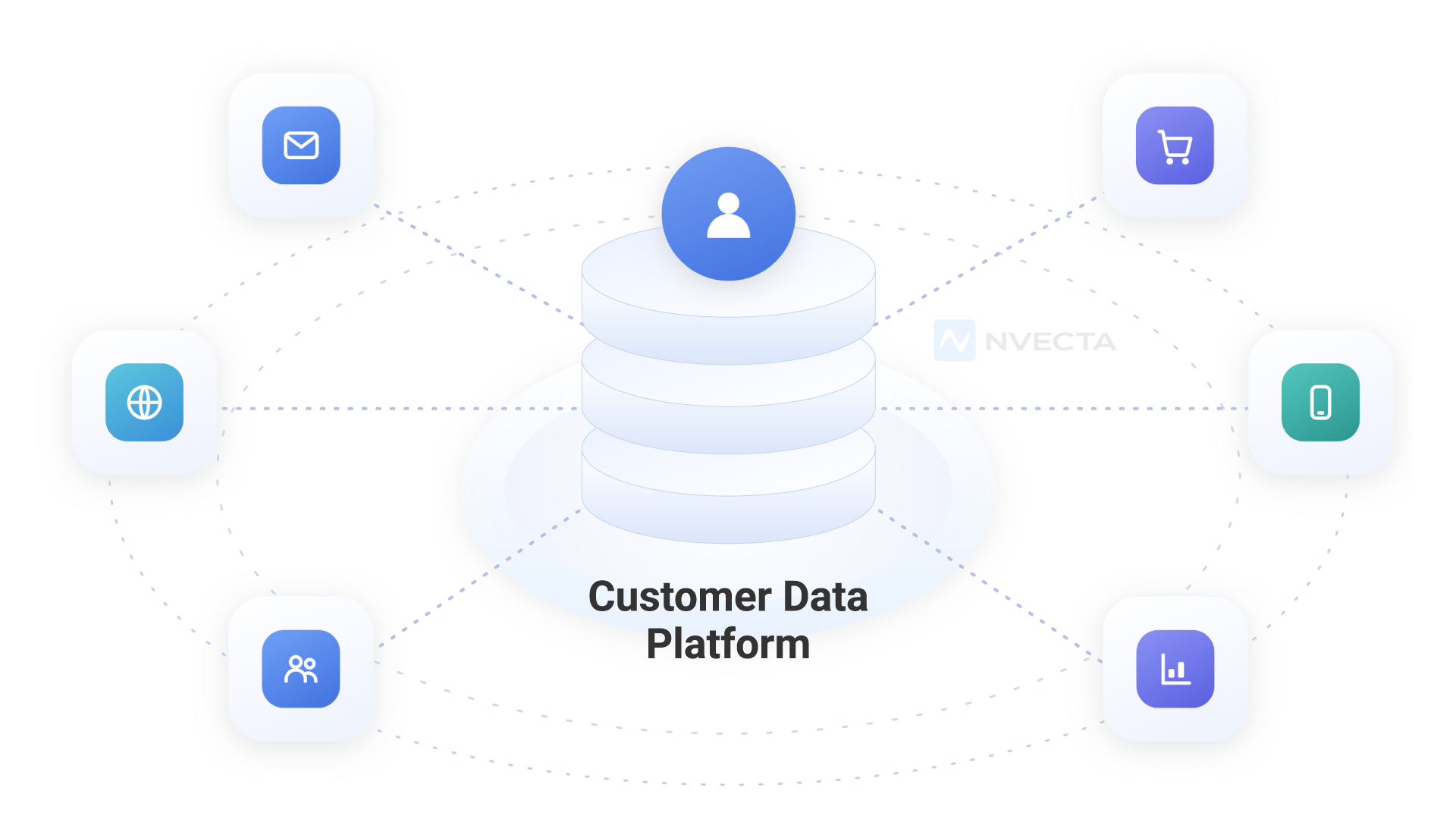
A customer data platform is designed to consolidate scattered customer data from different sources into a single repository.
It collects information from websites, emails, apps, CRM systems, and other channels. CDP integrates this information to build a complete profile for each customer.
One of the key strengths of a CDP is its use of first-party data.
It uses identity resolution and connects different interactions to the same person, allowing businesses to track behaviour, preferences and engagement at an individual level.
This makes it easier to understand customers and plan more targeted strategies.
Another important aspect of a CDP is its ability to process data in near real time.
As users interact with a brand, their profiles update continuously, helping teams to work with information that reflects current behaviour.
Such updated data becomes the basis for segmentation, analytics, personalisation, and other marketing activities.
What is a Customer Engagement Platform?
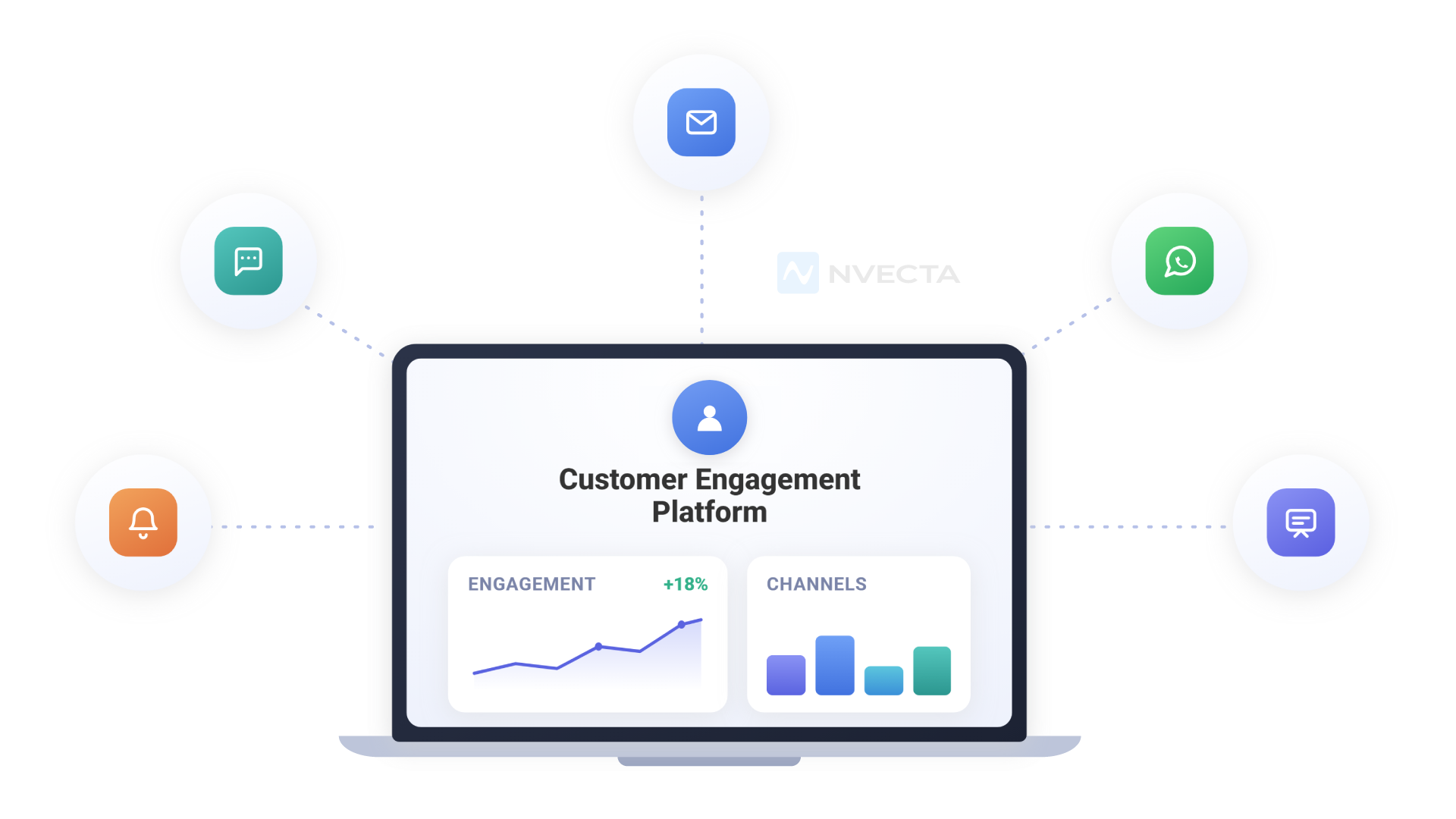
A customer engagement platform is designed to help businesses communicate with customers across multiple channels in a consistent, personalised way.
It enables teams to create, manage, and optimise campaigns through email, SMS, WhatsApp, push notifications, and other communication channels.
It primarily focuses on delivering consistent, relevant experiences.
CEP uses available customer data to create audience segments and build automated journeys based on user behaviour.
Whether it is a welcome message, a reminder or a follow-up after purchase, the platform ensures that communication happens at the right time.
This reduces manual efforts and improves overall customer experience.
Another important aspect of CEP is its ability to orchestrate engagement in real time. As customer behaviour changes, the platform adjusts messaging based on their actions.
This helps businesses stay relevant and move away from generic communication.
CEPs are an essential tool for implementing personalised marketing and maintaining consistent engagement across the customer lifecycle.
CDP vs Customer Engagement Platform: Key Differences
Now that we have an idea of both platforms, let’s take a comparative approach to draw a clearer distinction between a CDP and a customer engagement platform in terms of their core features and purposes.
One is centred on data and focuses on building a clear customer view, while the other is centred on communication and uses that view to drive interaction.
| Feature | CDP | Customer Engagement Platform |
|---|---|---|
| Purpose | Unify and organise customer data | Deliver personalised communication |
| Focus | Data management | Campaign execution |
| Real-Time Use | Continuously updates customer profiles | Triggers messages based on behaviour |
| Personalisation | Builds segments and a unified customer view | Delivers tailored messages across channels |
| Primary Users | Data teams and marketing strategists | Marketing and growth teams |
Purpose and Core Function
A CDP is built to process, organise, and unify customer data from different sources, both online and offline, into a single, unified customer profile. These profiles help businesses understand what customers are doing and what they are interested in, supporting better analysis and planning.
A CEP uses data to manage communication across the channels a brand uses to interact with its customers. The goal is to enhance customer interactions and engagement. One creates understanding while the other turns that understanding into action.
Data Versus Execution Focus
A customer data platform works in the background to organise all your customer data into a structured format. It handles identity resolution by connecting data points to the same person and building reliable, connected profiles.
A CEP focuses on execution, using this structured data to run campaigns, automate journeys, and drive behaviour-based communication. The CDP prepares the data, while the engagement platform executes it to drive engagement and interactions.
Real-Time Capabilities
Both platforms work in real time, but they use this capability differently. A CDP continuously updates customer profiles as new interactions happen. Activities such as browsing, purchases, and clicks are reflected immediately, ensuring profiles always represent current behaviour.
A CEP uses this updated data to trigger communication. Actions such as cart activity or repeated visits can initiate timely messages across channels. One continuously updates the data, and the other acts on it.
Personalisation
A CDP enables personalisation by organising customer data into meaningful segments built on behavioural data, transactional history, preferences, and user attributes. This helps businesses define who to target and how.
A CEP focuses on delivering that personalisation. It uses segments to send messages across channels, making communication feel timely and relevant. One lays the foundation for personalisation while the other delivers tailored experiences.
Ownership and Users
A CDP is managed by data teams and marketing strategists who focus on data quality, identity resolution, and customer segmentation. Their work supports analysis and long-term planning.
A CEP is used by marketing and growth teams responsible for campaign execution, journey design, and performance tracking, with a focus on sending the right message and improving engagement. Both teams need to stay connected so that what is learned from data is actually reflected in campaigns.
How a CDP Works
A CDP does not just collect data; it organises and activates it to support better targeting, personalisation, and decision-making. Here are the key steps:
- Data collection: Gathers information from emails, websites, apps, CRM systems, and other touchpoints
- Identity resolution: Connects different interactions to a single user profile
- Profile building: Creates unified profiles that update in real time
- Segmentation: Organises users into groups based on behaviour and preferences
- Data activation: Shares structured data with engagement and analytics tools
How a CEP Works
A CEP uses customer data to determine when, where, and how to reach users, tailoring communication to real interactions. Here are the key steps:
- Audience selection: Identifies the right users using predefined segments
- Journey creation: Builds flows based on user behaviour and lifecycle stages
- Trigger setup: Initiates messages based on specific actions such as signing up, browsing, or making a purchase
- Multi-channel execution: Sends messages through email, SMS, WhatsApp, push notifications, and web
- Performance optimisation: Monitors results and adjusts campaigns to improve engagement
The focus is on using data effectively and ensuring messages reach the right users at the right time through the right channel, making every interaction feel natural.
CDP vs Customer Engagement Platform use cases
Understanding the difference between the platforms becomes much easier when you can categorise the industry-specific use cases. Each one supports a different part of the workflow, from understanding the customer to delivering timely interactions.
E-Commerce and Retail
CDP use cases
- Identifies high-intent users based on repeated product views
- Connect cross-device interactions to maintain a single consistent customer profile
- Segments customers based on buying patterns such as discount usage, price sensitivity, and purchase frequency
- Detects churn risks and inactive users for further targeting
CEP use cases
- Same timely cart recovery messages with relevant product details
- Triggers alerts for price drops and stock availability
- Recommend related products after a purchase
- Managers follow up on communication, such as delivery updates and review requests
Banking and Fintech
CDP use cases
- Consolidate transaction history, app activity and product usage into a single profile
- Identifies the onboarding drop in incomplete actions
- Segment customers based on value, activity and engagement
- Identifies high-value users based on their spending and early churn signals based on reduced activity
CEP use cases
- Trigger onboarding reminders to complete account setup
- Send payment due alerts and credit card usage notifications
- Deliver personalised offers, suggest card benefits or loan upgrades
- Send real-time alerts for suspicious transactions or account activity
Travel and Hospitality
CDP use cases
- Connect search behaviour, bookings, and loyalty data into a single traveller profile
- Identify high-intent users based on repeated searches
- Segment customers based on preferred destinations, travel frequency and spending patterns
- Detect seasonal behaviour, such as holiday travel or last-minute bookings
CEP use cases
- Send a fare alert based on the user’s interest
- Trigger booking reminders for incomplete reservations
- Deliver real-time check-in notifications and travel updates
- Recommend hotels, packages, or destinations based on past trips
SaaS and B2B Products
CDP use cases
- Track product usage and session activity into a single profile
- Identify the onboarding drop in incomplete actions
- Segment users based on usage, depth, plan, type and engagement frequency
- Detect churn risk through declining activity or reduced feature usage
CEP use cases
- Trigger onboarding emails or in-app prompts during setup
- Trigger feature adoption messages based on behaviour
- Deliver upgrade and expansion offers based on usage patterns
- Send renewal reminders and a re-engagement campaign for inactive users
Media and Content Platforms
CDP use cases
- Track viewing behaviour, content preferences, and activities into one single profile
- Identifies users with an interest in specific categories
- Segment the audience based on engagement level, frequency, and subscription status
- Detects a drop in activity to flag users at risk of churn
CEP use cases
- Send personalised content recommendations based on viewing history
- Trigger alerts for new episode releases or trending content
- Delivery of re-engagement campaigns for inactive users
- Send subscription renewal reminders
How to Decide Between a CDP and a Customer Engagement Platform
Now that we are aware of the functions and use cases of a CDP and a CEP, it is easy for you to choose an appropriate approach for your business.
You just need to identify where your current marketing system lags behind, whether the issue lies in data management or execution.
A CDP becomes important when your data is scattered, and it is difficult to interpret customer behaviour.
Teams work with disconnected data sets, broader segmentation, incomplete customer journeys, and unreliable insights. A CDP unifies all your data and builds a strong data foundation for overall decision-making.
A CEP becomes necessary when communication lacks personalisation. Your campaigns remain manual, and there is no structured way to trigger interactions based on customer behaviour.
Messages feel random, and nothing happens at the right time. Even when data is available, engagement is very limited.
A CEP is the best way to improve engagement, as it ensures timely, automated communication that aligns with real customer activity.
How do CDP and CEP Work Together?
CDP and CEP deliver the most value when they work together within the same system. They work as a team: one figures out what the user is doing, and the other responds to it.
For example, a CDP tracks repeated product views and cart activity to update customer profiles and derive actionable insights, while a CEP uses these signals to trigger communications, such as reminders or suggestions.
This creates a continuous loop where data and interaction support each other.
Using both platforms helps improve overall engagement outcomes and supports marketing operations that drive business growth.
Benefits of using a CDP and CEP together-
- Better personalisation- messages feel relevant because they are based on real actions
- Improved customer experience- interactions remain consistent across all channels
- Higher ROI- campaigns perform better as they are backed by accurate data and timing
- Consistent messaging- messaging remains aligned throughout the journey
- Real-time decision making- responses adapt quickly to customer actions
How NVECTA Brings CDP and CEP Together
NVECTA integrates CDP and CEP capabilities into a single system, where data and engagement are connected in a single flow.
Teams do not have to switch tools; they can understand customer behaviour and act on it from NVECTA’s unified platform.
Let us look at the NVECTA specific features-
Unified Data and Activation
Customer data from multiple touch points is brought together to build customer profiles. These profiles directly support segmentation, targeting and campaign execution, improving both speed and consistency.
Real Time Segmentation
It has advanced segmentation where audience segments update continuously as customer behaviour changes.
This means targeting is always based on what users are doing now. This makes communication more relevant and aligned with the current intent.
AI-Driven Journey Orchestration
Customer journeys are dynamically driven by behaviour and context, allowing interactions to evolve rather than follow a fixed path.
This ensures that communication remains responsive across different stages of the customer lifecycle.
Cross-Channel Campaigns
NVECTA ensures consistent communication across channels, so every interaction reflects the same understanding of the customer and avoids disconnected or repetitive messaging. This helps in delivering a smoother overall experience.
These features help businesses to understand customers effectively and interact with them in a way that feels more natural and connected.
Conclusion
Customer data and engagement can function independently, yet they also complement each other.
Businesses must define their goals and use cases to determine whether CDP and CEP should be used separately or as an integrated system.
NVECTA provides a collaborative approach that handles data and engagement in one place, helping businesses to enhance marketing outcomes.
Stop switching between tools, start managing data and engagement together with NVECTA.
FAQs
What is the main difference between a CDP and a Customer Engagement Platform?
A CDP collects and unifies customer data from multiple sources into a single profile, while a Customer Engagement Platform uses that data to deliver personalised communication across channels. One builds understanding, the other turns it into action.
Can a business use a CEP without a CDP?
Yes, but with limitations. A CEP can work with available data, but without a CDP, the data may be incomplete or scattered, leading to less accurate targeting and weaker personalisation.
Do I need both a CDP and a Customer Engagement Platform?
Not always. If your primary challenge is disorganised or siloed data, start with a CDP. If your communication lacks personalisation and automation, a CEP is the priority. However, using both together delivers the strongest results.
Who manages a CDP versus a CEP?
A CDP is typically managed by data teams and marketing strategists, with a focus on data quality and segmentation. A CEP is used by marketing and growth teams responsible for campaign execution and performance tracking.
How do CDP and CEP work together?
A CDP continuously updates customer profiles based on real-time behaviour. A CEP uses these profiles to trigger timely, relevant messages across channels. Together, they create a continuous loop where data and engagement support each other.
What industries benefit most from using both platforms?
Industries such as e-commerce, banking, travel, SaaS, and media benefit significantly, as they deal with large volumes of customer data and require timely, personalised communication across multiple channels.
Is real-time communication possible without a CDP?
A CEP can trigger real-time messages, but the accuracy and relevance of those messages depend on the quality of the underlying data. A CDP ensures that the data powering those triggers is complete and up to date.
What happens when CDP and CEP are integrated?
Integration enables better personalisation, consistent messaging across channels, faster response to customer behaviour, and improved campaign performance, ultimately leading to a higher return on investment.
