














 Email
Email SMS
SMS Whatsapp
 Web Push
 App Push
 Audience Sync for Ads
 Popups
 Channel A/B Testing
  Control groups Analysis
 Frequency Capping
 Funnel Analysis
 Cohort Analysis
 RFM Analysis
 Signup Forms
 Surveys
 NPS
NPS Landing pages personalization
  Website A/B Testing
  PWA/TWA
 Heatmaps
 Session Recording
 Wix
Wix Shopify
 Magento
 Woocommerce
 eCommerce D2C
  Mutual Funds
 Insurance
 Lending
  Recipes
  Knowledgebase
 Developer Docs
 Product Updates
 App Marketplace
 Academy
 Ebooks
 Case Studies
 Blog
Blog Templates
 Afreen Sheikh
Over the past few years, media and publishing teams are rethinking how they engage audiences and drive better revenue. With third party cookies fading out and stricter privacy rules, traditional approaches to advertising and engagement are no longer effective for a steady growth.
In the meantime, first-party data becomes more valuable, as it provides direct insights into audience preferences and interactions. CDP comes to the rescue by unifying scattered data into a single source and enabling organisations to utilise first-party data effectively.
In this blog, we will explore how a CDP for media and publishing helps improve audience monetisation and build a strong first-party data strategy. Further, we will also see how NVECTA does this by turning audience data into actionable insights that drive business growth.
What Is a CDP for Media And Publishing?
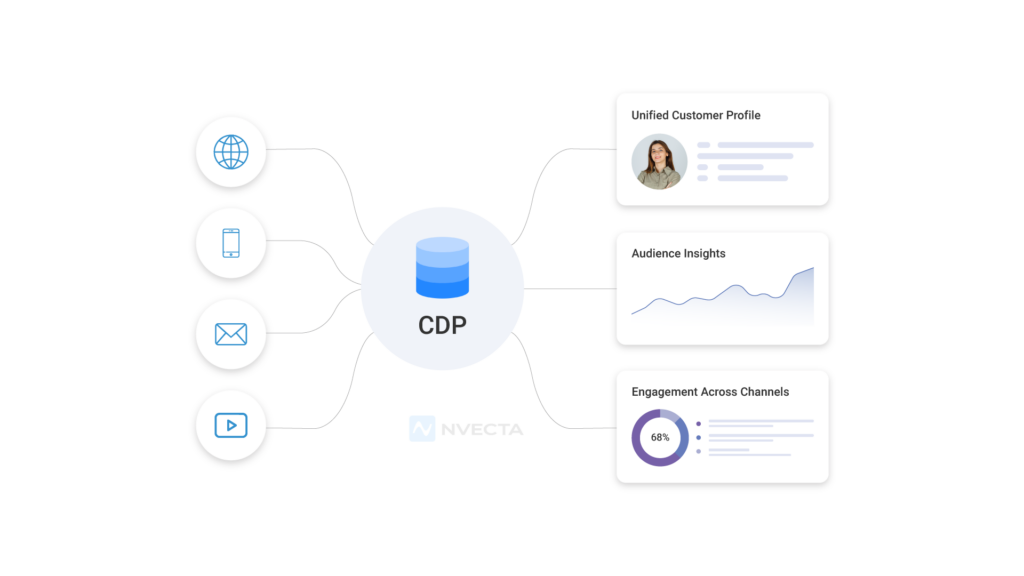
A CDP for media and publishing is a platform that brings all your audience data into one place. It pulls signals from your website, app, newsletters, and paywall, then ties them to a single reader profile that stays consistent across every visit.
Most publishers already collect this data, but it sits in separate tools. Your analytics knows what readers click, your email system knows what they open, and your paywall knows who paid.
A customer data platform joins these pieces so you can see the full reader journey instead of scattered numbers. With that view, you can use your own first-party data to personalise content, time subscription prompts, and grow revenue without depending on third-party cookies.
What Is a CDP for Media And Publishing? Strategy & Use Cases
A CDP for media and publishing is a system that unifies audience data from every touchpoint into one reader profile. Instead of leaving reader behaviour spread across analytics tools, email platforms, and your CMS, it connects those signals so your teams can actually act on them.
The value shows up when you treat first-party data as your foundation. A CDP turns anonymous visitors into known readers as they sign up or subscribe, keeps their reading history intact, and refreshes audience segments the moment behaviour changes.
Editorial, ad, and subscription teams then work from the same picture instead of three different dashboards.
A few ways publishers put this to work:
- Dynamic paywalls that trigger once a reader shows real interest, rather than after a fixed article count
- First-party audience segments sold to advertisers at higher rates than open programmatic inventory
- Personalised home feeds and recommendations shaped by what each reader actually reads
- Early churn signals that flag at-risk subscribers before they cancel
- Push and email prompts tied to recent activity, like a breaking story in a topic the reader follows
Done well, this is what lets a publisher run advertising and subscriptions off one audience view instead of pulling readers in two directions.
Why Media and Publishing Businesses Need a CDP
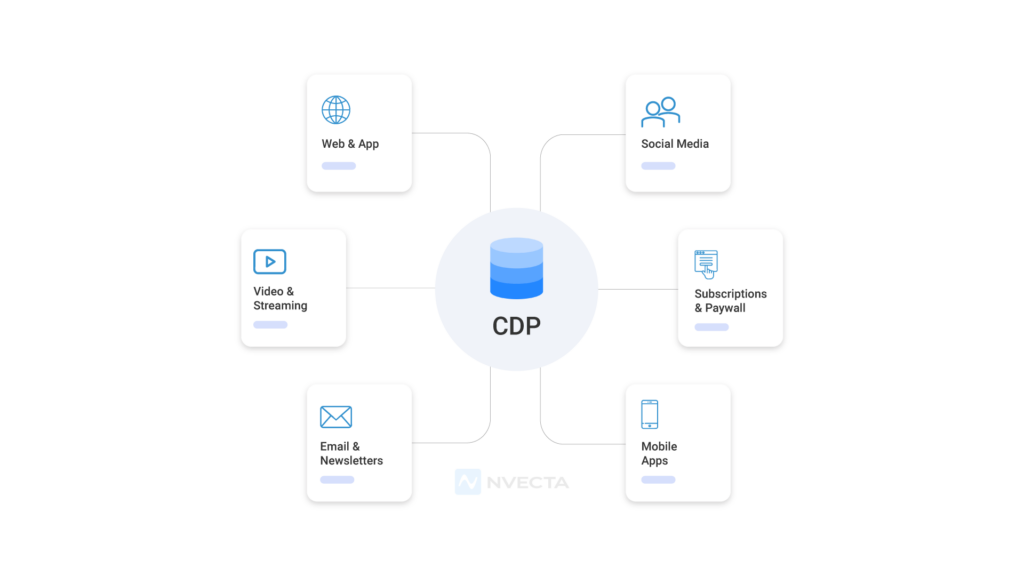
Media and publishing teams already collect detailed audience data, but they fail to use it effectively. User interactions are scattered across multiple systems.
A reader might discover an article through a search, return to it via a newsletter, and later engage with it in the app.
Such a disconnected series of interactions makes it difficult to understand users’ intent and the factors that drive engagement or conversion, ultimately limiting opportunities to increase customer engagement.
This disconnect affects teams’ day-to-day operations. Advertising teams rely on broad segments, subscription teams lack insights into content performance, and personalisation remains limited.
Data is available over analytics dashboards, CMS logs, email tools, and ad platforms, but it is not structured around the user.
A CDP provides a unified view of every interaction. It enables teams to see the full user journey, understand user behaviour more clearly, and further utilise insights to improve engagement and monetisation.
Understanding First-Party Data in Media and Publishing
First-party data comes directly from how readers interact with your content and platform. It is not just the login details of subscription records.
It includes capturing every action, such as what users read, how long they stay, what they skip, and how often they return. Each of these actions adds context.
When these signals are connected, they reveal behaviour patterns such as topic preference, reading depth, visit frequency, and likelihood of subscribing.
The challenge begins when this data is collected across multiple touchpoints. Content interactions are stored in CMS, session behaviour in analytics tools, email engagement in marketing systems, and subscription data in paywall systems.
Every system captures a part of the user journey, but these parts remain disconnected, making it difficult to see how one action leads to another.
The real value of first-party data comes when these signals are connected and read as a part of a continuous journey.
Without drawing a connection, teams see isolated metrics rather than patterns. It becomes hard to identify users’ intent and understand what drives loyalty.
How a CDP Builds an Effective First-Party Data Strategy
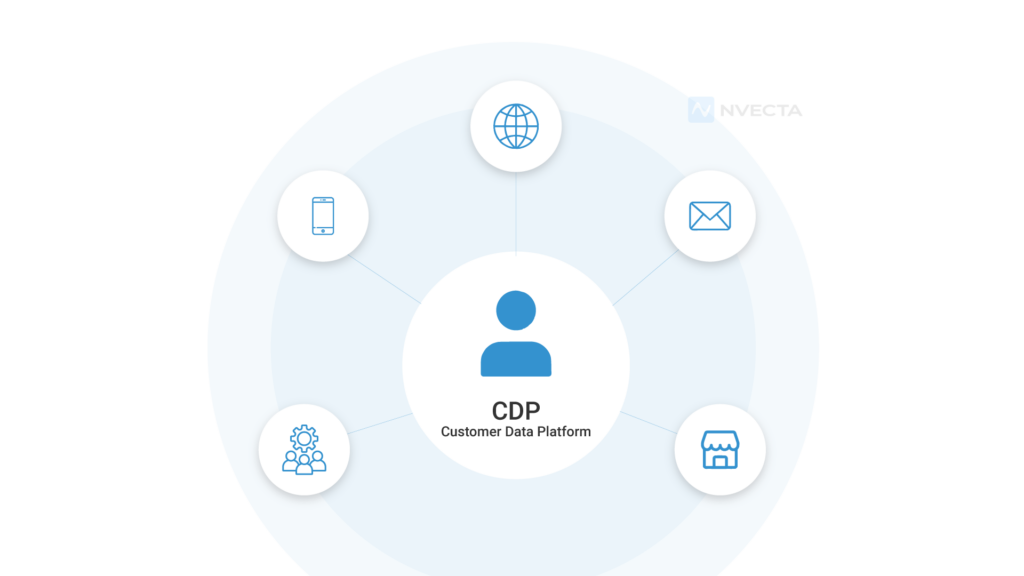
A CDP makes first-party data usable by connecting interactions spread across systems. It removes the need for scattered views and organises all data into a connected journey that supports both analysis and actions.
The following is the process that leads to the formation of an effective first-party data strategy with CDP-
Centralise Data from All Sources
Combines data from CMS, analytics, emails, apps and paywalls into one unified system, removing data silos and giving a consistent view of every user’s activity.
1. Built a Continuous User Profile
Maps every interaction into a single user profile, including tracking behaviour and maintaining context across sessions, platforms and content consumption patterns.
2. Resolves Identity Across Devices and Sessions
Links anonymous and known users while connecting behaviour across devices, ensuring a unified view instead of fragmented or duplicate user records.
3. Enable Real-Time Segmentation
Creates customer segments based on live behaviour data, such as reading habits or visit frequency, and updates continuously as user activity changes.
4. Turn User Behaviour into Timely Actions
Trigger actions based on user activity, helping teams to deliver timely content, offers, or paywall prompts aligned with real-time user signals.
5. Consistent View of the User Journey for All Teams
Ensures all teams work with consistent audience insights, improving coordinated decision making, effective marketing and monetisation efforts.
Best Audience Monetisation Strategies by Using CDP for Media and Publishing
Once CDP organises your customer data, your audience behaviour is clearly mapped, and now is the time to use the signals to drive revenue decisions.
Just look for patterns that signal user interest and intent, as these are where value lies, and you can easily align content, ads, and subscriptions with what users are actually responding to.
Here are a few strategies that can be practically used for a precise, behaviour-led monetisation-
| Strategy | How It Works | Example |
|---|---|---|
| Behaviour-Based Ad Targeting | Serves ads based on current reading behaviour, making campaigns more relevant and improving ad performance | A reader who follows tech reviews is shown ads for smartphones and gadgets |
| Dynamic Paywall Timing | Triggers subscription prompts only after a user shows consistent engagement, making the ask feel timely and justified | A user who finishes a full article sees a subscribe prompt after deeper engagement |
| Personalised Subscription Offers | Sends tailored subscription messages that match individual user preferences, increasing the likelihood of conversion | A frequent news reader receives an offer aligned with the topics they read most |
| Content-Driven Monetisation | Recommends content based on past engagement to keep users on-site longer, increasing ad impressions and subscription opportunities | A user interested in finance is served related articles after finishing one |
| High-Value Audience Segmentation | Groups users by engagement frequency and depth to help teams focus conversion and retention efforts where they matter most | Highly active readers are prioritised for premium subscription campaigns |
1. Behaviour-Based Ad Targeting
Ads work better because they are based on current user behaviour, which is what readers are actually interested in.
The advertisers serve ads that users are likely to interact with, making campaigns more relevant and improving ad performance.
Publishers and advertisers evaluating the technology behind this process can also consider open-source vs hosted ad servers based on their requirements for control, scalability, and maintenance.
For example, a reader who frequently follows tech reviews is shown ads for smartphones and gadgets.
2. Dynamic Paywall Timing
With behaviour-driven paywalls, subscription prompts are sent only after a user shows consistent engagement.
This allows readers to explore content first and move to subscription thereafter.
The prompt will feel more justified and timely. For example, a user who has finished a full article sees a prompt to subscribe after deeper engagement.
3. Personalise Subscription Offer
Send tailored subscription messages that match users’ preferences, making them feel more natural with the likelihood of conversion.
4. Content-Driven Monetisation
Send content recommendations based on past engagement behaviour to encourage users to stay longer. This increases the opportunities for advertising impressions and subscription conversions.
5. High-Value Audience Segmentation
Segment users based on engagement patterns that help identify audiences that interact frequently. This helps teams to target those users and increase the chances of conversion and retention.
Use Cases of CDP in Media & Publishing
1. Breaking News Alert Via Web Push
When a major story breaks timing decides whether the reader returns or scroll past it.
A CDP triggers real time push notification based on users interest and past behaviour so notifications feel relevant and drive immediate traffic at the right moment.
2 Personalised Content Feed
Readers expect a personalized experience from platforms. It uses pass reading behaviour to shape home page or app feeds, helping them to discover more of the content which they are interested in and actively searching for.
3. Newsletter Automation
Generic newsletters are easy to ignore. With CDP, email content matches with user preferences and past engagement, making it feel like a continuation of the reading experience and improving both open rates and return visits.
4. Subscription Funnel Optimisation
Subscription decisions built with time. A CDP tracks repeated engagement and content depth, allowing timely paywalls or personalized offers to appear when interest is already formed, making conversions feel more natural.
5. Trending Content Campaigns for Re Engagement
A CDP identifies early signs of inactivity and disinterest and help bring those readers back through content which they previously used to engage with specially trending or high interest topics.
Benefits of Using a CDP for Media and Publishing: from Engagement to Retention
When the above strategies are applied consistently, an impact is visible through metrics that reflect revenue growth and whether you were able to monetise audiences effectively.
You can see the following benefits once you get to know about the strategies that are performing well for your business-
1. Improved Audience Engagement
A CDP tracks users’ behaviour and clearly surfaces their interests. This enables the delivery of content and communication in line with user expectations, leading to relevant experiences that drive meaningful engagement.
2. Stronger Retention Signals
It detects early signs of disengagement, helping teams to take timely action with re-engagement efforts.
3. Better Personalisation Across Channels
A CDP connects user behaviour across channels, helping deliver a consistent and personalised content wherever the user interacts.
4. Accurate Targeting
A CDP sends campaigns to users likely to engage and convert, leading to better targeting based on smart behavioural insights.
5. Higher Customer Lifetime Value
A CDP supports long-term value by driving consistent, relevant, and timely engagement, encouraging users to engage more often, and improving overall user lifetime value.
How to Choose the Right CDP for Media and Publishing
To choose the right CDP, you need to evaluate how well it fits with your current setup. It should be efficient enough to explain its structure while handling and storing user data.
The right choice connects existing systems, keeps user data consistent, and supports real-time action without unnecessary complexity.
Let’s have a deep look at what media and publishing houses should look for while choosing a CDP-
1. Seamless Integration with the Existing Stack
Publishing teams use multiple systems to handle content engagement and monetisation separately.
A CDP should connect directly with all tools and integrate them without major restructuring.
2. Accurate Identity Resolution Across Users and Devices
Users interact across sessions and devices, often starting anonymously. A CDP should link these interactions into a single user profile and apply identity resolution to eliminate multiple records.
3. Real-Time Data Processing and Availability
User behaviour changes quickly specially when it comes to content consumption. CDP must be equipped to process every interaction in real time to generate actionable insights.
These insights support actions such as recommendations, notifications, or paywall prompts to engage users quickly.
4. Flexible and Scalable Data Model
In media and publishing, data is dynamic and evolves with time. It includes multiple metrics such as reads, scroll depth, clicks, sessions, duration, subscriptions, and more. A CDP should handle multiple event types without any rigid structures and scale naturally.
5. Accessible and Usable for Non-Technical Teams
Marketing, editorial, and product teams need to regularly work with audience data.
A CDP should offer a user-friendly interface that allows these teams to function smoothly without relying on software support. This reduces operational delays and improves execution speed.
6. Built-in Activation Across Channels
Data is valuable only if it is used effectively. A CDP should activate data across channels, including email, push notifications, on-site personalisation, and ad platforms.
This ensures that insights convert directly into actions that improve engagement and monetisation.
NVECTA for Media & Publishing: Driving Audience Monetisation and First-Party Data Strategy
NVECTA is an AI-powered customer data platform that brings audience data engagement and monetisation into a single system.
With smart features such as data unification, segmentation, personalisation, real-time execution, and intelligent automation,
Media and publishing houses can leverage audience data to better understand their users and create engagement and revenue opportunities.
1. Audience Segmentation and Personalisation
NVECTA captures how readers actually behave across content and sessions. Then uses those signals to build dynamic audience segments that continuously update based on reading patterns and preferences.
This allows teams to send relevant content recommendations and an on-site experience that supports both engagement and conversion.
2. Web Push Notifications for Real-Time Engagement
NVECTA enables real-time push notifications based on recent user activity and interest, ensuring relevant content reaches to readers when engagement is most likely.
This allows publishers to deliver timely updates about breaking news or trending stories rather than generic messaging.
3. Email Marketing for Content Distribution
NVECTA supports personalised email campaigns that align email content with user behaviour and preferences.
Newsletters and automated flows show what users have engaged with, helping in maintaining consistent leadership and encouraging repeat visits over time.
4. Website Personalisation and A/B Testing
NVECTA allows teams to hyper-personalise content feeds, layouts and recommendations based on user activity and preferences.
It also supports testing multiple variations, such as headlines and placements, helping identify what drives engagement and later refine the experiences accordingly.
5. User Journey Orchestration
NVECTA combines user interactions into connected journeys that show how users move across content and channels.
These journeys guide users from initial engagement to deep interaction and eventual conversion, forming a cohesive customer journey that drives meaningful results.
6. Analytics and Content Insights
NVECTA captures engagement patterns and turns them into actionable insights. These insights help teams identify which strategies influence retention and subscriptions and, later, refine them accordingly.
7. Monetisation and Subscription Optimisation
NVECTA aligns subscription prompts and paywalls with user engagement patterns, ensuring monetisation efforts reflect actual behaviour.
This helps improve conversion rates through better timing and relevance, while providing a consistent user experience.
8. Multi-Channel Engagement
NVECTA ensures coordinated communication across multiple channels, such as email, SMS, WhatsApp push notifications, and in-app messaging. This helps interactions feel connected and maintain continuity in users’ experience of content.
9. Data Integration and Export
NVECTA supports smoother data export and integration with the existing ecosystem, ensuring the sharing of audience data without disrupting current workflows across editorial, marketing, and analytics teams.
10. AI-Powered Capabilities
NVECTA applies AI to automate multiple operations, such as content creation and campaign execution, helping teams generate messaging and insights more effectively while maintaining relevance. Using AI helps reduce manual effort and make faster decisions.
Conclusion
First party data has changed how media and publishing teams approach growth. Engagement retention and monetization depend on how well they utilise their audience data. A CDP is the present day requirement to structure the data and understand reader behaviour And act on it across content campaigns and subscriptions.
NVECTA supports this by connecting data automation and execution into one system helping teams to improve both engagement and subscription performance.
Built an effective first party data strategy that drives stronger engagement and revenue outcomes with NVECTA. Schedule a demo now.
FAQs
How does a CDP for media and publishing work without third-party cookies?
A CDP relies on first-party data, which is the behaviour readers share with you directly when they visit your site, open a newsletter, or subscribe. It collects these signals and builds reader profiles that you own. Since nothing depends on cookies set by other sites, your targeting keeps working even after third-party cookies go away.
What is the difference between a CDP and a DMP for publishers?
A DMP mainly handles anonymous, third-party audience data for short-term ad targeting, and it loses accuracy as cookies fade out. A CDP works with your first-party data and keeps lasting profiles that combine anonymous and known readers. For publishers, a CDP supports both ad sales and subscriptions, while a DMP really only helps advertising.
How is a CDP different from a CRM or Google Analytics?
A CRM stores known customer records, and analytics tools report on traffic in aggregate. Neither one links every reader action into a single continuous profile. A CDP sits across both: it unifies anonymous and known behaviour at the individual level and lets you act on it in real time, not just review past reports.
Do mid-size publishers need a CDP, or is it only for large media companies?
A CDP fits any publisher that earns from advertising or subscriptions and collects reader data across more than one platform. Large publishers benefit from scale, but mid-size teams often see quicker wins because their data is easier to unify. The deciding factor is how scattered your audience data is, not your company size.
Will a CDP integrate with our existing CMS, paywall, and email tools?
Yes. A good CDP connects to the systems you already run instead of replacing them. It reads behaviour from your CMS, paywall, analytics, and email platform, then sends segments and triggers back to those same tools. NVECTA, for instance, is built to plug into an existing stack without a major rebuild.
Is the first-party data a CDP collects privacy-compliant?
First-party data collected with reader consent can be used in line with GDPR and similar rules, since the reader shares it with you directly. A CDP helps by storing that consent alongside each profile and applying it when you activate data, so personalisation and ad targeting stay within what the reader agreed to.
