













 Email
Email SMS
SMS Whatsapp
 Web Push
 App Push
 Audience Sync for Ads
 Popups
 Channel A/B Testing
  Control groups Analysis
 Frequency Capping
 Funnel Analysis
 Cohort Analysis
 RFM Analysis
 Signup Forms
 Surveys
 NPS
NPS Landing pages personalization
  Website A/B Testing
  PWA/TWA
 Heatmaps
 Session Recording
 Wix
Wix Shopify
 Magento
 Woocommerce
 eCommerce D2C
  Mutual Funds
 Insurance
 Lending
  Recipes
  Knowledgebase
 Developer Docs
 Product Updates
 App Marketplace
 Academy
 Ebooks
 Case Studies
 Blog
Blog Templates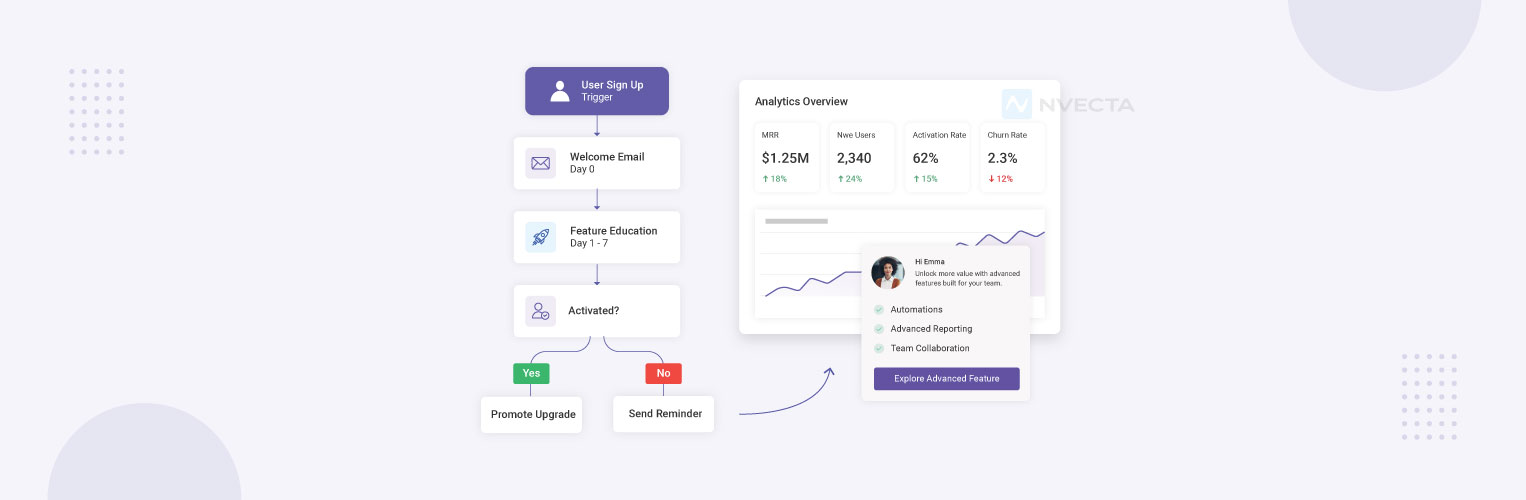
 Aparupa Saha
Quick Answer
Marketing automation for SaaS is the practice of using behavioural triggers — based on what users actually do in your product — to automate onboarding, trial conversion, churn prevention, and upsell at scale. Unlike general marketing automation, SaaS automation is lifecycle-driven: every trigger connects to product usage, not campaign schedules. Done well, onboarding sequences increase activation rates by 25–40% and reducing churn by just 5% can increase profits by 25–95%.
Marketing automation in SaaS is often misunderstood. For many teams, it still means a handful of automated emails sent after signup. But in a subscription-based business, growth does not come from messages alone. It comes from helping users understand the product, get real value from it, and continue finding reasons to stay.
Every interaction after signup matters. If users struggle during onboarding, they lose interest. If they stop seeing value, they churn. If they succeed but never learn about what else the product can do, growth stalls.
This is where marketing automation plays a much bigger role. When it is tied to product usage and customer behaviour—especially when powered by a customer data platform—automation becomes a way to guide users through their journey instead of pushing generic campaigns at them.
In this guide, we will look at how SaaS teams can use marketing automation to support onboarding, reduce churn, and drive upsell in a practical way. The focus is not on theory or tools, but on how automation can be used to improve real customer experiences.
Whether you are an early-stage SaaS company trying to improve activation or a growing brand streamlining your SaaS management to strengthen retention and expansion, the ideas in this guide are meant to be applied, tested, and refined over time.
Why Marketing Automation Matters for SaaS Growth
In SaaS, a signup does not equal success. It only means someone was interested enough to try. What happens after that moment is what determines whether revenue grows or quietly leaks away.
Most SaaS companies learn this the hard way. You can keep pouring money into acquisition, but if users struggle to get started, forget about the product, or never see a clear reason to stay, growth stalls. Retention becomes the real battleground.
Over time, many teams also realise that their biggest wins come from existing customers who expand their usage, not from chasing new logos every month.
Marketing automation exists to handle this middle ground, the space between signup and long-term adoption. When it is connected to product behaviour, automation helps teams react to what users actually do. A new user who is stuck gets help.
An engaged user gets nudged toward deeper features. A quiet account gets attention before it goes cold. None of this works if everyone receives the same messages on the same timeline.
When used well, marketing automation supports growth without adding more manual work. It helps users reach value faster, reduces churn by catching problems early, and creates room for expansion that feels earned rather than forced.
Just as important, it brings marketing, product, sales, and customer success onto the same page by focusing everyone on the same question: how do we help customers succeed long term?
The SaaS Lifecycle: From Onboarding to Expansion
Most SaaS products follow a similar journey after signup, even if teams do not always think about it in lifecycle terms. Users start by exploring the product and deciding whether it solves their problem.
If they find value, they begin to incorporate it into their workflow. Only after that do they become candidates for deeper adoption, upgrades, or expansion.
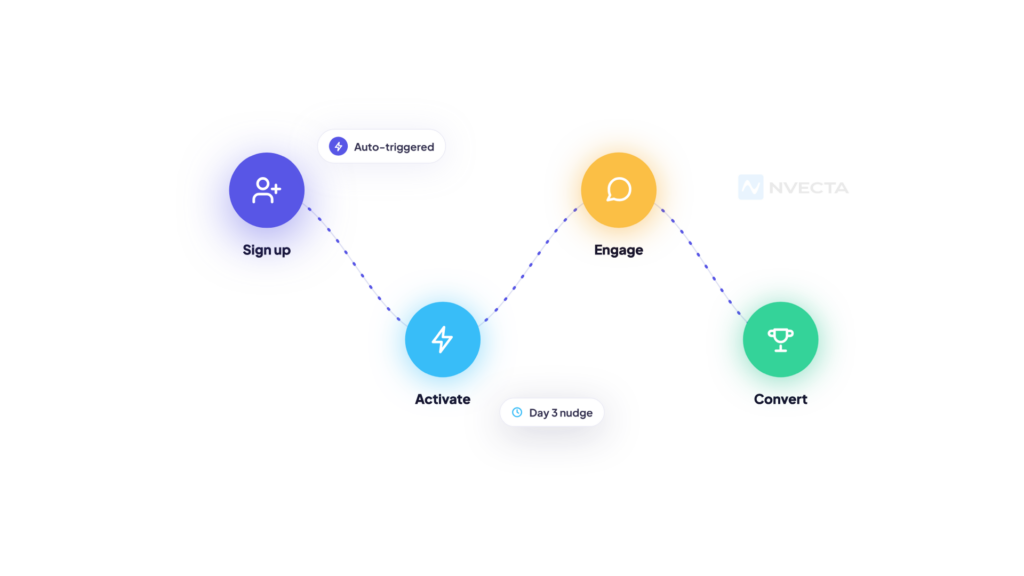
The first stage is onboarding and activation. At this point, users are not trying to master every feature. They are looking for a clear outcome that proves the product can deliver on its promise. The faster they reach that moment, the more likely they are to continue using the product.
The next stage is retention. Once users have experienced value, the focus shifts from education to reinforcement. The goal is to help customers build habits, reduce friction, and continue to find value over time. Small drops in engagement often become early warning signs that attention is starting to fade.
Expansion comes later. Customers are most receptive to upgrades, add-ons, or higher-tier plans when they are already succeeding with the product. When value is established, growth feels like a natural next step rather than a sales push.
Each stage requires a different approach. The signals you monitor, the automation you build, and the outcomes you measure evolve as customers move through the lifecycle.
| Lifecycle Stage | Customer Goal | Automation Focus | Key Metrics |
|---|---|---|---|
| Onboarding & Activation | Achieve a meaningful first win | Welcome journeys, setup guidance, activation triggers, product education | Activation Rate, Time to First Value, Trial-to-Paid Conversion |
| Retention | Build the product into regular workflows | Re-engagement campaigns, feature adoption nudges, churn prevention automation | Engagement Rate, Feature Adoption, Churn Rate |
| Expansion | Increase the value of the product | Usage-based upsell journeys, upgrade prompts, and expansion campaigns | Expansion MRR, Upsell Conversion Rate, Net Revenue Retention |
Thinking about the customer journey as a lifecycle rather than a single funnel makes it easier to build automation that supports long-term growth. Instead of sending the same messages to every user, teams can respond to the needs and behaviours that matter most at each stage.
Automated Onboarding Journeys for SaaS
Why Onboarding Automation Is Critical
Onboarding is where most SaaS products either earn trust or lose it. New users come in with interest, but very little patience.
If they cannot quickly figure out how the product helps them, they move on, often without ever saying why.
This is why onboarding has such a direct impact on retention. Users who do not reach value early rarely come back later to give the product another chance.
The first few days and weeks matter more than any campaign that comes after. Once confusion or friction sets in, churn becomes almost inevitable.
Onboarding automation helps close this gap. It ensures that new users are not left to figure things out on their own, especially when teams cannot manually support every signup.
By responding to what users do inside the product, automation can highlight the right steps, explain key features, and remove uncertainty at the moment it appears.
At its core, the goal of onboarding automation is not education for education’s sake. It is about shortening the path to value. The faster users experience a clear win, the more likely they are to keep using the product and build a habit around it.
Key Elements of SaaS Onboarding Automation
Segmented welcome flows
Not all users should receive the same onboarding journey. Segment users by:
- Trial, freemium, or paid users
- Roles such as founder, marketer, developer, or operations
- Use case or industry
- Company size or plan tier
Behaviour-based triggers
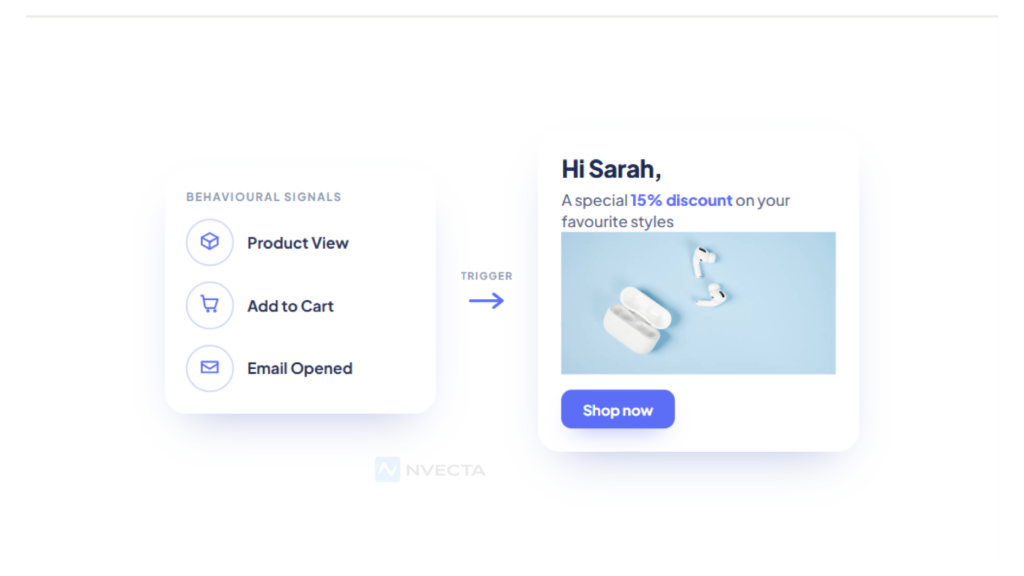
Move beyond time-based email drips. Trigger automation when users:
- Complete or fail to complete setup steps
- Use or ignore core features
- Reach key activation milestones
Multi-channel onboarding
Effective SaaS onboarding automation uses:
- Welcome and set up emails
- In app messages and tooltips
- Product tours and checklists
- Educational content and quick wins
Metrics to Measure Onboarding Success
- Activation rate
- Feature adoption rate
- Time to first value
- Trial to paid conversion
Churn Reduction Through Marketing Automation
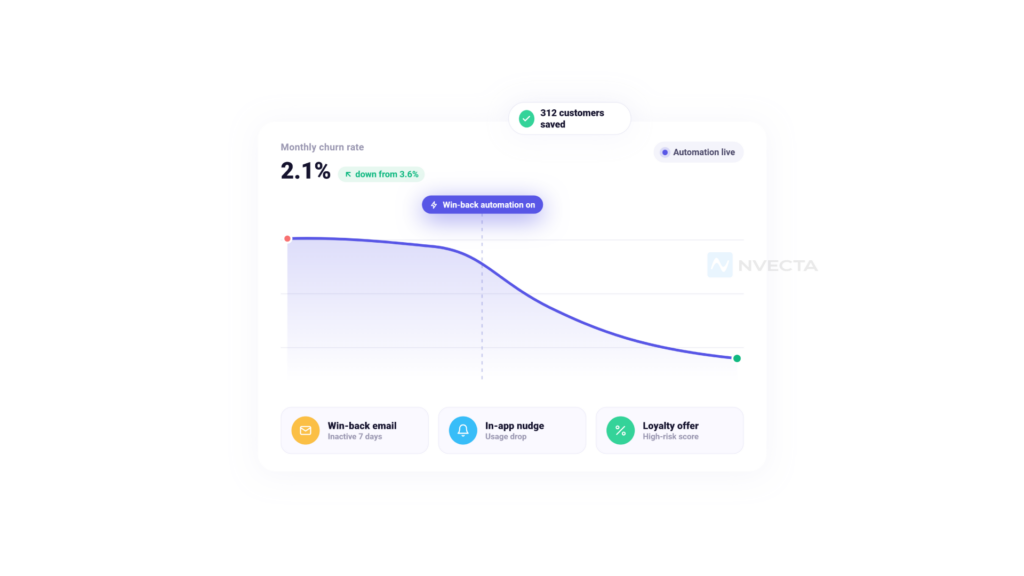
Churn is one of the biggest threats to SaaS growth, but in many cases, it is avoidable. Customers rarely leave without warning.
The signals are usually there long before cancellation happens. Marketing automation helps teams spot those signals early and respond before it is too late.
Understanding SaaS Churn Signals
Marketing automation is most effective when it is connected to product and customer data. Common indicators that a customer may be at risk include:
- Decreased login frequency, which often signals fading interest or a shift in priorities
- Core features are not being used, suggesting the customer has not fully adopted the product
- Long periods of inactivity that point to disengagement or confusion
- Negative NPS responses or repeated support issues that highlight unresolved friction
- Failed payments or billing issues that can lead to involuntary churn if ignored
These signals are rarely meaningful on their own, but when combined, they paint a clear picture of churn risk.
Automated Churn Prevention Campaigns
Automation allows SaaS teams to act on churn signals quickly and consistently without relying on manual monitoring.
Re-engagement automation
- Trigger campaigns when usage drops below normal levels
- Share the feature education that addresses likely gaps in understanding
- Deliver use case-specific content based on how the product is being used
- Offer simple product tips that help users get unstuck
Proactive support and customer success alerts
Automation works best when it supports human intervention rather than replacing it.
- Alert customer success teams when accounts show early signs of churn
- Prioritise outreach for high-value or strategic customers
- Trigger personalized check ins at moments when help is most likely to matter
Cancellation flow automation
When users initiate cancellation, automation can slow the exit and surface useful insights.
- Ask users why they are leaving through short exit surveys
- Respond with relevant education or feature suggestions based on their feedback
- Offer plan downgrades or pauses instead of forcing a full cancellation
Win Back Automation
Churn does not always have to be permanent. With the right approach, automation can help recover lost customers.
- Run-time-based reactivation campaigns after churn
- Share meaningful product updates or new feature releases
- Invite former customers into personalised re onboarding flows
- Focus on changes that directly address past reasons for leaving
Used thoughtfully, marketing automation turns churn reduction into an ongoing process rather than a last-minute reaction.
Upsell & Expansion Journeys in SaaS Automation
For many SaaS companies, especially those past the early growth stage, expansion revenue becomes the main driver of long-term growth.
When customers are already using and relying on the product, increasing usage or upgrading plans feels like a continuation of their success rather than a sales push.
Marketing automation helps teams support these moments at scale without overwhelming users or forcing upgrades too early.
Identifying Upsell Opportunities
Upsell automation should always be tied to customer success signals instead of fixed timelines or blanket campaigns.
- Reaching usage or seat limits
This usually indicates that customers are actively using the product and need more capacity to continue growing. - Advanced feature engagement
When users explore deeper or more complex features, it often signals higher commitment and readiness for expanded plans. - Account maturity milestones
Long-standing customers with stable usage patterns are more likely to see value in additional features or higher tiers. - Consistent product adoption
Regular usage over time shows that the product has become part of the customer’s workflow, making expansion a logical next step.
Types of SaaS Upsell Automation
Different upsell motions require different automation approaches depending on customer size and complexity.
In app upgrade prompts
- Show prompts when users hit plan limits or attempt locked features
- Keep messaging focused on removing friction rather than selling
- Highlight how an upgrade supports the user’s current goal
Usage-based email campaigns
- Trigger emails when usage trends increase over time
- Introduce higher plans or add-ons in the context of growing needs
- Reinforce value by referencing real product behaviour
Cross-sell and add-on journeys
- Introduce complementary features only after the core value is established
- Frame add-ons as enhancements to existing workflows
- Avoid promoting too many options at once
Sales-assisted expansion triggers
For mid-market and enterprise SaaS, automation should support human conversations.
- Alert sales teams when accounts reach expansion thresholds
- Share usage insights to help sales personalise outreach
- Coordinate timing between marketing and sales to avoid overlap
Avoiding Upsell Fatigue
Poorly timed upsells can quickly erode trust, even with active customers.
- Never push upgrades before users reach activation
- Personalise messaging based on role, plan, and lifecycle stage
- Focus on outcomes and value instead of pricing or discounts
When upsell automation is built around customer success, expansion becomes a natural extension of the product experience rather than an interruption.
Orchestrating the Full SaaS Automation Lifecycle
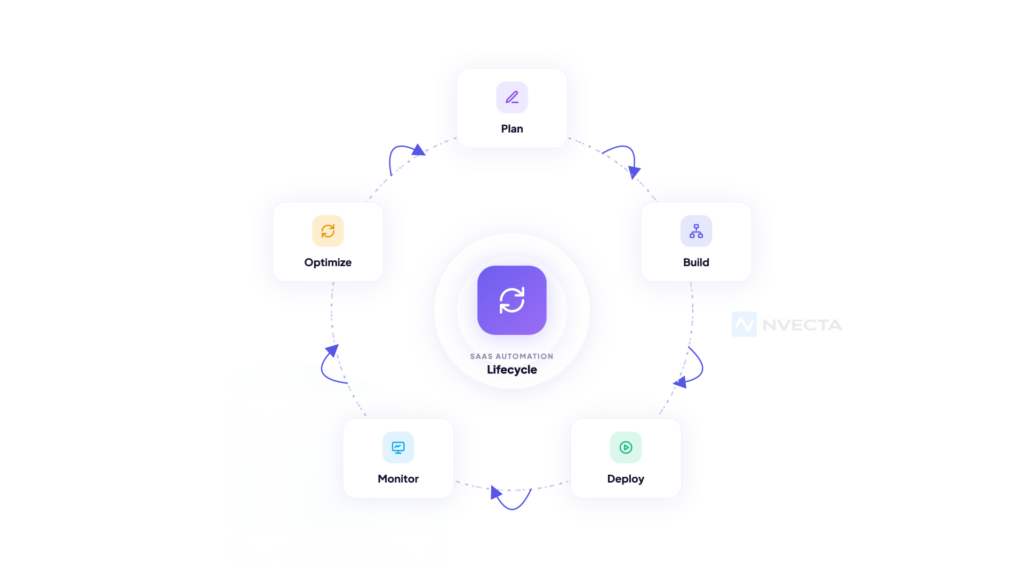
Marketing automation works best when it is treated as one system, not a collection of disconnected flows.
If onboarding, retention, and upsell are built in isolation, customers feel the gaps. They get repeated messages, confusing timing, or outreach that does not match where they are in the product.
A better approach is to think in terms of continuity. From the first login onward, every message and trigger should build on what came before. The experience should feel consistent, even as the goals change.
- Align on lifecycle stages across teams
Teams need shared definitions for stages like activated, engaged, at risk, and expansion-ready. Without this alignment, automation becomes noisy and difficult to trust. - Connect product, customer, and communication data
Automation only works when it is driven by real behaviour. Product usage, account details, and past conversations should inform every trigger, not just time since signup. - Make ownership clear between teams
Automation should clarify who steps in next. Whether it is marketing guiding early users, customer success addressing risk, or sales handling expansion, handoffs should be intentional, not assumed. - Use automation to support people, not replace them
The goal is not to remove human interaction. It is to make those interactions more timely and informed. Automation should handle repetition and surface insight, while people handle context and nuance.
When lifecycle automation is treated as a shared system, customers move through the product more smoothly, and teams work with less friction. Growth becomes easier to manage because everyone is focused on the same journey, not just their own part of it.
SaaS Marketing Automation Metrics That Matter
It is easy to assume automation is working just because things are running. Emails go out. Messages fire. Flows look busy. But none of that matters if users are not getting value or sticking around.
The only way to know if automation is actually helping is to look at how customers move through the product. Different stages tell different stories, so the metrics you track should change as customers move forward.
Onboarding metrics
These numbers answer a simple question: are new users figuring things out, or are they getting lost?
- Activation rate
This tells you how many people reach that first moment where the product clicks. If this number is low, no amount of later automation will fix it. - Feature adoption
Logging in is not the same as using the product. This shows whether users are touching the features that actually matter. - Trial conversion
If people try the product but do not commit, onboarding is likely not doing enough to show value early.
Retention metrics
Once onboarding is over, the focus shifts to consistency.
- Logo churn
This shows how many customers quietly disappear over time. It is often the first signal that something is not working. - Revenue churn
Losing a few small accounts is very different from losing a few large ones. This metric adds that context. - Engagement trends
Usage usually drops before churn happens. Watching patterns over time helps teams step in earlier.
Expansion metrics
Expansion metrics help you understand whether customers are growing with the product or just staying flat.
- Net revenue retention
This is one of the clearest indicators of long-term health. It shows whether existing customers are worth more today than they were before. - Expansion MRR
This tracks how much growth is coming from upgrades and increased usage rather than new signups. - Upsell conversion rates
This tells you whether expansion messages are landing or being ignored.
How NVECTA Supports the SaaS Automation Lifecycle
The automation strategies outlined in this guide only work when they are connected to real customer behaviour. Many SaaS teams struggle not because their ideas are wrong, but because their tools force them to choose between automation and relevance.
They build onboarding flows that ignore what users actually do. They set up churn alerts that come too late. They launch upsell campaigns that miss the moment when customers are truly ready.
NVECTA addresses this core challenge by treating the entire SaaS lifecycle as an integrated system rather than a collection of separate campaigns.
Instead of building onboarding in one tool, retention in another, and expansion in a third, teams can orchestrate all three around the same behavioural data.
Built for Behaviour, Not Schedules
At its foundation, NVECTA connects product usage, customer data, and communication in a way that makes automation responsive rather than rigid.
This means triggers are not based on days since signup or arbitrary timelines. They are based on what customers actually do inside the product.
A user who reaches an activation milestone gets immediate recognition and the next logical step. An account showing early churn signals gets proactive support before disengagement takes hold.
A customer who hits a usage limit discovers the higher plan at the exact moment it solves a real problem. None of this requires manual intervention or guesswork about timing.
Unifying Onboarding, Retention, and Expansion
When onboarding, churn reduction, and upsell are built separately, customers feel the fragmentation.
They receive conflicting messages, get nudged at the wrong moments, or see promotions that do not align with where they actually are in their journey.
NVECTA allows teams to build these lifecycle stages as one continuous experience. A user moves from onboarding to engaged customer to expansion candidate, with every touchpoint informed by what came before.
The product context from onboarding carries forward to retention efforts. The usage patterns that indicate engagement inform expansion timing.
There are no dead zones or misaligned handoffs because the entire journey is visible in one place.
Supporting Teams, Not Replacing Them
Automation often gets blamed for feeling impersonal or poorly timed. But the real problem is usually that automation has too much responsibility and too little insight. NVECTA flips this by making automation a support system for human expertise, not a replacement for it.
Customer success teams get alerted to churn risk before it becomes critical, giving them time to have meaningful conversations.
Sales teams receive expansion signals tied to real usage patterns, making outreach more informed and less interruptive.
Marketing teams can focus on messaging and strategy while automation handles the timing and routing. When automation is this connected, people can do what they do best: provide context, judgment, and genuine support.
Growth Through Alignment
The biggest barrier to effective automation is not technology. It is alignment. When marketing, product, sales, and customer success teams build automation without shared visibility into customer behaviour and lifecycle stages, confusion spreads quickly. Messages overlap. Timing conflicts. Priorities clash.
NVECTA creates a single source of truth for where customers are in their journey and what they need next. This brings teams onto the same page because they are literally looking at the same data. Onboarding success becomes everyone’s responsibility.
Churn signals matter to more than just customer success. Expansion opportunities are recognised earlier because the signals are visible across the organisation.
When automation is built this way, growth is no longer something marketing owns or sales drives alone. It becomes a shared outcome that every team contributes to in coordinated ways.
From Setup to Scale
Implementing the lifecycle automation strategies in this guide requires the right foundation. NVECTA makes this possible by providing the infrastructure to connect behavioural data, trigger logic, and multi-channel messaging in one platform.
Early-stage SaaS teams can start with basic onboarding automation and layer in retention and expansion as they grow.
Scaling companies can coordinate across teams and channels without rebuilding their entire automation strategy.
The result is automation that feels natural to customers because it is built around their actual journey, not a template that works for no one.
It feels timely because it responds to real signals. It feels personal because it is informed by genuine product behaviour.
And crucially, it feels supportive rather than pushy because it only appears when customers actually need help moving forward.
This is how automation becomes a sustainable engine for SaaS growth rather than just another set of emails.
Final Thoughts: The Future of Marketing Automation for SaaS
Marketing automation in SaaS has grown. It is no longer about building long email chains and hoping users follow along.
What matters now is understanding what people are actually doing inside the product and responding to that in a useful way.
The companies that get this right focus on the basics. They help new users get value quickly. They notice when usage drops and step in early.
They do not push upgrades until customers are already getting something real out of the product. When automation works, it feels quiet and supportive, not loud or sales-driven.
Doing this well takes more than good intentions. Teams need tools that connect product behaviour with messaging and timing.
Platforms like NVECTA make this easier by letting SaaS teams react to how users engage, instead of relying on fixed schedules or broad campaigns.
In the end, marketing automation should not live on its own. It should sit alongside the product, helping users move forward and helping teams grow without losing touch with their customers.
SaaS Marketing Automation Benchmarks — What Good Actually Looks Like
Most SaaS teams know their automation could be better. The harder question is how to tell when it is working well versus when it just looks busy. These benchmarks give you a reference point — not as targets to hit overnight, but as signals to calibrate against.
- Well-designed onboarding sequences increase activation rates by 25–40% (SaaSHero, 2026). The difference between a time-based drip and a behaviour-triggered onboarding flow is that wide. Most of that gain comes from responding to what users actually do rather than sending the same sequence to everyone on the same schedule.
- 55% of users who do not achieve quick wins churn within the first 90 days (Databox). Time-to-first-value is not a nice-to-have metric. It is one of the strongest predictors of whether a user stays beyond 90 days. If your onboarding does not deliver a clear win in the first two weeks, more than half of your signups will not be around long enough to matter.
- Reducing churn by just 5% can increase profits by 25–95% (SaaS Validation). The range is wide because it depends on your current churn rate and margins, but the principle holds at every scale: churn prevention is one of the highest-ROI activities in SaaS. It is also one of the easiest areas where automation provides compounding value over time.
- Trial-to-paid conversion sequences drive 10–20% of total conversions (SaaSHero). A focused trial nurture sequence — separate from the onboarding flow — is often the most neglected automation investment in early-stage SaaS. Most teams treat trial and onboarding as the same thing. They are not: onboarding gets users to value, trial conversion gets them to pay.
- Dunning automation recovers 15–30% of failed payments (ALM Corp, 2026). Involuntary churn — customers who did not choose to leave but whose payments failed — is a quietly significant revenue leak. An automated dunning sequence that retries payments and communicates proactively typically recovers nearly a third of those charges without any manual intervention.
- Top SaaS companies generate 50%+ of new ARR from existing customer expansion (Directive Consulting, 2026). If expansion accounts for less than 30% of your new ARR, there is almost certainly a gap in how upsell signals are being identified and acted on. The best expansion automation is not aggressive — it simply makes sure the right offer appears at the moment a usage signal genuinely justifies it.
- Healthy SaaS businesses target NRR of 110–120%+ (Directive Consulting). Net Revenue Retention above 100% means your existing customer base is growing in revenue even without new signups. NRR is increasingly the metric that investors and operators use to assess automation effectiveness, because it captures retention and expansion together in one number.
The pattern across these figures is consistent: behaviour-triggered automation outperforms schedule-based automation at every lifecycle stage.
The gap is largest in onboarding and churn prevention, where timing relative to what the user just did — not days since signup — determines whether an intervention lands or gets ignored.
The 5 SaaS Automation Sequences That Move the Revenue Needle
Most SaaS growth problems come down to gaps in one of five automation sequences. Teams that have all five running well — and connected to each other — grow more predictably than those still patching things together. Here is what each sequence does and what fires it.
1. Onboarding Sequence
Goal: Guide new users to their first activation milestone before they lose interest.
What fires it: Signup event — then individual triggers based on whether users complete or skip setup steps, use core features, or go quiet after the first session.
This is the sequence most teams build first, but it is also the one most often built wrong — as a time-based drip rather than a behaviour-responsive flow.
The version that works responds to what users actually do: a user who skips step 2 of setup gets a different message than one who completed it and is exploring features. The one that does not work sends the same five emails to everyone on days 1, 3, 5, 7, and 10, regardless of what happened in between.
2. Trial-to-Paid Conversion Sequence
Goal: Convert engaged trial users to paid before the window closes.
What fires it: Approaching trial end date, pricing page visits, feature engagement that signals readiness, or specific activation milestones that correlate with paid conversion in your product analytics.
This is different from onboarding. Onboarding gets users to value. This sequence converts users who have already found value but have not committed.
The most effective version segments users by engagement level — highly engaged trial users near the end of their trial get urgency-based messaging; users who have barely logged in get a different message focused on helping them get started rather than pressuring them to upgrade.
3. Dunning Sequence
Goal: Recover failed payments before involuntary churn happens.
What fires it: Failed payment event from your billing system.
Involuntary churn — customers who did not choose to leave but whose card expired or payment failed — is one of the most fixable revenue leaks in SaaS.
A standard dunning sequence looks like this: day 1 sends a soft notification explaining the failed charge and asking the customer to update their payment details; day 5 adds light urgency and explains what will happen to their account; day 10 sends a final notice before suspension with an offer to contact support if there is an issue.
The day structure gives the scaffolding. What determines how much of the recovery range a team actually captures is whether the retry timing and the email copy are built as a single coordinated system or run as two independent workflows.
A subscription dunning recovery sequence that staggers retry attempts at Day 2, Day 5, and Day 9 and aligns each email to the account state at that moment recovers significantly more than a sequence where messages are scheduled independently of when the charge was last attempted. The customer receiving a message on Day 5 should know their payment has already been retried twice, and that context changes how they read the ask.
Automated retry logic between messages recovers a significant portion without any human involvement. Most SaaS teams underinvest here because it feels like a billing problem, not a marketing problem. The overlap is bigger than it looks.
4. Churn Prevention Sequence
Goal: Re-engage at-risk accounts before they cancel voluntarily.
What fires it: Declining usage patterns, login frequency dropping below a threshold, key features going unused for an extended period, or a combination of signals that your product data shows correlates with churn.
The key here is early intervention. By the time a customer is on the cancellation page, the sequence has already failed. The best churn prevention automation triggers weeks before the cancel button gets clicked — when the usage data shows the account going quiet.
At that stage, a well-timed message asking if the customer needs help, or surfacing a use case they have not tried yet, lands very differently than the same message sent after they have already mentally moved on.
5. Expansion and Upsell Sequence
Goal: Grow revenue from existing customers by surfacing the right upgrade at the right moment.
What fires it: Usage approaching plan limits, adoption of advanced features, consistent high engagement over time, team growth signals, or account maturity milestones.
Expansion automation only works when it is tied to genuine success signals, not to how long someone has been a customer. A customer who just hit 80% of their seat capacity is a very different proposition from a customer who has been on the same plan for two years without growing their usage.
The first is ready for a usage-based upgrade conversation. The second might need a different kind of value reinforcement before expansion makes sense.
All five sequences compound over time. Onboarding that works feeds better trial conversion rates. Better trial conversion improves the quality of paying customers, which makes churn prevention more effective.
Customers who stay and adopt deeply become expansion candidates. Building them as one connected system — not five separate automations — is what separates teams that grow efficiently from teams that constantly fight fires.
Trial-to-Paid Conversion Automation — What Actually Works
Trial conversion is the automation investment most SaaS teams underestimate. Onboarding gets attention because it is the first thing that runs. Churn prevention gets attention because it is the most painful problem to ignore.
Trial conversion sits in between — and because it is harder to measure than either of those, it often gets left as a basic “your trial is ending” reminder rather than a proper sequence.
That is a significant missed opportunity. Trial-to-paid conversion sequences, when built properly around engagement signals, drive 10–20% of total SaaS conversions in isolation.
Segment trial users by engagement level first
The biggest mistake is treating all trial users the same. A user who has logged in every day, connected their integrations, and invited a teammate is not the same prospect as one who signed up on a Tuesday and never came back.
Sending them the same “trial ending” email is not just inefficient — it is counterproductive, because urgency-based messaging on a user who has not yet seen value will push them away rather than convert them.
Segment into at least three groups: highly engaged (logged in regularly, completed core setup, used key features), moderately engaged (some activity, partially set up), and low engagement (minimal logins, incomplete setup). Each group needs a different message and a different goal.
Highly engaged users need a conversion prompt. Moderately engaged users need a value nudge first, then a conversion prompt. Low engagement users need an activation rescue before conversion is even on the table.
Watch signals, not calendars
The most effective trial conversion triggers are behavioural, not time-based. A user who visits the pricing page is signalling intent. A user who invites a team member is investing in the product.
A user who uses an advanced feature for the first time is demonstrating commitment. Each of these signals warrants a conversion-focused message much more than “your 14-day trial ends in 3 days.”
In practice, a good trial conversion sequence combines both: time-based triggers as a safety net near trial end, and behavioural triggers that fire whenever the signal appears during the trial — regardless of how many days remain.
A user who hits the right signal on day 4 should not have to wait until day 12 to receive a well-timed conversion prompt.
What to include in a trial conversion message
The message that converts a trial user to paid should do three things: reference something specific they have actually done in the product, show them what they will lose or miss if they do not upgrade, and make the next step feel simple.
Generic “upgrade now for 20% off” messages work poorly because they ignore the first two elements.
A message that says “you have set up three integrations and processed 47 events — upgrading keeps that data and removes the event cap” is more effective because it is grounded in what that specific user has already built.
NVECTA connects product usage data directly to messaging logic, which means trial conversion sequences can reference real user activity rather than inserting generic placeholders. This is what separates conversion automation that feels personal from the kind that feels like a bulk email with a first name.
Dunning Automation — The SaaS Revenue Leak Nobody Talks About
Involuntary churn is the churn nobody budgets for. A customer did not decide to leave. Their card expired, their bank flagged the transaction, or a payment detail changed.
Without automation in place, these accounts quietly disappear — not because they wanted to, but because nobody caught the billing failure before it turned into a cancellation.
The data is clear on this. Automated dunning sequences recover 15–30% of failed payment charges. For a SaaS business with £50k MRR and a 3% involuntary churn rate, that is £750/month in preventable loss — and the fix is a three-message automated sequence that runs without manual intervention.
How a dunning sequence works
The sequence fires the moment a payment fails. It does not wait for the next billing cycle.
Message 1 (Day 1) — Soft notice. The tone is practical and non-alarming. “Your recent payment did not go through — here is how to update your card.” No urgency language. No consequences mentioned. Most people update their payment details at this stage because the message arrived before they even noticed the failure.
Message 2 (Day 5) — Light urgency. The payment has still not been updated. This message is friendly but clearer about what happens if nothing changes: access may be affected, data will be preserved for 30 days, and here is the one-click update link. Most remaining recoveries happen here.
Message 3 (Day 10) — Final notice + support offer. Access is about to be suspended. The message gives a final opportunity to update payment, explains exactly what will happen and when, and offers a direct line to support for anyone facing genuine payment issues. Some customers have billing problems that are not their fault — a card issuer blocking international charges, a company card that needs reissuing — and offering human help here recovers a portion that automated retries alone cannot reach.
What most teams miss
Dunning automation is treated as a billing problem and handed to finance or engineering. It is not. The messaging, timing, and tone of dunning communication is a marketing decision with direct revenue consequences. Teams that treat it that way — with the same care given to any lifecycle sequence — recover significantly more than those that send a generic “payment failed” alert and leave it there.
The sequence should also include automated payment retry logic alongside the messages — not just emails. Most billing platforms support smart retry timing (attempting the charge again at intervals that align with when card approvals are most likely). Combining retry logic with human-readable messaging is what gets the recovery rate to the top of the 15–30% range rather than the bottom.
FAQs
What is marketing automation for SaaS?
Marketing automation for SaaS is the practice of using behavioural triggers — based on what users actually do inside your product — to automate onboarding, trial conversion, churn prevention, dunning, and upsell at scale. Unlike general marketing automation, which runs on schedules and campaign calendars, SaaS automation is lifecycle-driven: every trigger is connected to product usage. A user who hits an activation milestone gets a different message than one who is going quiet, regardless of when they signed up.
What are the most important SaaS automation sequences?
Five sequences drive the most revenue impact for SaaS teams:
(1) Onboarding sequence — guides new users to their first activation milestone;
(2) Trial-to-paid conversion sequence — converts engaged trial users before the window closes;
(3) Dunning sequence — recovers failed payments before involuntary churn happens;
(4) Churn prevention sequence — re-engages at-risk accounts showing declining usage;
(5) Expansion and upsell sequence — surfaces upgrade opportunities when usage signals genuinely justify them. These work best when they are connected to each other rather than built as separate isolated flows.
How does trial-to-paid conversion automation work?
Trial-to-paid conversion automation segments trial users by engagement level — highly engaged, moderately engaged, and low engagement — and sends different messages based on where each user is. Behavioural triggers fire on signals like pricing page visits, team invites, or advanced feature usage, not just approaching trial end dates. The most effective conversion messages reference something the user has actually done in the product, explain what they will lose if they do not upgrade, and make the next step feel simple. Well-built trial conversion sequences drive 10–20% of total SaaS conversions.
What is dunning automation in SaaS?
Dunning automation is a sequence triggered by a failed payment event that attempts to recover the charge before involuntary churn happens. A standard sequence sends a soft payment notice on day 1, a light urgency message on day 5, and a final notice with a support offer on day 10 — combined with automated payment retry logic. Automated dunning sequences recover 15–30% of failed payment charges, making it one of the highest-ROI automation investments in SaaS. It is often treated as a billing problem rather than a marketing problem, which is why most teams underinvest in the messaging quality.
What SaaS marketing automation benchmarks should I be tracking?
Key benchmarks to calibrate against: onboarding sequences should increase activation rates by 25–40%; 55% of users who do not achieve quick wins churn in the first 90 days; reducing churn by 5% can increase profits by 25–95%; trial conversion sequences drive 10–20% of total conversions; dunning automation recovers 15–30% of failed charges; top SaaS companies generate 50%+ of new ARR from existing customer expansion; and healthy SaaS businesses target NRR of 110–120%+. These are reference points, not universal targets — your baseline and business model will determine which of these is most meaningful to optimise first.
