














 Email
Email SMS
SMS Whatsapp
 Web Push
 App Push
 Audience Sync for Ads
 Popups
 Channel A/B Testing
  Control groups Analysis
 Frequency Capping
 Funnel Analysis
 Cohort Analysis
 RFM Analysis
 Signup Forms
 Surveys
 NPS
NPS Landing pages personalization
  Website A/B Testing
  PWA/TWA
 Heatmaps
 Session Recording
 Wix
Wix Shopify
 Magento
 Woocommerce
 eCommerce D2C
  Mutual Funds
 Insurance
 Lending
  Recipes
  Knowledgebase
 Developer Docs
 Product Updates
 App Marketplace
 Academy
 Ebooks
 Case Studies
 Blog
Blog Templates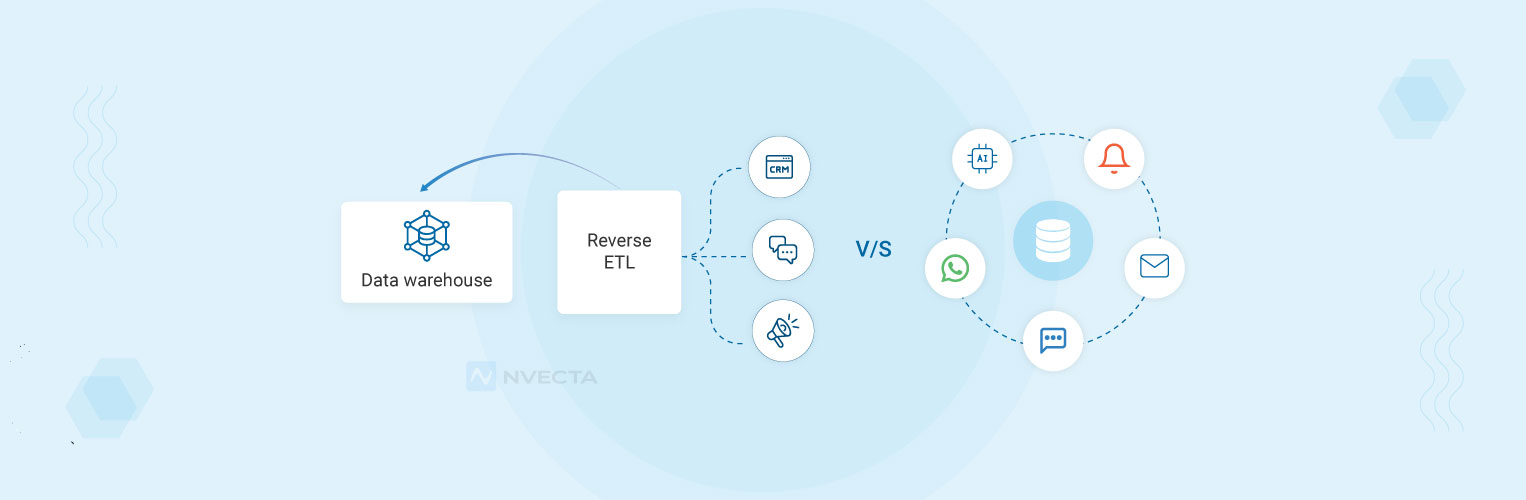
 Afreen Sheikh
📌 Quick Answer: Reverse ETL vs CDP
Reverse ETL moves processed, clean data from a data warehouse into operational tools like CRMs, marketing platforms, and support systems — turning analytical insights into real-time business actions. A Customer Data Platform (CDP) collects and unifies customer data from multiple sources into a single persistent profile, enabling personalization, segmentation, and omnichannel engagement. The core difference: Reverse ETL is analytics-driven and operated by data engineering teams; a CDP is customer-centric and built for marketing and CX teams to use without heavy technical involvement.
Choosing between Reverse ETL vs CDP has become an important decision for teams that want to turn scattered customer data into real business impact. As data continues to spread across warehouses, marketing platforms, CRM systems, and digital touchpoints, businesses find it difficult to create unified customer views or deliver personalised experiences at scale.
This challenge often raises the question of Reverse ETL vs CDP. Although both solutions help activate data, they are built for different purposes. One focuses on moving warehouse insights into operational tools, while the other is designed to understand customers in real time and engage them across channels. Understanding these differences is essential before investing in either solution.
In this blog, we’ll break down Reverse ETL vs CDP, their benefits, use cases, and help you decide which one fits your business needs best—while also exploring the key functionalities of CDP versus CRM and DMP.
Reverse ETL vs CDP: Quick Comparison
Before diving into the details, here is a side-by-side comparison of Reverse ETL and a Customer Data Platform (CDP) to help you quickly understand which solution fits your needs. Google features comparison tables prominently for queries like this — so here it is upfront:
| Comparison Area | Reverse ETL | Customer Data Platform (CDP) |
|---|---|---|
| Core concept | A method for syncing prepared data from a data warehouse into business tools | A centralized platform that collects and organizes customer data from multiple sources |
| Primary function | Activates warehouse data inside operational systems | Creates and maintains unified customer profiles |
| Type of solution | Data movement and activation workflow | Customer data management and engagement platform |
| Main objective | Make analytical insights usable across teams | Enable better personalization and customer understanding |
| Data source dependency | Fully dependent on a data warehouse | Can work independently of a data warehouse |
| Team ownership | Managed mainly by data or engineering teams | Used and owned primarily by marketing and CX teams |
| Level of technical involvement | Requires technical setup and data modeling | Designed for easy use by non-technical users |
| Best suited for | Organizations with advanced analytics and mature data stacks | Businesses focused on customer experience and marketing efficiency |
What Is Reverse ETL?
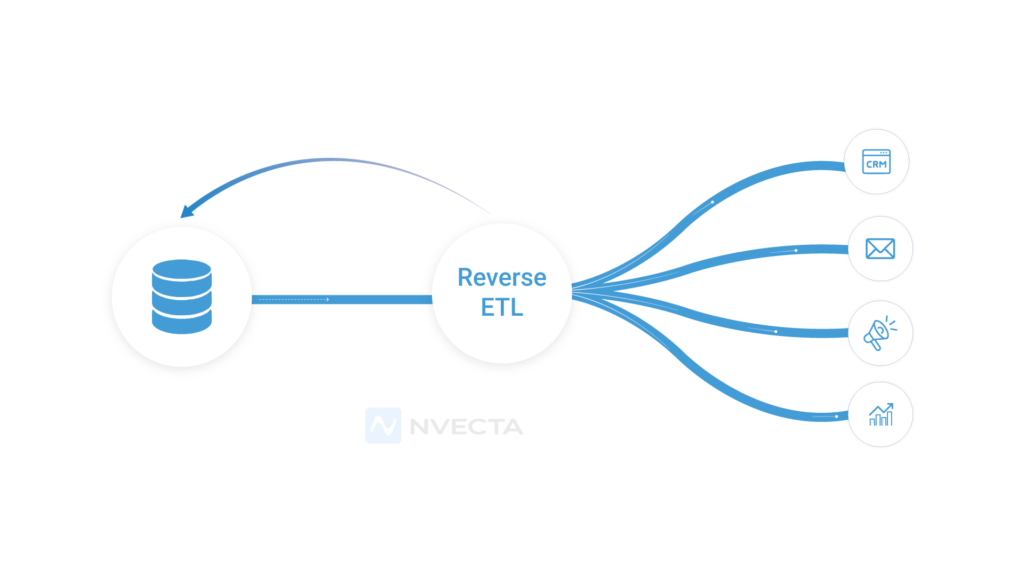
Reverse ETL is a data integration method that enables businesses to shift customer data from a cloud data warehouse into the operational tools such as CRM systems, marketing platforms, analytics tools, and customer success software.
Instead of limiting data to reporting and analysis, Reverse ETL ensures that insights reach the systems where real decisions and actions take place.
While traditional ETL pipelines (Extract, Transform, Load) are designed to collect and store data inside a warehouse, Reverse ETL takes a different approach by pushing selected, well-structured data back into business-facing tools.
This is especially valuable for teams that have invested heavily in building insights within their warehouse but struggle to apply them inside tools like Salesforce, HubSpot, or Zendesk.
By making warehouse data accessible to marketing, sales, and support teams, Reverse ETL helps organizations turn analytical insights into practical, outcome-driven strategies.
How Reverse ETL Works — a 4-step process
Understanding Reverse ETL at a conceptual level is useful, but the mechanics matter too — especially for data and engineering teams evaluating whether it fits their current stack. Here is how the process works in practice.
Step 1: Connect your data warehouse
The Reverse ETL platform connects directly to your existing cloud data warehouse — Snowflake, Google BigQuery, Amazon Redshift, or Databricks. This connection is read-only, meaning the warehouse remains your single source of truth and no data is duplicated or moved into a separate storage layer. The platform reads from tables, views, or dbt models already in your warehouse.
Step 2: Model and select the data to sync
Once connected, you define which data objects to activate — customer attributes, computed scores (such as LTV, churn probability, or lead score), behavioural segments, or product usage metrics. These are typically tables or SQL queries that your data team has already prepared. The Reverse ETL platform uses this as its activation-ready dataset without requiring further transformation.
Step 3: Map fields to the destination tool
Step 4: Schedule syncs and monitor data freshness
Finally, you configure how often the sync runs — real-time event-triggered, hourly, or daily batch — depending on how time-sensitive the data is. The platform then handles incremental updates automatically, syncing only changed records to reduce API load and processing costs. Monitoring dashboards track sync status, error rates, and data freshness so engineering teams maintain full visibility over what is flowing where.
Benefits of Reverse ETL
Reverse ETL helps businesses activate warehouse data by making it available within the tools that teams use everyday. These benefits explain why Reverse ETL has become an important part of modern data workflows.
Data Activation Across Multiple Tools
Reverse ETL pushes data from the warehouse directly into CRM systems, marketing platforms, and customer support tools. This allows teams to act on insights in real time instead of relying only on reports or dashboards.
Faster, Data-Driven Decisions
By syncing data from a single source, Reverse ETL ensures that all teams work with consistent and accurate data. This improves reporting quality and helps teams make faster, better data-driven decisions.
Reduced Manual Work
Reverse ETL automates the movement of data between systems, removing the need for manual exports and spreadsheet-based processes. As a result, teams save time and reduce the risk of human error.
Scalable Customer Segmentation
Behavioral, usage, and lifecycle data can be synced into downstream tools to support audience segmentation. This makes it easier for marketing teams to run targeted campaigns at scale.
Turning Insights into Action
Reverse ETL bridges the gap between analytics and execution by delivering warehouse insights directly into operational systems. This ensures that valuable data leads to meaningful business outcomes.
Use cases of Reverse ETL
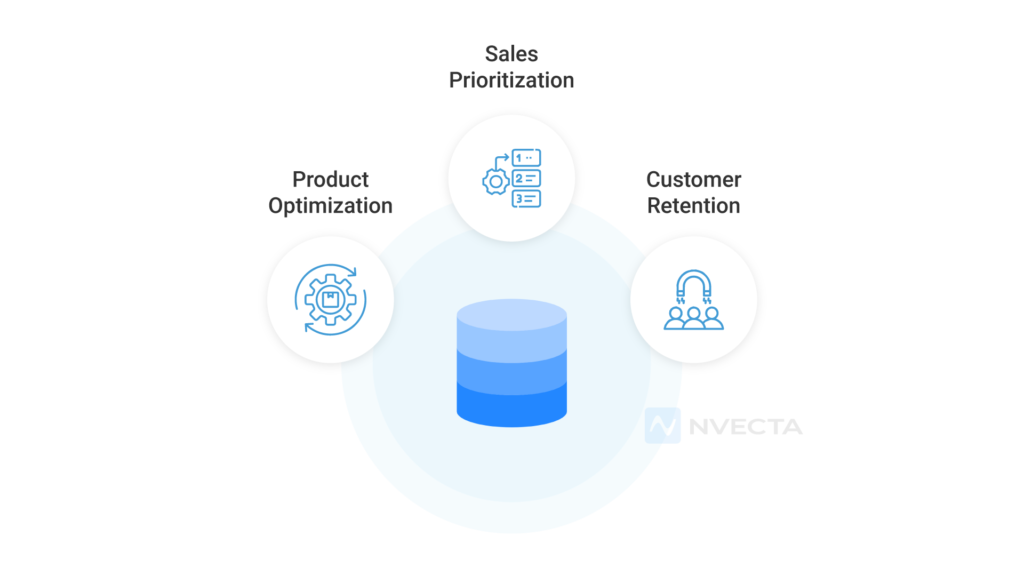
Reverse ETL is commonly used in data-driven organisations that already rely heavily on their data warehouse for insights. Here are a few use cases-
Product Optimization
Reverse ETL allows product teams to access usage metrics and feature adoption data inside their tools. This helps prioritise product improvements based on real customer behaviour.
Sales Prioritization
Sales teams can receive lead scores and intent signals directly within their CRM. This enables them to focus on high-value prospects and time outreach more effectively.
Customer Retention
Customer success teams can view churn indicators and usage trends in their support platforms. This makes it easier to identify at-risk customers early and take proactive action.
What Is a Customer Data Platform (CDP)?
A Customer Data Platform, or CDP, is designed to collect, unify, and activate customer data from multiple touchpoints in one centralised system. Its primary goal is to create a complete and consistent view of each customer.
Unlike Reverse ETL, a CDP does not depend on a data warehouse. It pulls data directly from websites, mobile apps, emails, CRM systems, and marketing tools.
When comparing Reverse ETL vs CDP, the CDP’s strength lies in real-time customer understanding and engagement.
CDPs are built for marketing, growth, and customer experience teams that need fast access to unified customer data.
To better understand how businesses apply these platforms in real-world scenarios, teams can also discover common use cases for CDPs across personalization, audience segmentation, omnichannel engagement, and customer retention initiatives.
Benefits of a Customer Data Platform (CDP)
A Customer Data Platform helps teams understand customers better and use data efficiently across channels. These benefits show how a CDP supports smarter actions.
Better Data Quality and Control
A CDP helps organise and standardise customer data from multiple sources. By managing identities and removing duplicate or inconsistent records, it ensures teams work with clean and reliable data.
This also supports compliance with data privacy requirements and builds trust in customer insights, while enabling teams to go further by exploring privacy-safe insights with data clean rooms.
Single View of the Customer
CDPs bring together customer data from websites, apps, CRM systems, emails, and support platforms into one profile.
This removes data silos and gives all teams access to the same customer information, creating a consistent understanding across the organisation. Learn how a warehouse-native CDP takes this even further by keeping data inside your existing infrastructure.
Real-Time Access to Customer Data
With a CDP, customer data stays updated as interactions happen. Teams can respond to recent behaviour, such as page visits or support activity, and take action at the right moment. This improves timing and relevance across customer touchpoints.
More Personalised Customer Experiences
By using unified profiles and behavioural data, a CDP makes it easier to segment audiences and deliver relevant messages.
This also demonstrates how customer data platforms enhance marketing automation by helping marketing teams create targeted campaigns that feel more personal, even when reaching customers at scale. See how businesses evaluate and shortlist the best customer data platforms for their needs.
Businesses evaluating CDP adoption can also explore insights from real CDP case studies on ROI to better understand how personalization and unified customer data contribute to measurable growth outcomes. See how businesses evaluate and shortlist the best customer data platforms for their needs.
Faster, Aligned Decisions Across Teams
A CDP ensures that marketing, sales, and support teams rely on the same data structure and insights. This reduces confusion, speeds up decision-making, and helps teams work together more effectively.
Use Cases of a CDP
CDPs are widely used for customer-centric and marketing-led use cases. Businesses use them to unify customer data, improve personalization, and coordinate experiences across channels.
Teams looking to explore various customer data platform applications often use CDPs to better understand customer behavior, streamline engagement, and support data-driven growth strategies.
Personalized Retail and Commerce Experiences
CDPs help retail and e-commerce brands combine online behaviour, purchase history, and app activity into a single customer profile.
Such functions allow businesses to recommend relevant products, personalise offers, and deliver a consistent shopping experience across digital and physical touchpoints.
Many brands are also leveraging CDP for effective retargeting strategies to reconnect with shoppers who abandon carts, browse products, or engage with previous campaigns.
Coordinated Marketing Across Channels
Marketing teams use CDPs to connect with customers via email engagement, website activity, and advertising interactions and later support unified customer journeys.
This also highlights the importance of integrating CDP with marketing automation tools to deliver consistent messaging, improve campaign timing, and create smoother customer experiences across channels.
Unified Data for Sales and Support Teams
A CDP consolidates customer information from CRM systems, other support platforms, and transaction tools into one shared view.
This ensures that sales and support teams have the context they need to engage customers more effectively and resolve issues faster.
Complete Customer Profiles Across Touchpoints
CDPs merge online and offline interactions such as website visits, app usage, purchases, and customer support conversations. This creates a comprehensive view of customer behaviour and preferences across every touchpoint.
These capabilities explain why many teams choose CDP when deciding between Reverse ETL or CDP. For a full foundation on how CDPs collect, unify, and activate data, read our guide on what is a customer data platform.
Key Difference Between Reverse ETL and CDP
The core differences between CDP and Reverse ETL lie in their purpose and data flow. Reverse ETL focuses on moving data from a warehouse into business tools, while a CDP focuses on collecting and unifying customer data from the source and delivering a personalized customer experience.
Reverse ETL is analytics-driven and typically requires strong data engineering support. CDPs are customer-centric and designed for real-time customer engagement.
Reverse ETL does not handle identity resolution or personalization natively, whereas CDPs are built for these use cases.
Here’s a quick comparison table highlighting the key differences between Reverse ETL and CDP.-
| Comparison Area | Reverse ETL | Customer Data Platform (CDP) |
|---|---|---|
| Core concept | A method for syncing prepared data from a data warehouse into business tools | A centralized platform that collects and organizes customer data from multiple sources |
| Primary function | Activates warehouse data inside operational systems | Creates and maintains unified customer profiles |
| Type of solution | Data movement and activation workflow | Customer data management and engagement platform |
| Main objective | Make analytical insights usable across teams | Enable better personalization and customer understanding |
| Data source dependency | Fully dependent on a data warehouse | Can work independently of a data warehouse |
| Team ownership | Managed mainly by data or engineering teams | Used and owned primarily by marketing and CX teams |
| Level of technical involvement | Requires technical setup and data modeling | Designed for easy use by non-technical users |
| Best suited for | Organizations with advanced analytics and mature data stacks | Businesses focused on customer experience and marketing efficiency |
What is a Composable CDP — and how does Reverse ETL power it?
One of the most significant shifts in the Reverse ETL vs CDP conversation is the rise of the composable CDP — a modern architecture that is rapidly replacing traditional monolithic CDP platforms for engineering-led organisations, especially as teams are increasingly exploring the advantages of customer data platforms in more flexible, scalable ways.
A traditional CDP is a packaged platform that stores and manages customer data in its own proprietary system, separate from your data warehouse. A composable CDP takes the opposite approach: it uses your existing data warehouse (Snowflake, BigQuery, or Databricks) as the single source of truth and assembles identity resolution, segmentation, and activation from modular, best-of-breed tools rather than a single vendor.
This is where Reverse ETL becomes a critical layer. In a composable CDP architecture, Reverse ETL serves as the activation engine — it reads the warehouse-modelled customer segments and computed scores (LTV, churn risk, propensity scores) and syncs them into downstream tools like CRMs, ad platforms, and marketing automation systems. The data stays in the warehouse; Reverse ETL simply activates it where it is needed.
The key advantages of a composable CDP approach include:
- No data duplication: Customer data stays in your existing warehouse — no migration to a separate CDP data store, no additional copies of sensitive records.
- No vendor lock-in: Each layer (ingestion, identity resolution, segmentation, activation) can be swapped independently without rebuilding the entire stack.
- Engineering control with marketing speed: Data teams define the trusted models and audiences in the warehouse; marketing teams activate them self-serve through the Reverse ETL interface without raising tickets.
- Cost efficiency: Composable architectures eliminate the high licensing costs of traditional CDPs, paying only for the specific capabilities each team needs.
Composable CDPs are particularly well-suited to organisations that have already invested in a modern data stack with dbt, Snowflake, or BigQuery and want to activate those investments without duplicating data into a third-party platform.
This architecture also demonstrates how CDPs and data warehouses support growth teams by giving marketing teams fast access to trusted customer data while allowing engineering teams to maintain full control over data governance and modelling.
To understand how this architecture works in practice, see our guide on warehouse-native CDP.
Do You Need Reverse ETL, a CDP, or Both?
Some large organisations run both a CDP and Reverse ETL, using the CDP to collect, unify, and activate customer data for real-time personalisation, while Reverse ETL syncs advanced warehouse models (LTV, churn risk, propensity scores, product usage signals) into business tools like CRM, marketing automation, ad platforms, and support systems.
That said, you don’t always need two separate solutions. The right approach depends on where your data lives today and how quickly your teams need to activate it:
- Choose a CDP if your priority is identity resolution, unified profiles, real-time segmentation, journeys, and personalisation, and you want marketing and CX teams to move fast without heavy data engineering.
- Choose Reverse ETL if you already have a strong data warehouse + BI/modelling setup, and your goal is to operationalise warehouse insights across SaaS tools reliably.
- Choose both if you want the speed of real-time customer experiences and the power of warehouse-driven intelligence pushed into frontline tools.
Why NVECTA: One Platform for CDP + Reverse ETL
NVECTA offers both CDP and Reverse ETL, so you don’t have to compromise or stitch together multiple vendors.
With NVECTA CDP, you can:
- Collect data from key touchpoints
- Build unified customer profiles
- Enable real-time segmentation, personalisation, and orchestration
With NVECTA Reverse ETL, you can:
- Activate warehouse models and analytics outputs
- Sync audiences and attributes to tools your teams use daily (CRM, marketing, ads, support)
- Keep operational systems aligned with your most trusted data
Whether you start with CDP for fast activation or Reverse ETL for warehouse-led operations, NVECTA lets you scale into a combined setup when you’re ready, without changing platforms.
Conclusion
The discussion around Reverse ETL vs CDP highlights two different approaches to data activation. Reverse ETL focuses on operationalising warehouse insights, while CDP focuses on understanding customers and delivering personalised experiences.
Choosing between Reverse ETL and CDP should be based on your data infrastructure, team capabilities, and customer experience goals. The right choice will help your business turn data into meaningful action and long-term growth.
FAQ
When should I use Reverse ETL instead of a CDP?
Use Reverse ETL when you already have a mature data warehouse with well-modelled analytics, and your primary goal is to push those insights — like lead scores, churn risk, or LTV — into operational tools such as Salesforce, HubSpot, or Zendesk. Reverse ETL is best suited for data and engineering teams that need to operationalise warehouse outputs across SaaS tools reliably.
When should I use Reverse ETL instead of a CDP?
Use Reverse ETL when you already have a mature data warehouse with well-modelled analytics, and your primary goal is to push those insights — like lead scores, churn risk, or LTV — into operational tools such as Salesforce, HubSpot, or Zendesk. Reverse ETL is best suited for data and engineering teams that need to operationalise warehouse outputs across SaaS tools reliably.
What is the main difference between Reverse ETL and a CDP?
Reverse ETL moves prepared data from a data warehouse into business tools. A CDP collects data from multiple sources, builds unified customer profiles, and enables real-time personalization and segmentation. Reverse ETL is analytics-driven and requires engineering support, while a CDP is designed for marketing and CX teams without heavy technical involvement.
Can I use both Reverse ETL and a CDP together?
Yes. Many organisations use both. The CDP handles real-time customer data collection, identity resolution, segmentation, and personalization. Reverse ETL syncs advanced warehouse models such as propensity scores, product usage signals, and churn predictions into frontline tools like CRM and marketing platforms.
Does a CDP replace a data warehouse?
No. A CDP and a data warehouse serve different purposes. A CDP is built for real-time customer data unification and activation across marketing and CX tools, while a data warehouse is designed for large-scale storage, analytics, and reporting. Understanding the key differences between CDPs and data warehouses helps businesses decide how these systems should work together within a modern data stack. Many organisations use both together.
Which teams benefit most from a CDP?
Marketing, customer experience, and growth teams benefit most from a CDP. It gives them real-time access to unified customer profiles, enabling faster segmentation, personalized campaigns, and coordinated journeys across email, SMS, push, and other channels without depending on data engineers for every activation.
What is a composable CDP and how does it relate to Reverse ETL?
A composable CDP is a modern data architecture where your existing data warehouse (Snowflake, BigQuery, Databricks) acts as the customer data foundation, rather than a separate monolithic CDP platform. Instead of copying customer data into a third-party system, a composable CDP uses modular tools for ingestion, identity resolution, segmentation, and activation — each layer independently chosen. Reverse ETL is the activation layer in a composable CDP: it reads warehouse-modelled segments and syncs them into downstream tools like CRMs, marketing platforms, and ad networks. The key benefits are eliminating data duplication, reducing vendor lock-in, and giving engineering teams full control while enabling marketing teams to self-serve activation.
What are the most widely used Reverse ETL tools?
The most widely adopted Reverse ETL platforms in 2026 include: Hightouch — the platform that coined the term Reverse ETL, now positioned as a composable CDP with 250+ destination connectors and AI-driven audience activation; Census — strong for operational analytics and warehouse-to-CRM syncing, acquired by Fivetran in 2025; RudderStack — a developer-friendly CDP with built-in Reverse ETL capabilities and open-source roots; and dbt — while not a Reverse ETL tool itself, dbt is commonly used alongside Reverse ETL platforms to model and prepare warehouse data before activation. NVECTA also provides native Reverse ETL within its unified CDP platform, allowing teams to activate warehouse data without managing a separate tool.
