













 Email
Email SMS
SMS Whatsapp
 Web Push
 App Push
 Audience Sync for Ads
 Popups
 Channel A/B Testing
  Control groups Analysis
 Frequency Capping
 Funnel Analysis
 Cohort Analysis
 RFM Analysis
 Signup Forms
 Surveys
 NPS
NPS Landing pages personalization
  Website A/B Testing
  PWA/TWA
 Heatmaps
 Session Recording
 Wix
Wix Shopify
 Magento
 Woocommerce
 eCommerce D2C
  Mutual Funds
 Insurance
 Lending
  Recipes
  Knowledgebase
 Developer Docs
 Product Updates
 App Marketplace
 Academy
 Ebooks
 Case Studies
 Blog
Blog Templates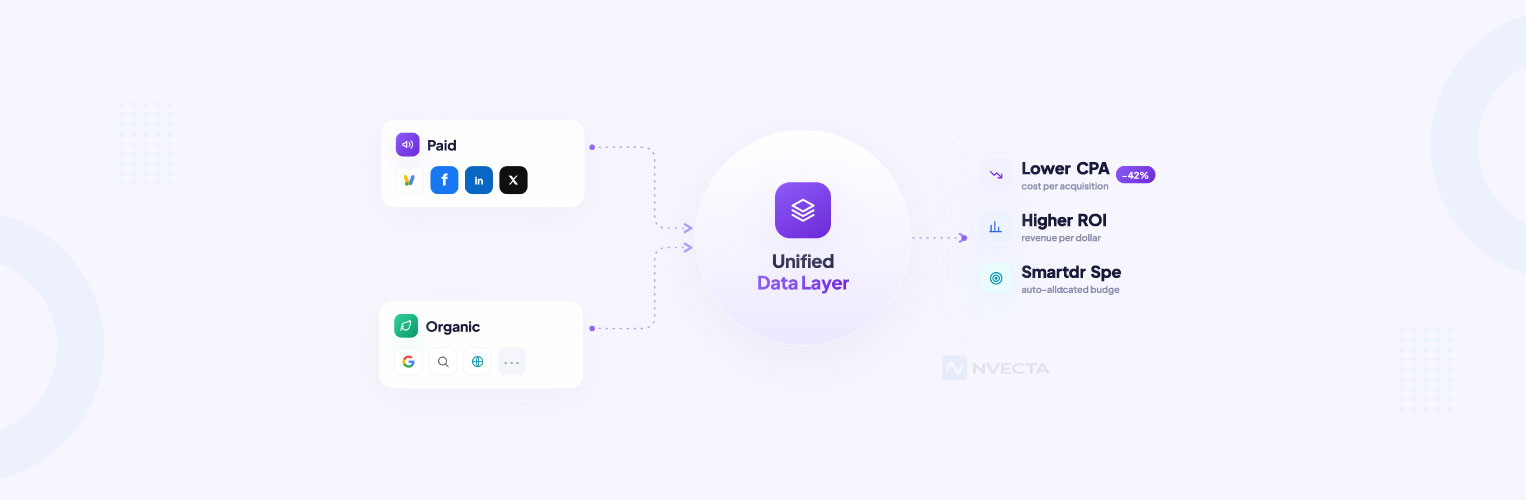
 Aparupa Saha
Most marketing teams still treat paid and organic as two separate machines. The SEO team chases rankings. The performance team manages bids. And first-party data sits somewhere in the middle, underused by both.
That disconnect is expensive. Paid + Organic Intelligence is what happens when you stop siloing those efforts and let real customer data drive both. The result: lower CPAs, higher-intent traffic, and ad spend that actually reflects what your customers do, not what a platform algorithm assumes.
NVECTA’s agentic customer data platform was built specifically for this kind of convergence, pulling behavioural, transactional, and engagement data into a single system that feeds both your organic strategy and your paid campaigns in real time.
Why the Paid-Organic Split Hurts More Than You Think
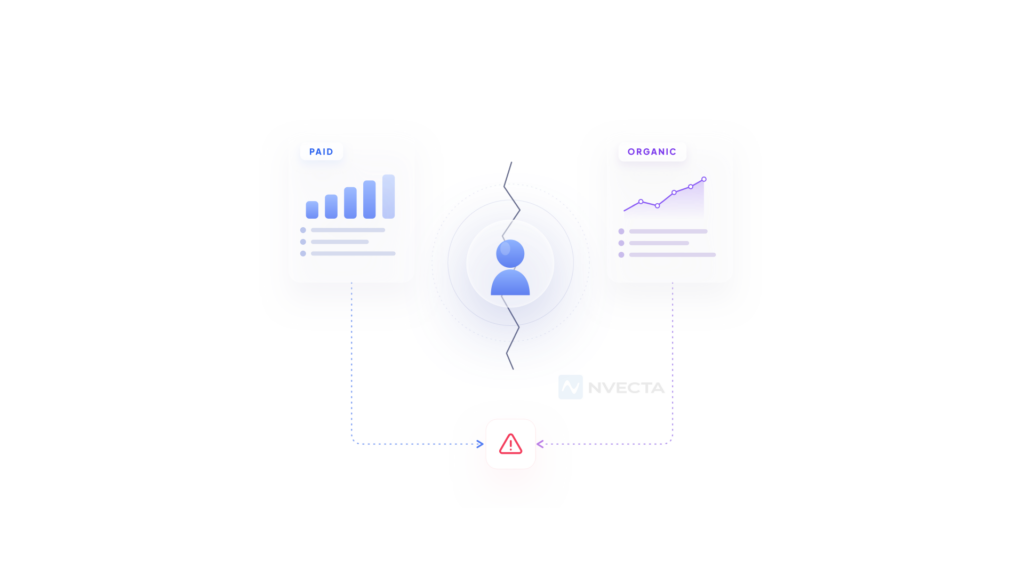
The traditional argument for keeping paid and organic separate is operational: different teams, different KPIs, different timelines. But operationally clean silos tend to be strategically expensive.
When your SEO team doesn’t know which customer segments are converting on paid, they optimise for traffic that might not matter. When your paid team can’t see organic intent signals, they overbid on keywords for users already close to purchase through other channels.
Here’s where the waste compounds. Platform-native audiences, the ones Meta and Google build for you, are constructed from third-party signals that are getting noisier by the day.
Cookie deprecation aside, these audiences have always been blunt instruments. A customer who bought from you six months ago, someone your CRM knows intimately, looks identical to a cold prospect inside a standard lookalike segment.
First-party data breaks that. When you feed your actual customer profiles into your campaign logic, the precision changes entirely.
What Paid + Organic Intelligence Actually Means
The concept isn’t complicated, but execution is where most teams fall short.
At its core, Paid + Organic Intelligence means using first-party behavioural and transactional data to align your content strategy with your acquisition targeting.
The signals that tell you what organic content resonates with high-LTV customers should also tell you what audiences to build on Google and Meta. The keywords driving assisted conversions should inform your content calendar.
In practice, this looks like:
- Uploading CRM-based audience segments as Customer Match lists to suppress recent buyers or target high-value lookalikes
- Feeding purchase history and predictive LTV scores into Smart Bidding to let Google optimise toward your best customers, not just last-click converters
- Pulling scroll depth, content downloads, and repeat-visit signals from your customer engagement platforms to qualify audiences before they ever see a paid ad
- Building content strategies around the intent signals your highest-converting paid traffic shows before they convert
First-Party Data vs. Platform Defaults: What Changes in Practice
| Signal Type | Without First-Party Data | With First-Party Data (NVECTA) |
| Search Intent | Broad keyword targeting, low precision | Matched to the known buyer stage and product affinity |
| Audience Segments | Third-party lookalikes, eroding post-cookie | Segments built from real behavioural and transactional data |
| Retargeting | Pixel-based, drops off after 7 days | CRM-powered, persistent across channels |
| Bid Optimization | Platform default signals | Customer LTV fed into Smart Bidding for better ROAS |
| Suppression | Manual exclusion lists are often outdated | Real-time suppression of recent converters |
How First-Party Data Tightens the Feedback Loop
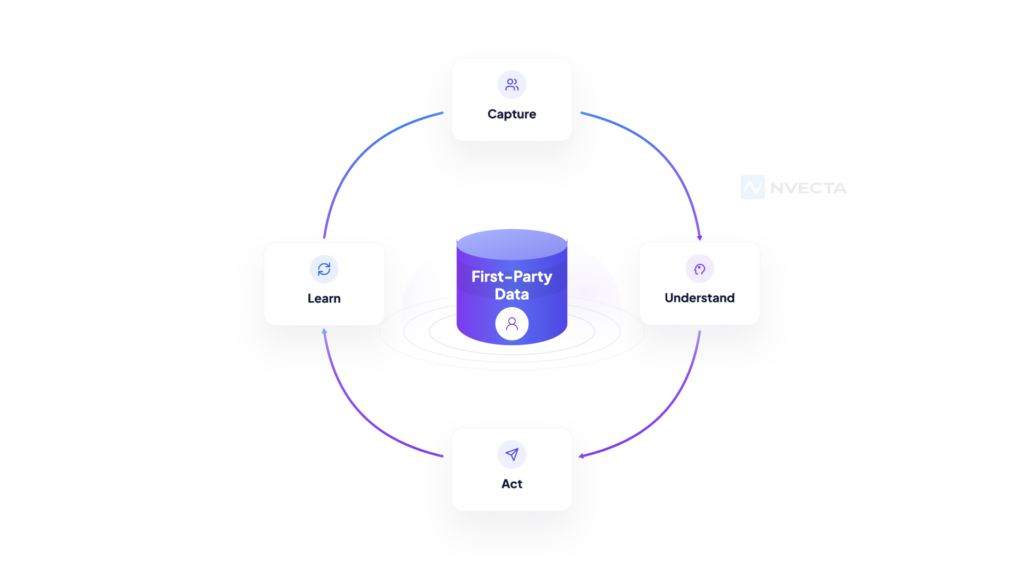
One of the clearest advantages of feeding first-party data into your paid campaigns is the impact it has on bidding. Google’s Smart Bidding is powerful, but it defaults to optimising for conversions it can observe. If your conversion window is 30 days and you sell high-consideration products, the algorithm has a limited signal.
When you upload offline conversion data or connect CRM outcomes back to campaign performance, the optimisation engine has something real to work with.
Customers who went on to make a second purchase. Leads that turned into enterprise contracts. Returns versus repeat buyers. That’s a fundamentally different quality of signal than click-to-form-fill.
On the organic side, the feedback loop works differently, but it’s equally powerful. When you know which content pieces appear in the paths of your highest-LTV customers, not just your highest-traffic pages, your editorial strategy stops being a volume game. You’re producing fewer pieces that do more work.
NVECTA connects these loops. Customer journey data captured in the customer data platform flows into both campaign optimisation and content performance analysis, so teams on both sides of the marketing org work from the same picture.
Is Your Current Stack Built for This?
The honest answer for most teams: probably not. The issue isn’t ambition. It’s infrastructure.
Running Paid + Organic Intelligence at any real scale requires a system that can unify identity across sessions and channels, compute segments in real time, sync audiences to ad platforms without manual exports, and tie paid conversions back to organic touchpoints in a coherent attribution model.
That’s a lot to ask of a stack built around disconnected point solutions. A CRM that doesn’t talk to your ad platforms. A CDP that requires IT involvement to push segment updates. An analytics layer that treats paid and organic attribution as separate reports.
The shift isn’t just about adding a data integration tool. It’s about having a system where first-party intelligence is the operating layer for both your content strategy and your media buying, continuously updated rather than refreshed in weekly batch jobs.
How NVECTA Brings This Together
NVECTA’s customer data platform resolves customer identity across your paid and organic touchpoints, then puts those unified profiles to work across both channels simultaneously.
High-intent organic visitors get suppressed from cold prospecting campaigns and re-entered into nurture sequences. Paid converters are removed from active retargeting within minutes of purchase. LTV-weighted audience segments sync to Google and Meta without manual uploads.
The AI Co-Marketer layer takes this further, continuously analysing which segments are responding, which content is converting, and where your paid budget is buying audiences your organic content is already warming.
That’s paid + organic intelligence working as a single system, not two teams occasionally comparing notes.
If your ad spend still runs on platform assumptions, there’s a gap between what you’re paying for and what your data actually knows. Closing it starts with making first-party data the shared foundation of both channels.
Frequently Asked Questions
What is Paid + Organic Intelligence?
It’s the practice of running paid and organic off the same data layer rather than separate playbooks. Your CRM knows who bought, who churned, who browsed three times and never converted. Paid + Organic Intelligence means those signals actually shape your content calendar and your bid strategy, not just your sales team’s pipeline view. The two channels stop guessing around each other and start sharing context.
How does first-party data improve paid ad performance?
The short version: platforms stop optimising for proxy metrics and start optimising for outcomes that actually matter to your business. Google’s Smart Bidding is only as good as what you feed it. By default, it’s working off clicks and on-platform conversions. Feed it LTV values, offline purchase data, repeat buyer signals, and the optimisation shifts. You’re no longer winning auctions for the most clicks. You’re winning them for the customers worth keeping.
Why does separating paid and organic teams hurt ROI?
Because neither team has the full picture. Your paid team might be spending heavily to acquire someone your blog has already brought to the edge of conversion. Your SEO team might be chasing keywords that have no correlation with buyer intent, purely because they drive volume. Those aren’t hypotheticals. They’re standard operating procedure in most orgs. The fix isn’t a kickoff meeting. It’s a shared data infrastructure that automatically makes both decisions smarter.
What role does a CDP play in Paid + Organic Intelligence?
Without a CDP, this concept stays theoretical. You need a system that can resolve identity across every session, channel, and device, and then push updated audience logic to your ad platforms in real time. Not nightly. Not after an analyst exports a CSV. Right now. That’s what a CDP actually does in this context. It’s the connective tissue between what your customers do and what your campaigns do next.
How does cookie deprecation affect this approach?
Honestly, it accelerates the argument for first-party data. Third-party audiences were always a compromise. You took a platform’s word for who your customers resembled. As that tracking degrades, those lookalikes get less precise. Brands sitting on rich CRM data and behavioural history are in a better position than they were two years ago, relatively speaking. Everyone else is bidding blind. Cookie deprecation doesn’t break Paid + Organic Intelligence. It rewards the teams that built for it early.
What’s the difference between Smart Bidding with and without first-party data?
Default Smart Bidding sees a form fill and calls it a win. It has no idea whether that lead closed, churned in month two, or went on to buy three more times. When you close that loop with offline conversion imports, LTV tiers, and actual revenue data, the algorithm has something meaningful to optimise toward. The bids shift. The traffic quality shifts. You stop over-indexing on volume and start buying the right customers, which is what the budget was supposed to do in the first place.
How does NVECTA support Paid + Organic Intelligence?
NVECTA’s CDP unifies identity across paid and organic touchpoints and keeps segments up to date without manual intervention. Someone who converts through organic search today gets removed from paid retargeting within minutes, not at the next batch sync. LTV-weighted audiences push to Google and Meta automatically. The AI Co-Marketer layer monitors where your paid spend is buying audiences your content is already warming, and flags the overlap. Both channels operate on the same customer intelligence, which is continuously updated.
