














 Email
Email SMS
SMS Whatsapp
 Web Push
 App Push
 Audience Sync for Ads
 Popups
 Channel A/B Testing
  Control groups Analysis
 Frequency Capping
 Funnel Analysis
 Cohort Analysis
 RFM Analysis
 Signup Forms
 Surveys
 NPS
NPS Landing pages personalization
  Website A/B Testing
  PWA/TWA
 Heatmaps
 Session Recording
 Wix
Wix Shopify
 Magento
 Woocommerce
 eCommerce D2C
  Mutual Funds
 Insurance
 Lending
  Recipes
  Knowledgebase
 Developer Docs
 Product Updates
 App Marketplace
 Academy
 Ebooks
 Case Studies
 Blog
Blog Templates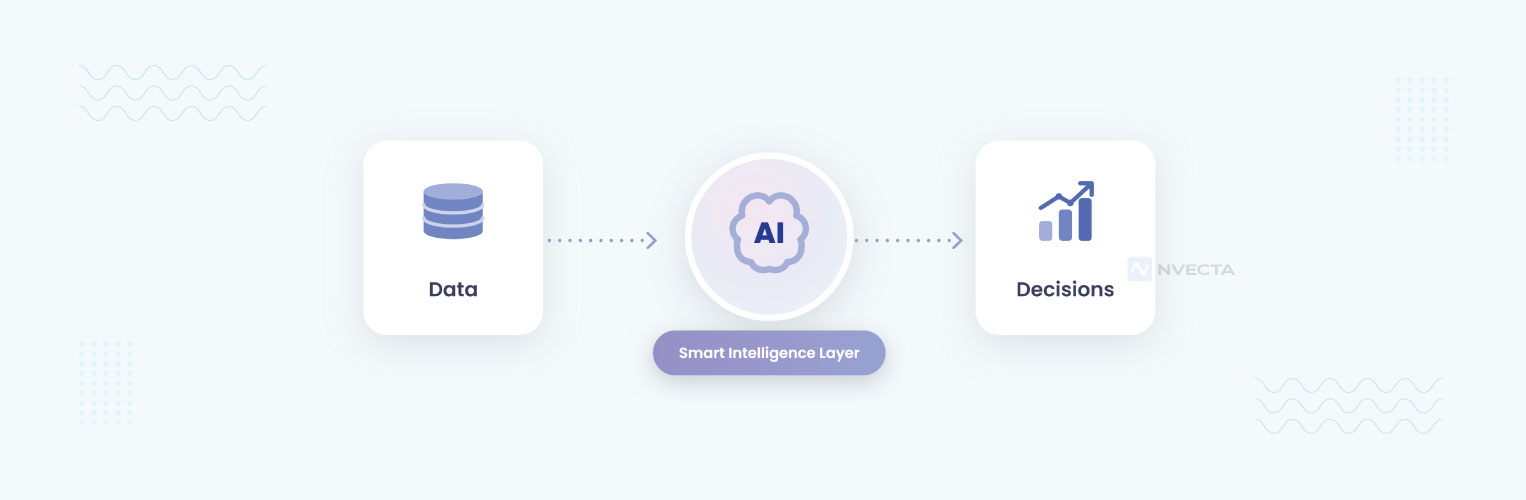
 Afreen Sheikh
Enterprises are handling a huge amount of data that includes customer interactions, transaction information, campaign performance, customer support conversations, and operational systems. All of these create valuable information that forms a basis for decision-making and responding to dynamic customer expectations. Yet many organisations still struggle to identify the right action at the right time due to dependence on manual efforts.
Most of them already have dashboards, analytics platforms, and AI initiatives in place. The challenge is turning insights into decisions quickly and efficiently -without any manual processes. To close that gap, you add an intelligence layer on top of your existing data infrastructure. It brings AI decisioning and accurate predictions into the mix, so teams act faster and actually move from data to decisions instead of stalling at dashboards. That speed is what improves customer experiences and business outcomes.
In this guide, we will see:
- Why Enterprises Still Struggle to Turn Data Into Decisions
- What an Intelligence Layer Is and How It Works
- Benefits of Intelligence Layers for Customer and Business Outcomes
- How NVECTA Adds an Intelligence Layer to Your Existing Stack
Why Enterprises Struggle to Turn Data Into Better Decisions
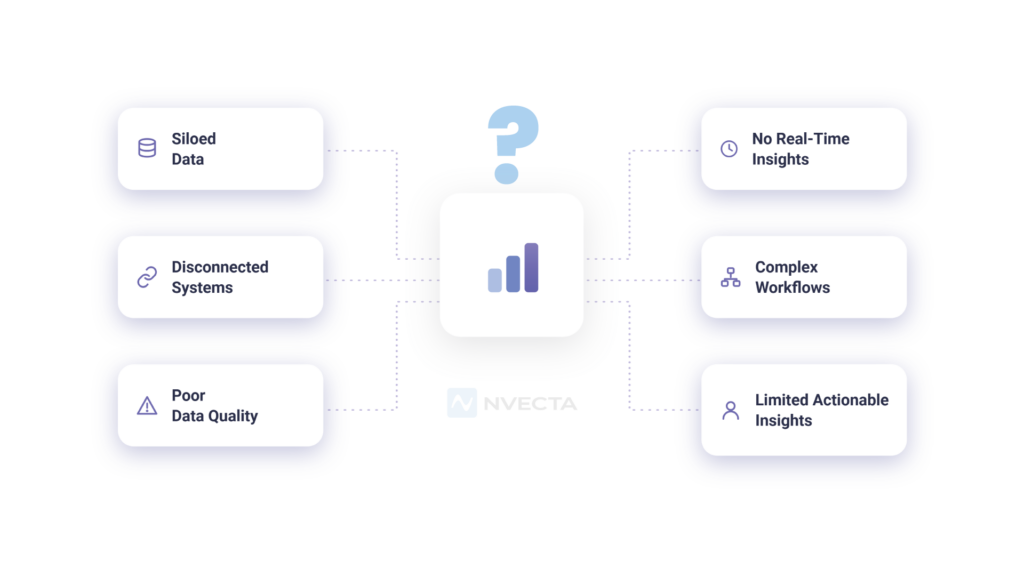
Enterprises struggle to turn data into decisions due to a lack of coordination between their own teams. As a business scales, it tends to add more tools, channels and data sources to manage data and facilitate a smooth functioning.
Yes, it gives teams greater visibility into specific functions and performing tasks with ease, but they often lose visibility across the entire customer journey. Decisions become slower because they spend more time piecing together information than acting on it.
Further, to make better decisions, teams are required to understand customer behaviour, context, business goals, and timing all at once.
Also, in most of the enterprises, this information is spread across different systems and reaches different teams at different times. Let us take a detailed look at the challenges that create the gap between data and decisions-
1. Data Overload and Decision Complexity
More data does not always mean better decisions; rather, it adds complexities. As the flow of data increases, so do reports, and dashboards add on from multiple sources, making it difficult for marketers to identify which signal matters most and which actions should be initiated first.
2. Data Silos and Disconnected Systems
Enterprise adds multiple tools to support marketing, sales, support or product teams. Every team works with different systems and data independently, creating fragmented information that is difficult to connect, leading to inconsistent experiences and missed opportunities for engaging customers.
3. Traditional Data Stacks
Enterprises that rely on traditional data stacks lag behind others, as such systems were designed to store information and support reporting.
They may excel at explaining what happened and measuring performance, but fail to meet the present-day data requirements. Today, businesses need a faster system that understands the changing events in real time and further supports decision-making as those events unfold.
4. The Gap Between AI Insights and Actions
Many organisations have built AI models that predict customer behaviour and give impressive recommendations with accuracy. But the real problem starts once those insights are generated.
Real business results come from acting on those insights quickly. And later, continuously learning from those results to optimise future actions.
What Is an Intelligence Layer?
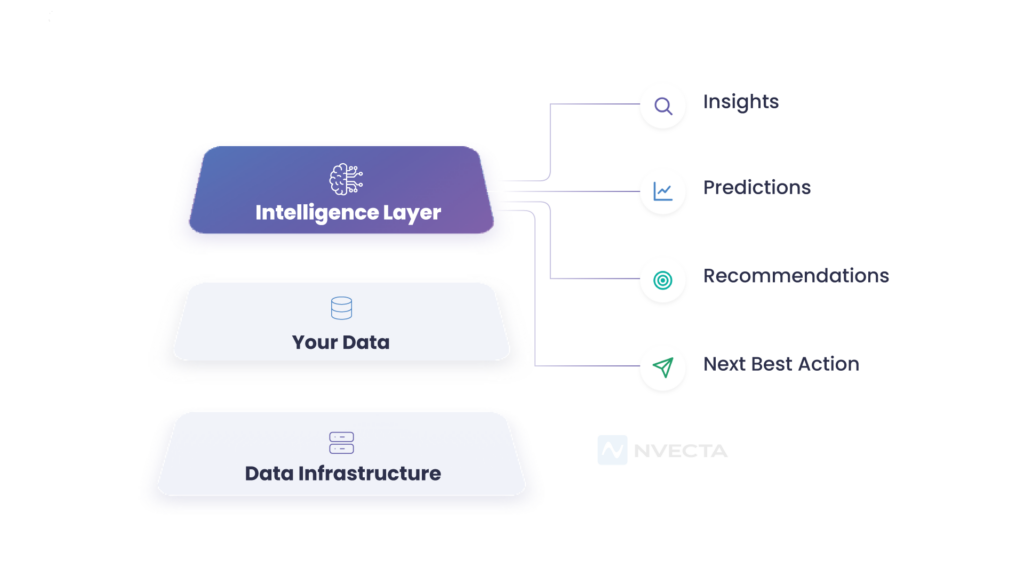
An intelligence layer is a smarter technology that operates on your existing data infrastructure and continuously interprets customer data to generate insights, predict outcomes and recommend the next best action.
It helps organisations to turn raw information into actionable decisions by connecting insights and execution.
1. Why is Data Alone Not Enough?
Data, analytics, and multiple metrics are the foundation of decision-making, not the outcome. An increase in website traffic, a drop in customer engagement or an increase in product usage can all signal something relevant.
However, these signals have less value until you understand their context and find a suitable action.
2. The Components That Power Intelligent Decisions
An intelligence layer requires the following four components to operate across different systems-
Unified data- unified data creates a connected view of customers by bringing together information from multiple sources into one single profile.
Context and identity- the system identifies the relationship between interactions, behaviour and events to provide meaning to that information.
Decisioning engine– the system evaluates customer behavioural signals and recommends the next best action to meet current marketing goals and priorities.
Continuous learning– the system continuously measures results and optimises future recommendations so that the accuracy of decisions improves over time.
These capabilities help marketers to make decisions with greater context, speed and confidence.
3. Turning Insights into Actions
Enterprises have mostly become proficient at generating insights. But the challenge comes when those insights need to be evaluated and operationalised.
AI decisioning goes one step further. It identifies customers who are likely to churn or highlight an opportunity to upsell a product. The intelligence layer not only generates these insights but also predicts the most relevant action, enabling organisations to respond in time.
4. Move Beyond Dashboards And Reports
Of course, dashboards and reports remain an important element for decision-making as they give visibility into performance and help teams to understand what has happened. But they require teams to manually interpret analytics and decide on the next step.
An intelligence layer acts as a decision-maker that continuously analyses data insights and acts in real time with the right action.
This shift from reporting to decision-making is crucial to consider for the current competitive environment. It requires a more responsive, adaptive and customer-centric approach.
Intelligence Layer vs Traditional Data Stack
To understand the role of an Intelligence Layer, here is a quick comparison with the Traditional Data Stack.
| Capability | Traditional Data Stack | Intelligence Layer |
| Primary role | Collects, stores, and organises data | Interprets signals and supports decision-making |
| focus | What happened? | What should happen next? |
| Decision making | Relies heavily on manual analysis and predefined rules | Recommends actions based on context and changing conditions |
| Customer understanding | Information is often spread across systems | Creates a connected and contextual view of customers |
| Response to change | Decisions are typically delayed and reactive | Supports timely and proactive decisions |
| Learning capability | Primarily uses historical information | Continuously refines recommendations using outcomes and feedback |
| Business value | Improves reporting and visibility | Improves customer experiences, operational efficiency, and business outcomes |
How an Intelligence Layer Turns Data Into Decisions
An intelligence layer mostly operates in the background, by continuously evaluating unified data, understanding the context and predicting the possible outcomes.
Let us understand the process an intelligence layer follows to add a decisioning layer to your existing stack-
1. Connecting Data Across the Enterprise
An intelligence layer continuously gathers signals from customer interactions, transactions, applications, and operational systems. Creating a connected view of information, it reduces fragmented decision-making and ensures actions are based on a broader business context.
2. Creating Context and Unified Intelligence
Data points rarely tell the full story on their own. An intelligence layer enriches customer insights with historical behaviour, business goals, and real-time interactions to interpret what an event means and why it matters.
3. Predicting Outcomes and Recommending the Next Best Action
Once patterns and context become clear, the intelligence layer predicts likely outcomes and recommends the most relevant action for a customer.
It could be about engaging a customer at risk of churn, prioritising a recommendation or alert, or identifying unusual disengagement activity that requires attention.
4. Learning and Improving Through Feedback Loops
Every decision creates new information. An intelligence layer continuously measures results and uses feedback for future recommendations. Over time, the system learns and improves the predictions, aligning more accurately with the changing customer behaviour and patterns.
From Data to Decisions: The Benefits of Adding an Intelligence Layer to Your Existing Stack
Enterprises already have their system to collect, store and analyse incoming data. With the addition of an intelligence layer, brands can understand customer behaviour effectively and make decisions with utmost accuracy and speed.
Further, it supports achieving defined goals, both long-term and short-term. By implementing relevant action at the right moment, customer experiences and engagement are improved.
1. Powering Personalised Customer Experiences
Customers are quite aware; they easily notice when every interaction feels repetitive or irrelevant. An intelligence layer identifies what customers are actually interested in and then delivers contextually relevant recommendation content and offers to engage customers.
2. Orchestrating Smarter Customer Journeys
Customer journeys are unpredictable; they move between channels and devices, making it difficult to deliver personalised experiences.
The intelligence layer continuously evaluates every interaction across channels and devices and determines the next best action in order to create journeys that adapt to customer behaviour in real time.
3. Enabling Proactive Risk Decisions
Risk often emerges gradually due to changes in customer behaviour, transaction and engagement patterns. An intelligence layer continuously monitors these risky situations, such as a sudden drop in engagement, unusual transaction pattern or repeated complaints.
Such signals need immediate attention, helping businesses to respond in time to any potential situation of churn, fraud or service issues.
4. Automating Decisions at Enterprise Scale
As a business expands, decisions multiply. Identifying which customers need attention, what leads should be prioritised, or which requests need immediate action cannot depend entirely on manual effort.
Evaluating every interaction manually is quite difficult and time-consuming. An intelligence layer automates repetitive decisions by processing data and recommending actions that improve efficiency and consistency.
5. Building More Adaptive and Autonomous Enterprises
Market conditions change, customer expectations shift- what worked six months ago may not work today. An intelligence layer learns from results and adjusts recommendations accordingly.
Businesses become more responsive as they no longer rely on fixed processes and assumptions.
How to Choose the Right Intelligence Platform
Choosing a decision intelligence platform is less about adding another tool and more about strengthening the way decisions are made.
The right platform should fit naturally into the existing ecosystem and help teams move from information to action without creating more complexity.
1. Unified Data and Context
Find a platform that can unify your data from different touchpoints and create a connected view of customers and ongoing interactions. A good intelligence platform brings peace signals together so that decisions are made with a complete customer picture.
2. Real Time Decisioning and Continuous Learning
The intelligence platform must be equipped to process real-time customer behaviour and adapt to changing customer interest and market conditions. The right platform should learn from previous interactions and improve future decisions.
3. Flexible Integration With Existing Systems
The right platform should integrate with your existing data stack and engagement tools. It should fit naturally into existing workflows and start delivering value without lengthy implementation requirements.
4. Measurable Business Outcomes
Look for a platform that gives real outcomes that teams can actually see and measure. The intelligence platform must generate value in terms of retention, engagement and decisioning.
How NVECTA Helps Enterprises Move From Data to Decisions
NVECTA is an AI-powered customer data platform that helps enterprises to activate the intelligence layer at different stages of data handling. It provides AI decisioning, next best action, predictive and recommendation intelligence for smarter and faster marketing.
1. One Customer View and Identity Resolution
NVECTA unifies customer data across websites, applications, CRM systems, and engagement platforms to create a single customer view. Resolving identities across touchpoints, it helps businesses make decisions using complete customer context.
2. AI Decisioning and Next Best Action
NVECTA continuously evaluates customer signals to determine the next best message, offer, channel, and engagement strategy. This helps businesses move from static rules to real-time, context-driven decisions.
3. Journey Intelligence and Optimisation
NVECTA continuously analyses customer responses and optimises journeys, communication channels, and engagement timing. This enables businesses to deliver experiences that adapt to changing customer behaviour and intent.
4. Product and Content Recommendations
NVECTA uuses behaviouraland contextual signals to deliver personalized product, content, and offer recommendations. This helps businesses increase relevance and improve customer engagement across every touchpoint.
5. Churn and Customer Lifetime Value Prediction
NVECTA predicts churn risk and CLV by analysing customer behaviour and engagement patterns. This helps businesses identify high-value customers and prioritise retention efforts more effectively.
6. Seamless Integration
NVECTA integrates with existing data warehouses, applications, and marketing platforms without complex implementation or re-instrumentation. Businesses can add intelligence to their existing stack and starrealisingng value faster.
Wrap up
Today, an enterprise’s growth mostly depends on how well they keep up with changing customer expectations, current marketing trends and technologies. This is why adding an intelligence layer to your stack has gained significance, as it resolves a major problem enterprises face- converting data insights into timely decisions. And effective decision-making is a real competitive advantage.
The intelligence layer implements AI decisioning, next best action, and automates repetitive operations that contribute to steady business growth.
NVECTA supports this approach by combining customer intelligence, AI decisioning, and activation in one platform, helping enterprises turn everyday decisions into measurable business outcomes.
Add an intelligence layer to your existing stack and turn data into faster, smarter decisions with NVECTA.
Schedule your demo now.
Frequently Asked Questions
What is an intelligence layer in enterprise data architecture?
An intelligence layer is a decision-making capability that sits on top of existing data systems. It continuously interprets information, predicts outcomes, and recommends actions, helping businesses move from reporting and analytics to timely and informed decisions.
Why do enterprises need an intelligence layer?
Most enterprises already have data platforms and analytics tools. The challenge is turning insights into actions quickly and consistently. An intelligence layer helps businesses understand context, identify the next best action, and respond faster to changing customer and business conditions.
How does an intelligence layer turn data into decisions?
An intelligence layer connects data across systems, understands relationships between signals, predicts possible outcomes, and recommends actions. It continuously learns from outcomes, allowing businesses to improve decision-making and adapt as customer behaviour and market conditions evolve.
What business outcomes can an intelligence layer improve?
An intelligence layer can improve customer engagement, personalisation, retention, operational efficiency, and decision speed. By enabling more informed and timely actions, it helps businesses create better customer experiences and measurable business outcomes.
How does NVECTA help enterprises move from data to decisions?
NVECTA is an AAI-powered customer data platform that adds an intelligence layer to enterprise data and customer journeys. It combines customer intelligence, AI decisioning, predictive capabilities, and activation to help businesses make faster, more informed, and measurable decisions.
Can NVECTA work with existing enterprise systems?
Yes. NVECTA integrates with existing data warehouses, applications, and marketing platforms without requiring complex implementation or re-instrumentation. This allows enterprises to add intelligence to their current stack and realise value faster.
