














 Email
Email SMS
SMS Whatsapp
 Web Push
 App Push
 Audience Sync for Ads
 Popups
 Channel A/B Testing
  Control groups Analysis
 Frequency Capping
 Funnel Analysis
 Cohort Analysis
 RFM Analysis
 Signup Forms
 Surveys
 NPS
NPS Landing pages personalization
  Website A/B Testing
  PWA/TWA
 Heatmaps
 Session Recording
 Wix
Wix Shopify
 Magento
 Woocommerce
 eCommerce D2C
  Mutual Funds
 Insurance
 Lending
  Recipes
  Knowledgebase
 Developer Docs
 Product Updates
 App Marketplace
 Academy
 Ebooks
 Case Studies
 Blog
Blog Templates
 Sara
SaraQuick answer: Lead nurturing is the process of building relationships with prospects at every stage of the buying journey through personalized, timely communication. According to Forrester, companies that excel at lead nurturing generate 50% more sales-ready leads at 33% lower cost. Annuitas research shows nurtured leads also make 47% larger purchases than non-nurtured ones. The best lead nurturing programs in 2026 combine email automation, behavioral scoring, AI-driven content selection, and cross-channel orchestration into one cohesive workflow.
Nurturing leads has become more important than ever heading into 2026. Buyers are doing more research before they engage, sales cycles are longer, and the brands that win are the ones that stay genuinely useful across every touchpoint of the journey. This guide walks through what lead nurturing actually is, why it pays off, and the 15 strategies that consistently outperform across industries.
What is Lead Nurturing?
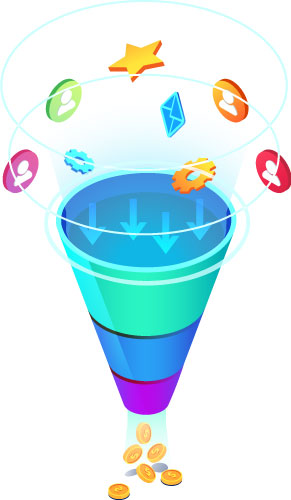
Lead nurturing is the practice of building genuine relationships with potential buyers and guiding them down your sales funnel through timely, relevant communication. It’s how brands turn cold contacts into warm prospects, then warm prospects into customers, without resorting to constant hard-sell tactics.
Effective lead nurturing helps companies guide prospects toward a purchase by answering their questions, addressing real challenges, and positioning the product as the natural solution to their problem. It’s less about pushing and more about being genuinely useful while the buyer makes up their mind.
Most buyers don’t arrive at your website ready to purchase immediately. They need a system that meets them wherever they are in their customer journey and gently moves them forward at a pace that respects their decision-making process.
With proper lead nurturing, you reach prospects across multiple touchpoints (email, SMS, push, in-app, social) and deliver the information they actually need to move to the next stage of the buyer’s journey. The brands doing this well aren’t selling harder. They’re being more useful, which is what earns the sale at the right moment.
Lead Nurturing Stages: TOFU, MOFU, and BOFU
The right nurturing approach depends entirely on where the lead sits in the funnel. Pushing a demo on someone who just signed up for your newsletter feels invasive. Sending blog content to someone who already requested pricing feels off-pace. Mapping content to the stage is what makes nurturing work.
Top of Funnel (TOFU) covers prospects who just discovered your brand. They’re researching the problem, not the solution. Content here should educate, build trust, and capture email for further nurturing. Blog posts, infographics, and lightweight ebooks work best.
Middle of Funnel (MOFU) covers leads who are actively evaluating solutions. They’ve identified the problem and are now comparing approaches. Content here should build authority, address objections, and qualify the lead. Case studies, comparison guides, webinars, and product demos perform well at this stage.
Bottom of Funnel (BOFU) covers sales-ready leads (SQLs). They’ve made the buying decision in principle and are now choosing between vendors. Content should accelerate the purchase decision. Free trials, ROI calculators, pricing pages, and personal demos move the needle here.
Why Is Lead Nurturing Important?
Before diving into how to nurture leads effectively, it helps to understand why this is one of the highest-leverage activities a marketing team can invest in.
Industry research consistently shows that on average 50% of the leads in your funnel aren’t yet ready to buy. They’re interested, but timing isn’t right, budget isn’t approved, or stakeholders haven’t aligned yet. If you only sell to the ones who are ready today and ignore the rest, you’re leaving roughly half your potential revenue on the table.
Beyond capturing more revenue, lead nurturing is one of the few growth strategies that doesn’t require expanding the marketing budget. You’re working harder with the leads you already paid to acquire, which is fundamentally cheaper than acquiring new ones from scratch.
According to Forrester, businesses that nurture leads well generate 50% more sales-ready leads at 33% lower cost. Annuitas adds another data point: nurtured leads make 47% larger purchases than non-nurtured ones, which means nurturing doesn’t just close more deals, it closes bigger ones.
DemandGen Report found that nurtured leads convert at 20% higher rates than cold ones. Marketo’s research is even sharper: companies running mature nurturing programs see a 451% lift in qualified leads compared to companies running nothing at all. The numbers compound across quarters, not weeks.
Before exploring specific lead nurturing strategies, the benefits below are worth understanding because they explain why the math works.
Top Lead Nurturing Benefits
Lead nurturing has a long list of tangible benefits. The category has been validated as a powerful technique that lifts sales output without requiring proportionally bigger budgets. Here are the eight benefits that matter most:
1. It Can Be Automated
You don’t have to track every lead manually. Set up automation once, then the system watches what each lead does, generates clean reports, and nurtures them at scale without ongoing effort from your team. Smart marketing automation platforms can handle thousands of nurturing journeys in parallel, each personalized to the recipient.
2. It Helps You Manage and Grow Relationships
Automated lead nurturing lets you manage every relationship between your business and prospects systematically, with a clear plan to deepen each connection over time. The systematic part matters because it raises the likelihood of turning prospects into customers without leaving anyone forgotten in the cracks. This approach also lifts how you handle business to business appointment setting, since every interaction moves the prospect closer to a meaningful sales conversation.
3. It Is Targeted
Lead nurturing doesn’t blast random content at everyone. It watches what each lead actually engages with and surfaces targeted content based on their real interests, which feels far more relevant to the recipient and converts measurably better. Pair this with strong customer segmentation underneath and the targeting gets sharper with every interaction.
4. It Saves You Money
Automated lead nurturing costs significantly less than direct manual outreach. It cuts the time and dollars spent staying on top of every possible customer, which frees up budget for higher-leverage activities.
Combined with all the benefits above, automated lead nurturing turns out to be one of the most cost-effective channels available. The system runs itself, which means you’re paying for software rather than hiring people just to follow up.
5. It Can Generate New Leads
Lead nurturing doesn’t just convert existing leads. It also drives new lead generation indirectly through word of mouth and content sharing. Happy customers talk to colleagues and friends, and referrals remain one of the highest-trust acquisition channels available.
If your nurturing content is shareable and genuinely useful, recipients tend to forward it to others with similar interests. That referral motion creates a steady trickle of new prospects without any additional acquisition cost.
6. Higher Click-Through Rates
A widely cited study covering more than 2,400 companies compared mass email marketing with proper lead nurturing. The nurturing approach delivered measurably higher click-through rates across every industry tested.
The same study also noted that nurturing emails had a slightly higher unsubscribe rate than generic blasts. That sounds bad on the surface, but it’s actually healthy: nurturing pulls fence-sitters off the list earlier, which leaves a smaller but qualified audience that converts at higher rates.
7. Lead Nurturing is Timely
Lead nurturing differs from random email blasts because it responds to timing signals from each prospect. It reacts when a customer is actually engaging, instead of broadcasting on a fixed schedule regardless of what the recipient is doing.
When a customer notices that your brand pays attention and responds at the right moment, the motivation to do business goes up measurably. That kind of attention is rare, and rare is what stands out in a crowded inbox.
8. It Lets You Discover Cross-Sell and Up-Sell Opportunities
For existing customers, lead nurturing gives a structured way to keep them aware of your full product range and new offers. The same nurturing motion that wins new business also expands relationships with existing accounts.
The same study found that nurtured leads have a 9% higher average deal size compared to non-nurtured ones. That means nurturing doesn’t just lift the count of closed deals. It also lifts the dollar value of each one, which compounds revenue per customer over time.
15 Best Lead Nurturing Strategies for Your Business
1. Know Your Buyer Persona
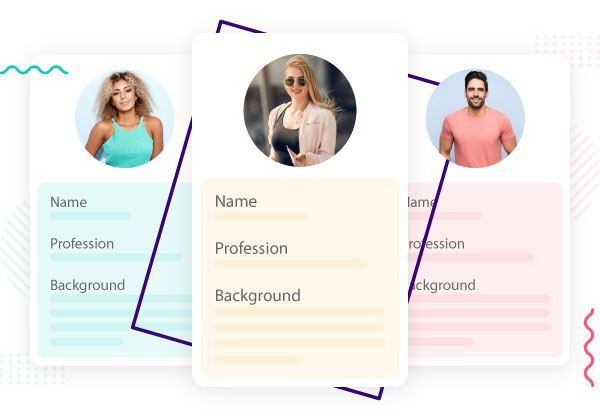
The first step is to define your buyer persona clearly. If you haven’t done this yet, start here. A clean buyer persona lets you separate worthwhile leads from time-wasters before you invest energy in nurturing the wrong people.
Focusing on the persona also helps you decide which leads deserve your team’s attention and what kind of content and interaction style will land best. People at different roles, company sizes, and industries respond to different angles, and skipping persona work is what makes nurturing campaigns feel generic.
Build the buyer persona alongside your sales team so both groups agree on who they should be communicating with and who they shouldn’t.
2. Coordinate Between Marketing and Sales Teams
Every department has its own roles, operations, and style, but marketing and sales ultimately share the same goal: turning leads into revenue. The point of a lead nurturing program is to get both teams genuinely aligned rather than throwing leads over the wall.
When both teams understand each other’s workflow and what counts as a qualified lead, your prospect nurturing starts to actually work. Misalignment is the single biggest reason nurturing programs underperform.
It also helps to use a shared tool so both teams see the same data on every lead. Knowing when and how to move leads through the funnel matters, but it’s just as important for both teams to share visibility on activity, scoring, and handoff timing.
3. Design and Send Segmented Content
Content is king, but personalization is what gives it edge. Generic content feels like spam. Personalized content feels like a one-to-one conversation, and the response rates reflect it.
Personalization takes prospects to the next level because it makes leads feel addressed individually, not blasted alongside thousands of strangers. The recipient feels like the brand actually knows who they are, which builds trust quickly.
Make sure to segment your content so every phase of the buyer journey gets content relevant to where they are in the conversion funnel. Cold leads need education. Warm leads need social proof. Hot leads need ROI proof and a clear path to purchase.
You can take it further by sub-segmenting each conversion stage content by demographics, industry, or role. The more personalized the message, the more valued the audience feels and the higher your conversion rate runs.
4. Set the Customer Journey
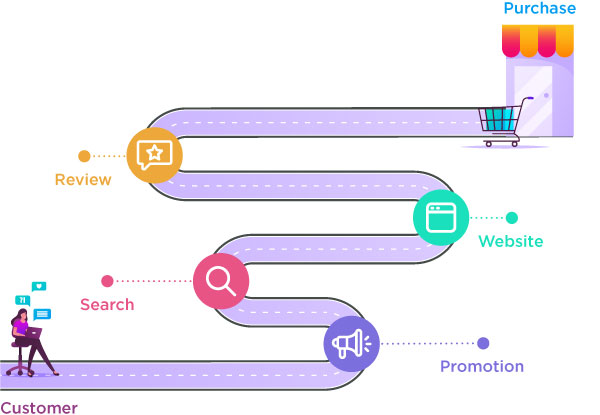
Once your buyer persona is locked in, the next step is mapping the buyer journey. The buyer journey is essentially how your potential customer flows down the conversion funnel from first touch to closed deal.
While preparing for inbound lead nurturing, define what kind of communication or content you’ll deliver as the lead progresses through the funnel. Don’t move too fast or it comes across as pushy. Match the cadence to the buyer’s natural pace, not your sales team’s quarterly targets. Tools like customer journey orchestration make it easy to map and refine these paths visually rather than coding them from scratch.
5. Track Interactions in Real-Time
Delivering the right message at the right moment is the core mechanic of inbound lead nurturing. Get the timing right and conversion rates climb. Get it wrong and even great content underperforms.
Triggered messages like a welcome email when someone signs up or a recovery email when a cart gets abandoned can make a huge difference at the moment of intent. The trick is to fire these messages within minutes of the trigger, not hours.
Timing can be tricky early in the buyer’s journey. Don’t request too much information from leads too early or you risk losing them entirely. Progressive profiling beats long forms every single time.
6. Use Smart Forms
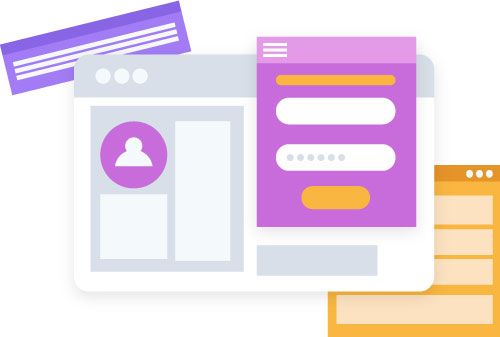
Capturing information about prospects is essential for proper segmentation. But getting enough information out of leads without scaring them away can be tricky.
This is where smart forms shine. Smart forms recognize returning users and ask different questions on each visit, building a richer profile progressively rather than dumping a 12-field form on first contact.
The more users engage with your website and content, the more useful data you collect on them, with each form interaction unlocking slightly deeper qualifying questions.
Smart forms end up benefiting both the company and the user. You learn more without them feeling like they’re being interrogated on every visit. The friction drops, the data quality climbs.
7. Automate Your Communication
If you’re trying lead nurturing tactics for the first time, the workload can feel overwhelming. And honestly, it is, unless you automate it. A proper lead nurturing approach has to be automated to be productive and effective at scale.
Use a marketing automation tool to build message sequences that send the right content at the right time. Pair it with broader email automation infrastructure and the entire program runs itself once it’s set up properly.
This not only takes the daily burden off your marketing and sales teams but also makes sure no lead falls through the cracks because someone forgot to follow up. Automation is what makes nurturing scalable beyond a handful of high-touch accounts.
8. Multi-Channel Lead Nurturing
When most marketers think about lead nurturing, they default to email marketing. But nurturing can and should happen across multiple marketing channels.
Research shows retargeting ads on Google and social media can be highly effective for ecommerce and online stores, especially when a potential customer has dropped their cart and gone quiet on email.
Uploading your database to those platforms lets you recognize leads and serve personalized ads outside email. Ebooks, downloadable resources, and webinars also work brilliantly as multi-channel nurturing assets that pull leads back into the funnel without relying on inbox attention alone.
9. Optimize Your Welcome Email
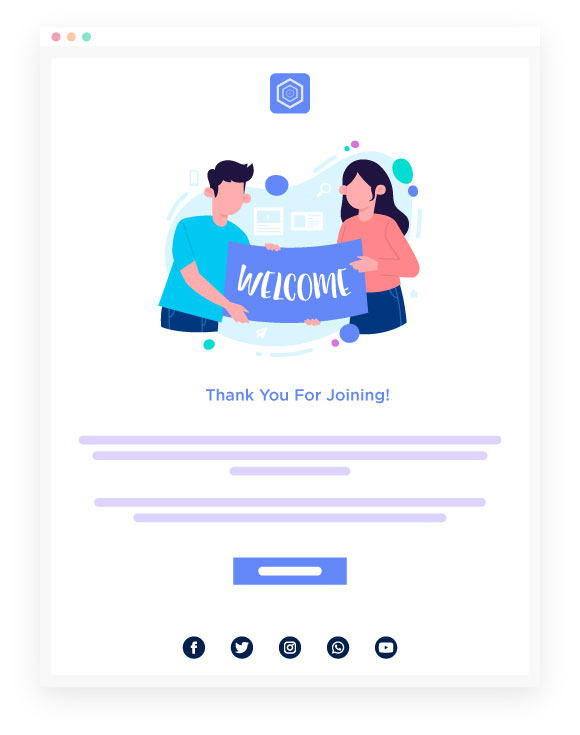
For lead nurturing, the first impression almost always happens through a welcome email. Get this one right and the rest of the sequence gets easier. Get it wrong and the rest doesn’t matter.
Welcome emails have an open rate of 57.8%, compared to 14.6% for other email types. When sent in real-time within minutes of signup, that figure climbs to 83%. The engagement window is genuinely huge if you act on it. Studying real welcome series email examples helps shortcut the design work and avoid rookie mistakes.
Your welcome email should include:
- Thanks: A polite thank-you for signing up. Keep it warm but brief.
- Explanation: What you do and what kind of content the subscriber should expect from you going forward.
- Extra Content: Personalized recommendations they might find useful while they’re still highly engaged.
- A CTA: One specific next action you want them to take. Include a Call-to-action that points to a product page, free trial signup, YouTube channel, or whichever single move matters most.
- A Farewell: A friendly sign-off. It never hurts to be genuinely warm.
10. Design Custom Offers
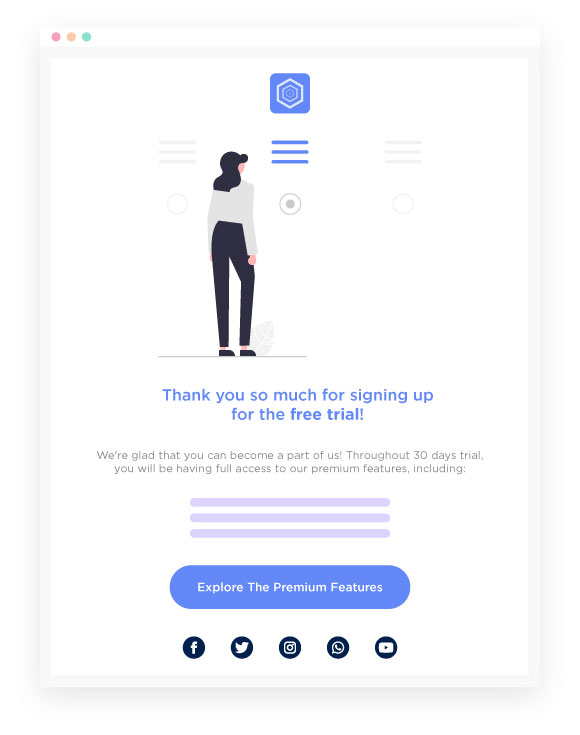
The strongest lead nurturing strategies collect a lot of useful data on each lead, then use that data to drive smarter offers at the right moment. When a lead is signaling buying intent, use everything you’ve learned about them to lift the chance of conversion.
Send them an offer that’s hard to refuse: a free trial extension, a custom discount, an exclusive bonus feature for their plan tier, or a free strategy session that ties to their specific use case. Personalized offers convert at meaningfully higher rates than generic ones.
11. Measure Interactions Throughout the Process
When you send out content, leads interact with it in different ways. These interactions should drive your next moves. Every action a prospect takes (opens, clicks, page views, downloads) should feed into your lead scoring process or algorithm.
Once they hit a certain score threshold, they get promoted to the next “level” of content automatically until they reach a score that signals they’re ready to be handed to your sales team. The scoring system replaces gut feel with data, which is what makes scaling possible.
12. Follow Through After the Sale
You’ve probably heard that it’s cheaper to keep an existing customer than acquire a new one. While the process is called inbound lead nurturing, the relationship doesn’t end when the sale closes.
Make sure the relationship you built with each customer stays strong post-purchase. Customer service check-ins, loyalty emails, and well-timed follow-up email sequences are how you keep customers from quietly churning. Retention is just nurturing extended past the close.
13. AI-Driven Content Selection
The biggest 2026 differentiator in lead nurturing is AI-driven content selection. The old approach picked content by hand-coded rules. The new approach uses machine learning to predict which content variant each lead is most likely to engage with based on past behavior, profile data, and signals from similar leads.
Modern AI agents can dynamically swap content, subject lines, and send times per recipient without any manual configuration. The result is higher engagement, lower fatigue, and better conversion across the entire program. The teams running mature AI today are pulling measurably ahead of teams still doing rule-based nurturing.
14. Account-Based Nurturing (ABM)
For B2B brands selling to mid-market and enterprise, account-based nurturing has become the default playbook. Instead of nurturing individual leads, you nurture entire accounts and the buying committee inside them.
The mechanics are similar to traditional nurturing but the targeting is account-level. When one stakeholder at a target account engages, the system surfaces relevant content for other stakeholders at the same company. The result is faster consensus inside the buying committee, which compresses sales cycles measurably.
15. Lead Scoring with Tiered Nurturing Paths
Not every lead deserves the same nurturing treatment. Lead scoring lets you segment by intent and engagement, then route each tier into a different nurturing path that matches its readiness level.
Hot leads (high score, recently engaged) get fast-paced BOFU content and direct outreach from sales. Warm leads (mid score) get educational MOFU content and qualifying questions. Cold leads (low score, low engagement) get gentle TOFU content and stay in the long-tail nurturing pool until they warm up. The tiered approach makes sure you’re spending the most attention on leads most likely to convert this quarter.
Lead Nurturing Workflow Templates
Strategies are useful, but most teams want a concrete starting point. Here are four real workflow templates you can adapt directly:
B2B SaaS Welcome to Demo Workflow (5 emails, 14 days)
- Day 1: Welcome email with key resource
- Day 3: Brand story + social proof case study
- Day 7: Feature spotlight tied to a common pain point
- Day 10: Customer success story with ROI numbers
- Day 14: Direct demo invitation with calendar link
Ecommerce Browse Abandonment to Purchase (3 emails, 7 days)
- Hour 4: Soft reminder with the viewed product
- Day 2: Social proof + customer reviews on the product
- Day 7: Limited-time discount offer with urgency
Free Trial to Paid Conversion (7 emails, 21 days)
- Day 1: Welcome + first activation step
- Day 3: Most-used feature tutorial
- Day 7: Advanced features unique to paid plans
- Day 10: Customer case study
- Day 14: Trial midpoint check-in
- Day 18: Trial expiration warning + upgrade incentive
- Day 21: Final upgrade ask + extended discount
MQL to SQL Handoff Workflow
- Trigger: Lead score crosses MQL threshold
- Step 1: Marketing email confirming engagement
- Step 2: Internal Slack/CRM alert to sales rep
- Step 3: Personal outreach from rep within 24 hours
- Step 4: Calendar link for discovery call
AI-Powered Lead Nurturing in 2026
The biggest shift in lead nurturing heading into 2026 is the move from rule-based workflows to AI-driven decisioning. The old approach scheduled emails on fixed days regardless of how each lead actually behaved. The new approach watches behavior continuously and adjusts timing, content, and even channel based on what each individual lead is most likely to respond to.
Modern AI-powered nurturing platforms include predictive lead scoring that replaces rule-based thresholds with machine-learned models, AI-generated content variants tested continuously, send-time optimization per recipient, and behavioral pattern detection that surfaces early warning signs of churn before they happen.
The catch worth stating clearly: AI only works on clean data and well-structured workflows. Adding AI to a fragmented setup generates bad decisions faster, not smarter ones. The foundation has to come first.
Lead Nurturing by Industry
The right lead nurturing playbook varies meaningfully by industry. Here’s how the priorities shift across the major verticals:
B2B SaaS teams focus on free trial activation, feature adoption, and demo conversion. The sequence runs across 14-30 days, with educational content interleaved with product nudges.
Enterprise B2B teams use account-based nurturing with case studies, ROI calculators, and executive briefings. The cycle runs 3-9 months and involves multiple stakeholders inside each target account.
Ecommerce teams prioritize cart abandonment, browse abandonment, post-purchase, and repurchase sequences. Speed matters: most ecommerce nurturing fires within hours, not days.
BFSI (banking and finance) teams focus on trust-building, product education, and connection to a human advisor at the right life-stage moment. Nurturing here runs longer and more conservatively.
Higher education runs ultra-long-cycle nurturing: program-specific content, application reminders, financial aid education, and parent-targeted outreach. The full cycle can run 12-24 months.
Lead Nurturing KPIs Worth Tracking
The strategies above only matter if you measure whether they’re moving the right numbers. Seven metrics matter most for any lead nurturing program:
- Email engagement rate (open, click, reply): 25-40% open rate and 3-5% click rate are healthy benchmarks for nurturing emails.
- Lead-to-MQL conversion rate: percent of leads that become marketing-qualified. 10-25% is typical for well-run programs.
- MQL-to-SQL conversion rate: percent of MQLs that become sales-qualified. 30-50% is the benchmark for healthy alignment.
- SQL-to-opportunity rate: percent of SQLs that become real pipeline. 50-70% is the target.
- Sales cycle length: shorter cycles mean nurturing is working. Track this quarterly.
- Cost per qualified lead: total nurturing spend divided by SQLs generated. Should drop over time as programs mature.
- Lead score velocity: how quickly leads move from low to high score. Faster velocity correlates with stronger nurturing.
Common Lead Nurturing Mistakes
Six mistakes show up repeatedly across lead nurturing programs that underperform. Catching them early saves teams months of fixing problems downstream:
The first mistake is generic content sent to the entire list. Personalization isn’t a nice-to-have. It’s the difference between a 5% conversion rate and a 0.5% one.
The second mistake is over-emailing without proper segmentation. Five emails per week to the same lead burns the list faster than zero emails. Frequency capping matters.
The third mistake is no lead scoring underneath. Without scoring, every lead gets treated the same, and your sales team wastes time on leads who aren’t ready.
The fourth mistake is misaligned sales-marketing handoff. If sales and marketing disagree on what makes a lead “qualified,” the handoff breaks down and good leads get dropped.
The fifth mistake is static workflows that never refresh. Buyer behavior shifts constantly. A nurturing sequence built two years ago probably doesn’t match today’s buyers. Review and refresh every 6-12 months.
The sixth mistake is no measurement plan per program. Aggregate metrics hide which sequences are actually driving pipeline and which are quietly failing. Track each program independently.
Frequently Asked Questions
What is lead nurturing?
Lead nurturing is the process of building relationships with prospects at every stage of the buying journey through personalized, timely communication. It typically combines email automation, behavioral scoring, content personalization, and multi-channel touchpoints to guide leads from initial interest to closed sale.
What are the benefits of lead nurturing?
Lead nurturing generates more sales-ready leads at lower cost, builds long-term customer relationships, increases average deal size, improves conversion rates, lifts click-through rates, surfaces cross-sell and up-sell opportunities, and lets the business grow without proportional increases in marketing spend. Forrester reports 50% more sales-ready leads at 33% lower cost for businesses that nurture well.
What’s the best lead nurturing strategy?
The best lead nurturing strategy combines a clear buyer persona, segmented content matched to funnel stage, multi-channel touchpoints, automated workflows, lead scoring with tiered paths, and AI-driven content selection in 2026. No single tactic works in isolation. The compound effect of doing several of these well is what drives results.
What is a lead nurturing model?
A lead nurturing model is the framework that defines how prospects move through stages (TOFU, MOFU, BOFU), what content they receive at each stage, what scoring thresholds trigger the next step, and when the lead handoff from marketing to sales happens. The model is the blueprint that makes the nurturing program repeatable.
What are lead nurturing tactics?
Common lead nurturing tactics include welcome email series, drip sequences, behavioral trigger campaigns, personalized content recommendations, lead scoring, re-engagement campaigns, webinar nurturing, multi-channel outreach (email + SMS + push + LinkedIn), social retargeting, case study drips, free trial activation flows, account-based nurturing, AI-driven content selection, and post-MQL handoff workflows.
What’s the difference between lead generation and lead nurturing?
Lead generation is about attracting new prospects and capturing their contact information for the first time. Lead nurturing is about building the relationship with those leads over time after capture, with the goal of converting them into customers. Generation gets them in the door. Nurturing turns them into revenue.
What is inbound lead nurturing?
Inbound lead nurturing means nurturing leads who came to you organically through content, SEO, social media, or referrals rather than through outbound sales outreach. The approach focuses on continuing to deliver value to leads who already showed interest, rather than cold-outreaching strangers.
What is lead nurturing in digital marketing?
In digital marketing, lead nurturing refers specifically to the automated workflows that engage prospects through email, SMS, push notifications, in-app messages, and social retargeting. It’s the digital execution layer that turns marketing-qualified leads into sales-qualified leads at scale.
How do I nurture leads?
Nurturing leads follows a clear pattern: define your buyer persona, map the customer journey, build segmented content for each funnel stage, automate the workflows that send the right content at the right time, set up lead scoring, align sales and marketing on what counts as qualified, then measure everything and iterate. Most teams get measurable lift within 60-90 days of properly implementing this loop.
What is nurture marketing?
Nurture marketing is the broader category that includes lead nurturing alongside customer nurturing (post-purchase) and account nurturing (in B2B). The shared principle is the same: build long-term relationships through timely, relevant, personalized communication that delivers genuine value at every touchpoint.
How does AI improve lead nurturing?
AI improves lead nurturing through predictive lead scoring that replaces rule-based thresholds with learned models, AI-generated content variants tested continuously, send-time optimization per recipient, behavioral pattern detection that surfaces churn risk early, and agentic AI nurturing flows that adapt without manual updates. The result is higher conversion, lower fatigue, and personalization at the individual level rather than the segment.
What are the stages of lead nurturing?
The three main stages of lead nurturing are TOFU (top of funnel: awareness and education), MOFU (middle of funnel: consideration and authority building), and BOFU (bottom of funnel: purchase decision and conversion). Content, cadence, and CTAs shift meaningfully across the three stages.
How long should lead nurturing last?
Lead nurturing duration varies dramatically by industry and product. Ecommerce nurturing typically runs days to weeks. B2B SaaS nurturing runs 14-90 days. Enterprise B2B can run 3-12 months. Higher education and BFSI can stretch 12-24+ months. The right length is whatever matches your actual buying cycle, plus a buffer.
Wrapping It Up
This guide covered what lead nurturing is, why it matters for revenue growth, and the specific benefits that compound when you actually execute on it. There are plenty of proven strategies above to give your program a real shot at outperforming whatever you’re running today. Start with the 5 strategies that fit your situation best, measure honestly, then expand based on what’s actually working. The brands that nurture leads well aren’t running flashier campaigns. They’re running more disciplined ones.
Read more:
