CDP Comparison 2026

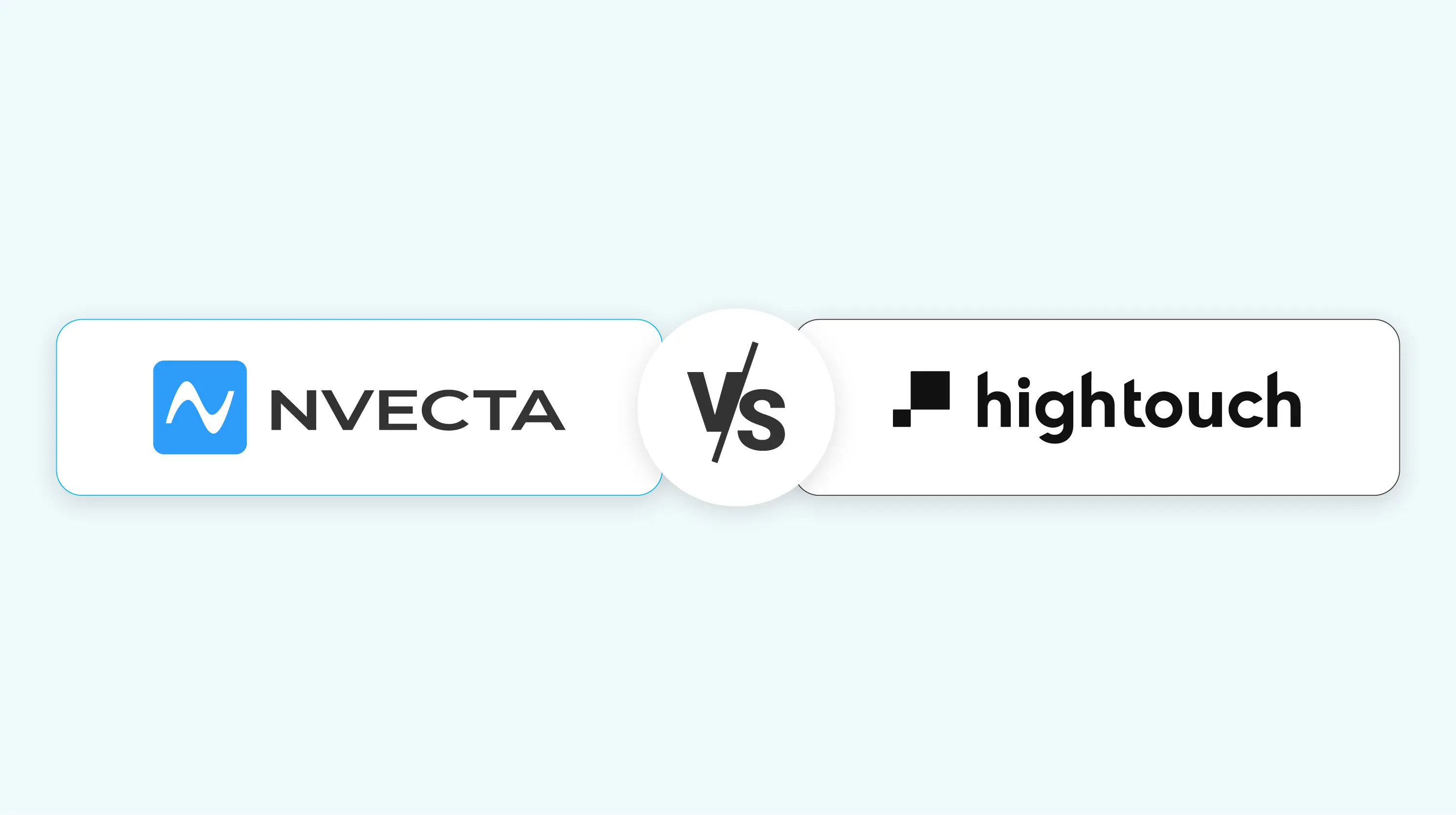
NVECTA vs Census: Complete Comparison Guide

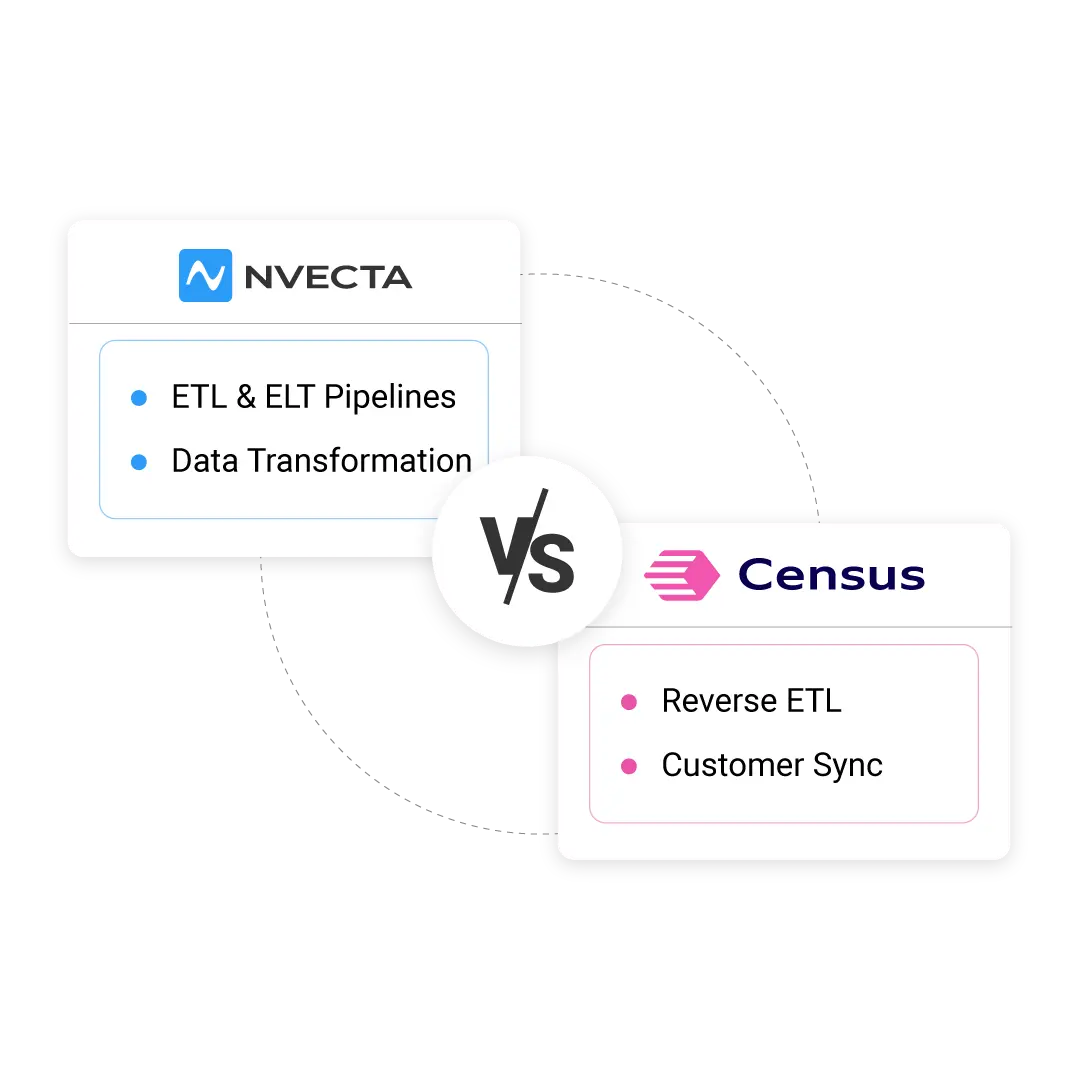
Census is a Reverse ETL tool — it syncs data from your warehouse to business tools, and does that well. NVECTA is an AI-native CDP built for what comes after syncing: real-time identity resolution, autonomous next-best-action decisioning, and journey orchestration that Census simply doesn't do.
NVECTA vs Census

Trusted by thousands

Success quantified

Real results from real customers—measured across ROI, growth and retention

500+

satisfied clients globally

98%

clients satisfaction

5x

ROI for clients

2x

more conversion

Why Teams Switch to NVECTA

What do you actually get that Census can't give you?

Not just features — real outcomes your marketing and data teams will feel from week one.

Census moves data. NVECTA decides what to do with it.

Census is a sync tool — it takes rows from your warehouse and pushes them to Salesforce, HubSpot, or ad platforms. You still need a separate MA platform, an ML team, and campaign logic to actually act on that data. NVECTA's RL engine turns raw behavioural signals into autonomous next-best-actions, no extra tools required.

4.2× higher campaign conversion vs rule-based segmentation

Sub-second activation — not warehouse-speed activation.

Census syncs run on a schedule or trigger after data lands in your warehouse. That typically means a 5–60 minute gap between a customer action and your response. NVECTA processes events in real-time, bypassing the warehouse write-read cycle entirely. For churn prevention, cart recovery, or trade alerts, that gap is everything.

<1s median event-to-activation latency vs 10–60 min typical for Census-triggered flows

One platform. Census is just one piece of a bigger stack.

A typical Census deployment still needs a CDP or MA platform for audience management, a journey tool for orchestration, and an ML platform for scoring. Census connects them — it doesn't replace them. NVECTA bundles collection, identity, AI, journeys, and activation in a single contract.

4 → 1 average vendor consolidation after switching to NVECTA

Case studies

See how our customers achieve success

Should you choose NVECTA over Census?

Census is a good sync tool. If all you need is to move warehouse data into Salesforce or HubSpot, it does that well. But if you need to personalise at scale, trigger real-time journeys, resolve identity across systems, or make AI-driven decisions on each customer — Census can't help you. That's where NVECTA starts.

Census syncs. NVECTA decides.

Census moves data from your warehouse to a destination. What you do with it once it arrives is still entirely up to you. NVECTA's AI engine reads the same data and figures out the next-best action for each customer — automatically, in real time, without a rules document or an analyst in the loop.

Activation lag matters more than you think.

Census Live Syncs brings latency down to minutes. But for use cases like trade alerts, fraud responses, loan application nudges, or cart abandonment, minutes is still too long. NVECTA processes events in sub-second latency via a real-time stream that never touches the warehouse write cycle.

Row-based billing doesn't reward efficiency.

Census prices by rows synced. As your data volume grows, so does your bill — regardless of whether those syncs are producing value. Nvecta's usage-based model charges for what you activate, not the volume of data moving through pipes. Most teams find this 30–40% more predictable at scale.

FAQ section

Questions people are actually asking
about NVECTA vs Census

Sourced from Google, ChatGPT, Gemini, and Perplexity searches — answered straight.

No, you can start by adding NVECTA alongside Census. NVECTA connects to the same warehouse and adds the layers Census doesn't have: AI decisioning, journey orchestration, identity resolution, and sub-second event processing. In practice, most teams consolidate over 2–3 months as they see NVECTA handling more of the stack, and naturally phase Census out. We'll never pressure you to drop a vendor on day one.

Census bills per row synced per month — which scales with your data volume, not with the value you extract from it. At high sync volumes or with frequent sync schedules, that bill grows fast. NVECTA's pricing is usage-based and modular: you pay for events processed, destinations activated, and compute. At equivalent scale, teams switching from a Census + MA platform + journey tool stack typically see 30–40% cost reduction — because NVECTA replaces all three products, not just one

No. NVECTA is zero-copy, same as Census. Your customer data stays in your own cloud environment (AWS, Azure, or GCP). NVECTA reads and processes data there, then pushes activation outputs to your destinations. Nothing is stored on NVECTA's servers. This is important for regulated industries: for banks, insurers, and healthcare companies operating under RBI data localisation rules, DPDP Act 2023, or HIPAA, zero-copy is a compliance requirement — not just a nice-to-have.

NVECTA's AI decisioning engine uses reinforcement learning — it continuously tests different next-best-actions (channel, timing, message, offer) for each customer and improves based on actual outcomes. You don't define campaign rules; the model learns them. For propensity scoring (churn risk, purchase probability, upgrade likelihood), NVECTA's built-in models train on your historical data and are production-ready without a data science team. If you already have custom models in your warehouse, NVECTA can consume those outputs and layer activation on top.

Census Live Syncs is an improvement over scheduled syncs — it can get activation latency down to 1–5 minutes for supported warehouses. That's useful. But it still depends on the warehouse processing the event before Census can act on it. NVECTA processes events in a separate real-time stream that runs in parallel to your warehouse. A customer event triggers a decision and an activation in under a second — without waiting for a warehouse write or a sync cycle. For trading alerts, cart abandonment, fraud responses, or loan application nudges, the difference between 60 seconds and 5 minutes determines whether the intervention works at all.

Flexible insurance plans for your
health, home, car, and future.

At NextSaaS, we help individuals and families secure financial protection with smart, personalized insurance coverage—fast, simple, and built around your life.

Customers love us

G2 Badge
G2 Badge
G2 Badge
G2 Badge
G2 Badge
G2 Badge
G2 Badge
Get started

Ready to transform your workflow?

Ready to unify your customer data and deliver personalized experiences?