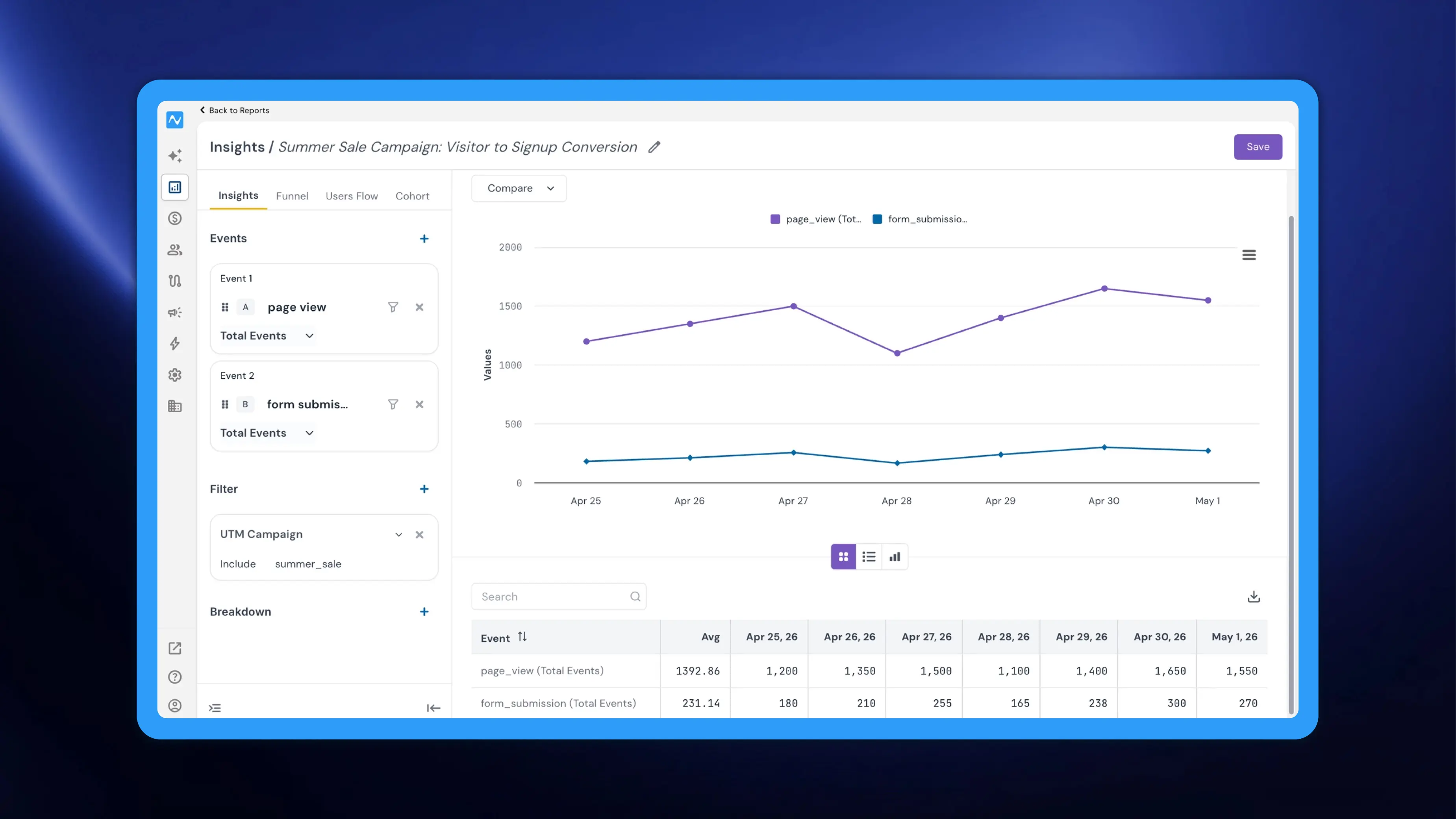
Reports often involve multiple events that need to be filtered by the same condition — a specific UTM source, a device type, a geographic region, or any other attribute. Until now, you had to apply that filter individually to each event, which was repetitive and error-prone, especially in reports with several events or funnel steps. NVECTA now introduces a common filter option in both Insights and Funnel reports, letting you define a filter once and have it apply to every event in the report automatically.
Where to find it
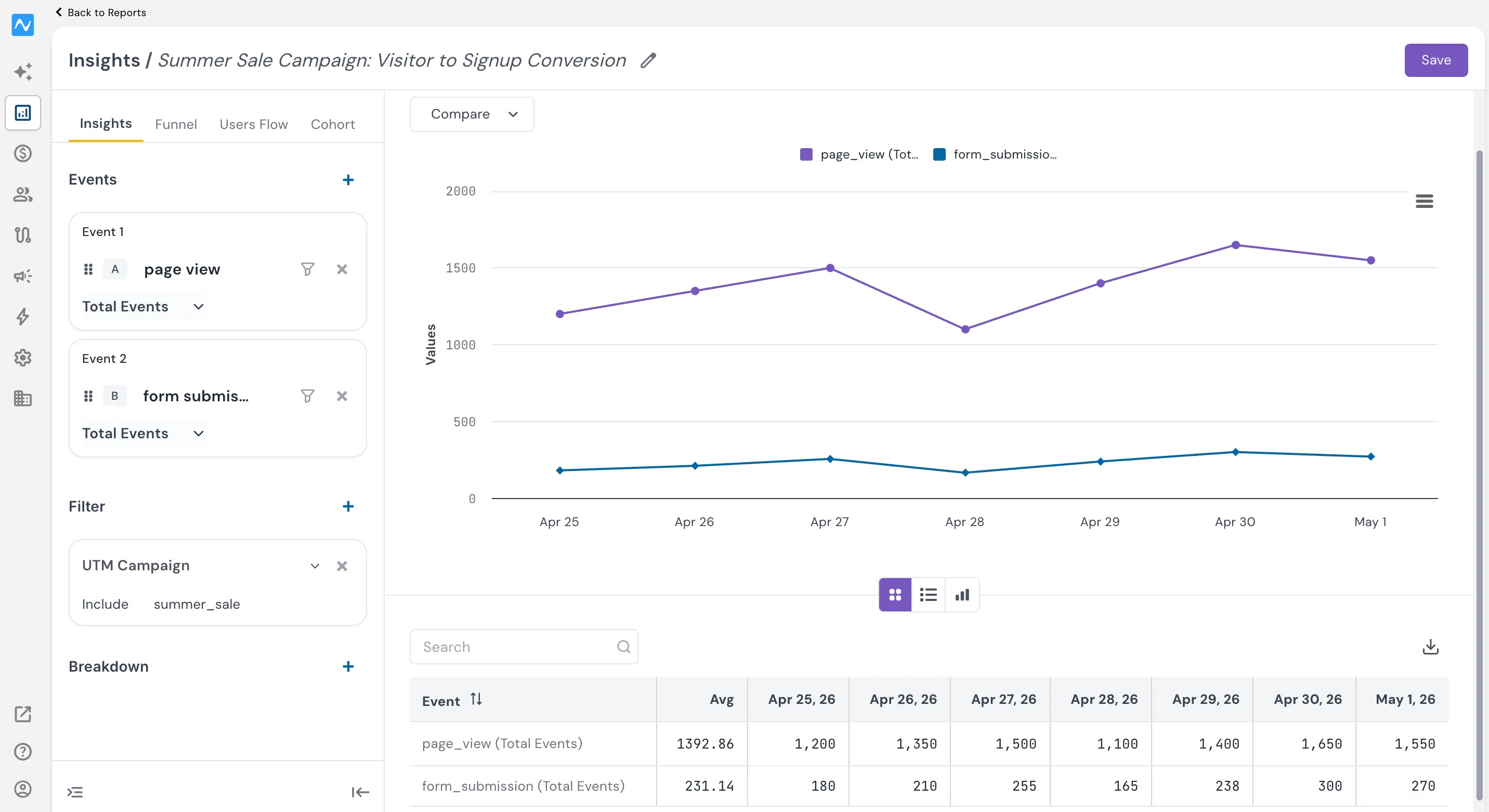
Go to Analytics → Reports and open or create an Insights or Funnel report. Below the Events panel, you'll see the Filter section with a + icon. This is the new common filter. Any filter added here applies globally to all events in the report. The per-event filter icon next to each individual event still exists for cases where you need event-specific filtering.
For a complete overview of the Reports section, refer to the Introducing Reports changelog.
How it works
Click the + icon next to Filter and select an attribute — for example, UTM Campaign. Set your condition (Include or Exclude) and specify the value, such as summer_sale. Once applied, the filter narrows all events in the report to only data matching that condition. In the screenshot above, both the page view and form submission events are filtered to show only traffic from the summer sale campaign, without needing to set the filter separately for each event.
This is especially useful in scenarios like comparing how organic Google traffic behaves across multiple touchpoints. For instance, if you're tracking page views, session starts, add-to-cart events, and purchases in a single report, applying a common UTM Source filter of "google" instantly scopes all four events to Google-originated sessions.
The common filter works alongside per-event filters. If you apply a common filter for UTM Source and also add a per-event filter on a specific event for device type, both conditions apply to that event. This gives you the flexibility to set a shared baseline while still refining individual events where needed.